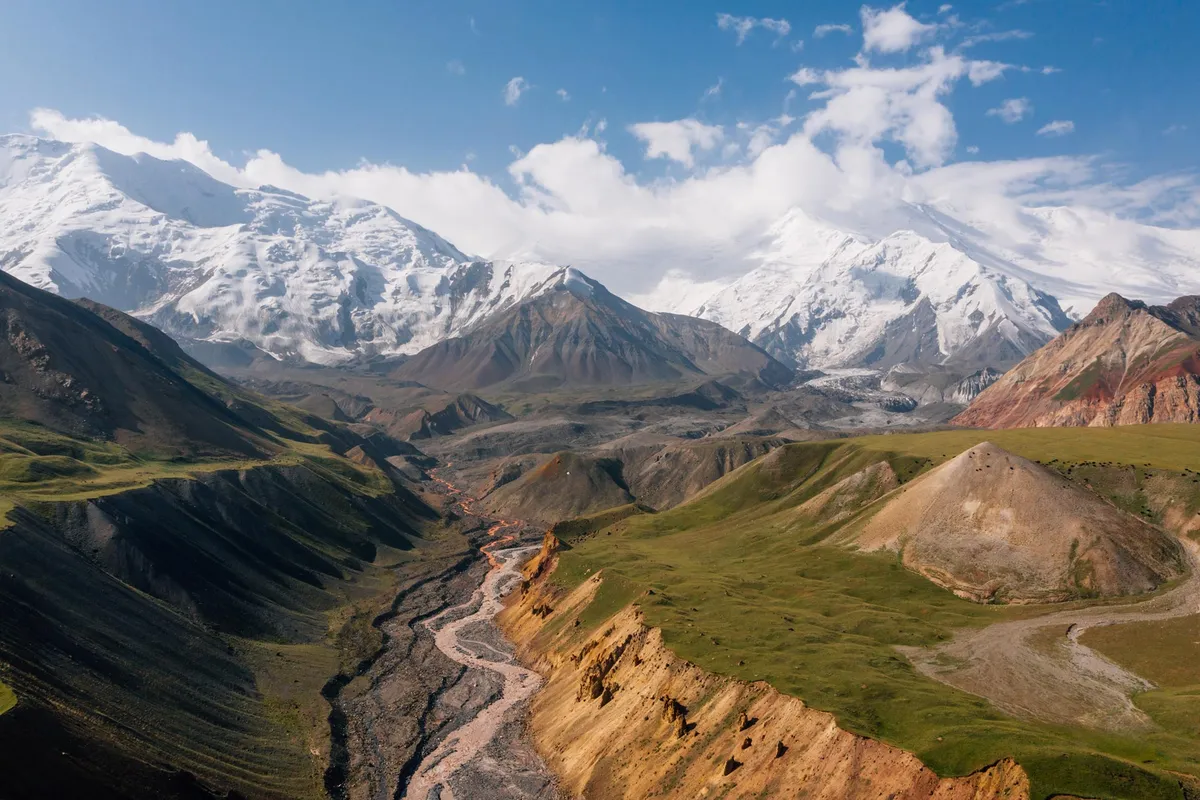
A vanished ocean may have been the architect of Central Asia's dramatic landscape. Geologists from the University of Adelaide found that the Tethys Ocean—which closed millions of years before the Himalayas even began to form—triggered waves of mountain building across the continent during the age of dinosaurs, thousands of kilometers away from where the ocean itself once lay.
The discovery rewrites how we understand what sculpted one of Earth's most complex mountain regions. For decades, geologists assumed Central Asia's terrain resulted from local tectonic collisions, climate shifts, and churning in Earth's mantle. But when researchers combined three decades of thermal history data—hundreds of previously separate studies treated as one unified dataset—a different story emerged.
"We found that climate change and mantle processes had only little influence on the Central Asian landscape," said Dr Sam Boone, who conducted the research as a post-doctoral researcher at Adelaide University. "Instead, the dynamics of the distant Tethys Ocean can directly be correlated with short-lived periods of mountain building in Central Asia."
We're a new kind of news feed.
Regular news is designed to drain you. We're a non-profit built to restore you. Every story we publish is scored for impact, progress, and hope.
Start Your News DetoxThe Tethys Ocean once stretched between major landmasses and dominated global plate movements. As it gradually closed over the last 250 million years, the shifting tectonic plates sent shockwaves across Eurasia. Though the ocean itself has vanished—only the Mediterranean Sea remains as its ghost—its influence is written into the ancient rocks of Central Asia.
When Dinosaurs Walked Mountain Ridges
During the Cretaceous period, when dinosaurs roamed the landscape, Central Asia looked different from today. Rather than the towering peaks we see now, the terrain resembled something like the Basin-and-Range Province in the western USA—a series of parallel ridges separated by valleys. These ridges formed because the Tethys Ocean's closure triggered a process called rollback, where subducting slabs of ocean crust reactivated old geological fault lines thousands of kilometers away.
"The present-day relief of Central Asia was largely built by the India-Eurasia collision and ongoing convergence," explained Associate Professor Stijn Glorie from Adelaide University's School of Physics, Chemistry and Earth Sciences. "However, during the Cretaceous periods, dinosaurs would have seen a mountainous landscape as well."
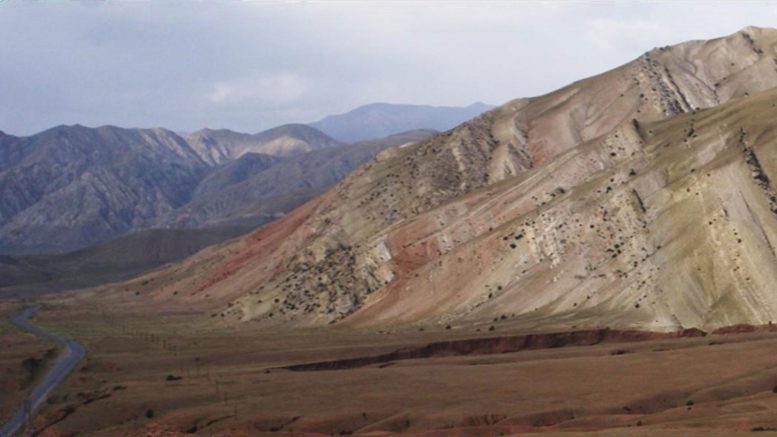
The breakthrough came from analyzing thermal history models—tools that track how rocks cool as they're pushed toward the surface during mountain uplift and erosion. By comparing these cooling patterns against plate-tectonic models of the Tethys Ocean's evolution, the team uncovered geological processes that individual studies had missed.
The same approach is now being applied elsewhere. Glorie's team is investigating why Australia's breakup from Antarctica 80 million years ago left so little trace in the thermal record of either continent. "There are many parts on the planet where the drivers and timing for mountain building and rifting are poorly understood," he said. The method that unlocked Central Asia's secrets may hold answers for these other puzzles too.
The research was published in Nature Communications Earth & Environment on December 18, 2025.