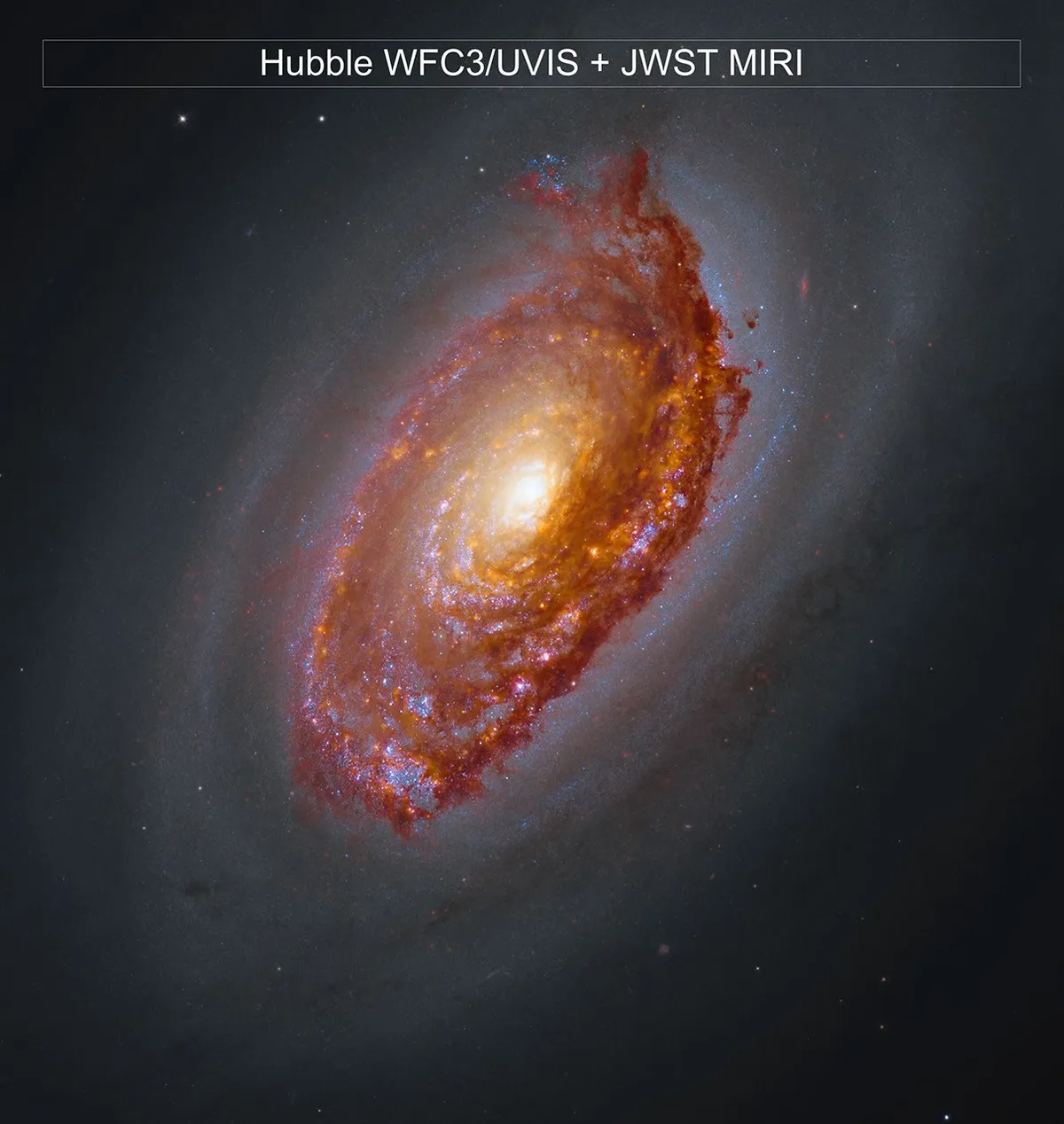
For years, the Hubble Space Telescope peered into the cosmic gloom of the Black Eye Galaxy and saw… well, gloom. A dark, dusty band that earned Messier 64 its delightfully dramatic nickname. But now, the James Webb Space Telescope (Webb) has turned its infrared gaze on the same spot, and it’s like someone finally flipped the lights on.
Turns out, that dusty band wasn't just dark; it was a bustling nursery. Webb's Mid-InfraRed Instrument (MIRI) punched through the cosmic veil, revealing the dust glowing a vibrant red. Why red? Because it's absorbing light from a fresh batch of newborn stars, then re-emitting it. Those same baby stars, in Hubble's view, were just faint pink smudges in star-forming regions. Webb just gave us the ultimate baby monitor.
But M64 isn't just a pretty face with a glowing eye. This galaxy has some serious internal drama. Its inner and outer gas regions are spinning in opposite directions. Imagine two massive cosmic currents colliding — that's precisely where new stars are popping up like popcorn.
We're a new kind of news feed.
Regular news is designed to drain you. We're a non-profit built to restore you. Every story we publish is scored for impact, progress, and hope.
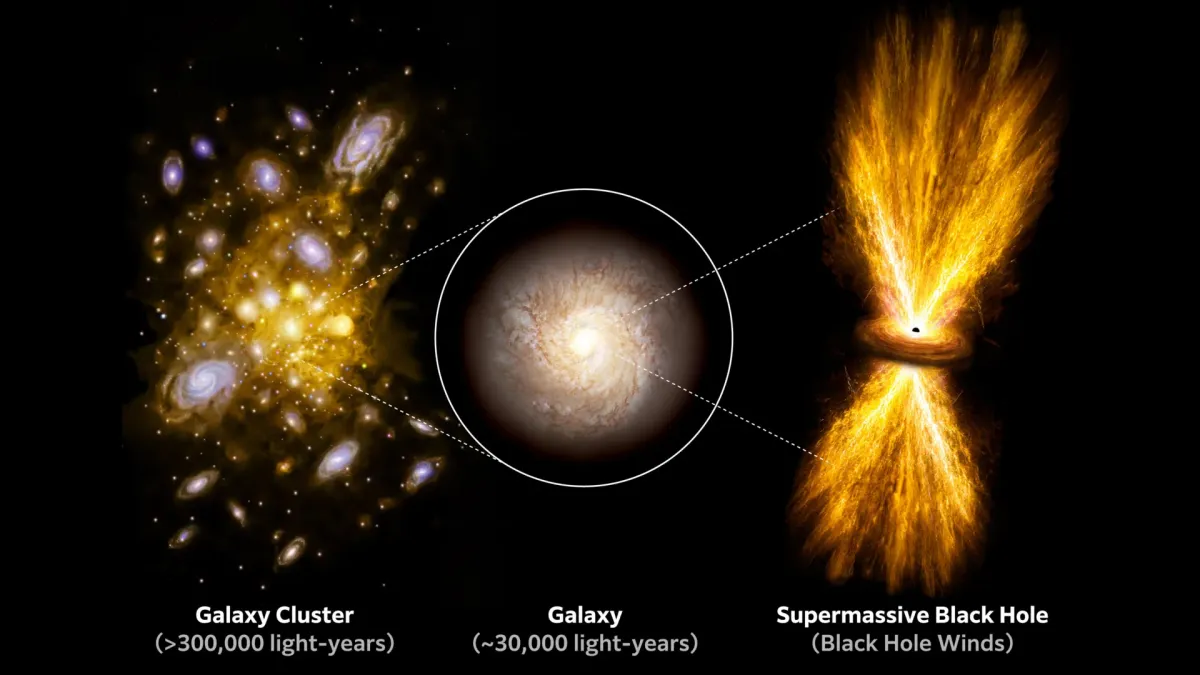
Start Your News DetoxScientists now suspect this galactic traffic jam is the result of a colossal fender-bender. A smaller galaxy likely slammed into M64 at some point, sending its outer gas into a reverse spin. For a long time, the prevailing wisdom was that spiral galaxies, like our own Milky Way, were the quiet, well-behaved types. M64, however, has been loudly proving them wrong, offering undeniable evidence that galactic mergers are just part of the spiral life.
Webb's new, luminous view of M64 isn't just pretty pictures. It's giving astronomers a ringside seat to the galaxy's turbulent past and present, offering clues about its dust, its motion, and how it came to be such a beautiful, chaotic mess. Which, if you think about it, is a pretty good metaphor for a lot of things.