For two thousand years, Vitruvius existed only in words. The Roman architect and engineer wrote De Architectura, a ten-book treatise from the first century B.C.E. that became the only surviving architectural text from classical antiquity—so influential that Leonardo da Vinci based his famous Vitruvian Man drawing on Vitruvius's ideas about human proportion. But no one had ever found a building he actually designed. Until now.
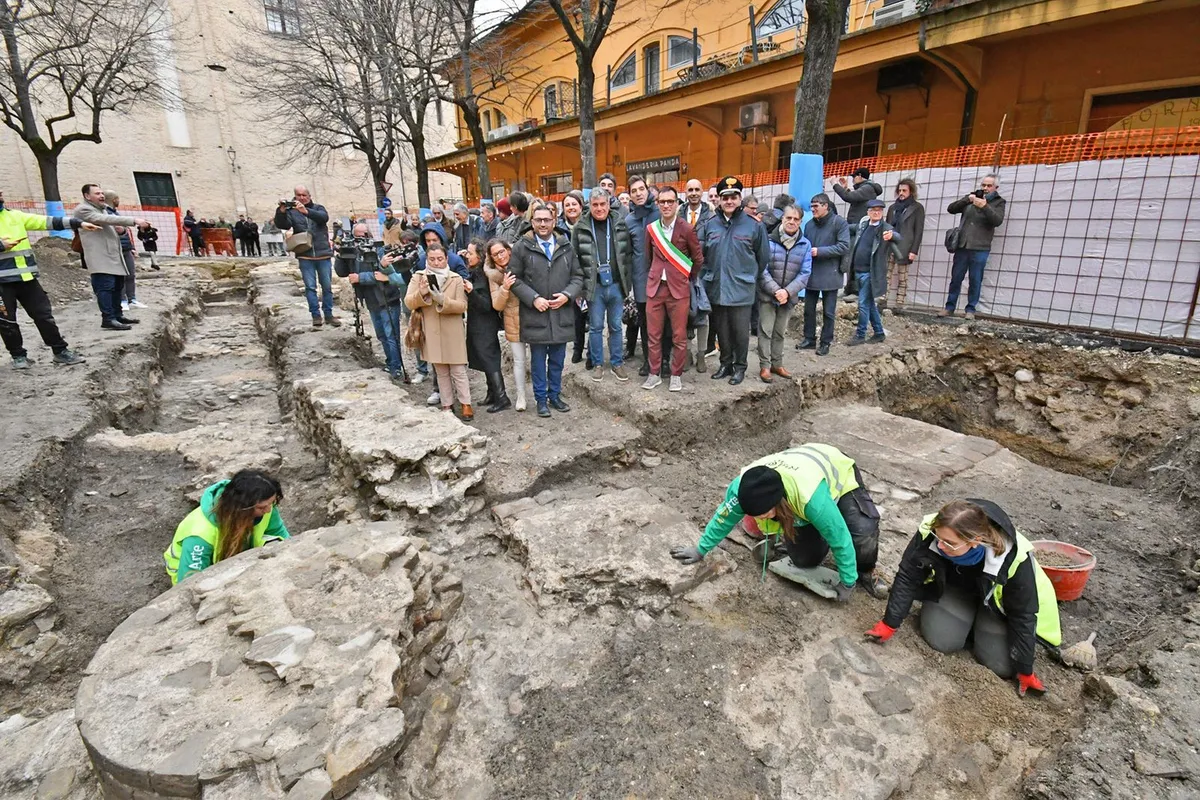
Archaeologists in Fano, Italy, have unearthed the stone remains of a basilica that matches Vitruvius's own written description with what experts are calling remarkable precision. In the fifth book of his treatise, Vitruvius described a basilica "carried into execution in the Julian colony of Fano"—a settlement on the Adriatic Sea named after a temple to the Roman goddess of fortune. For centuries, archaeologists searched for this structure. They've finally found it.
The rectangular building once stood with ten columns along each of its longer sides and four columns on the shorter ends. Those columns, roughly five feet in diameter, soared nearly 50 feet high. When researchers compared the excavated remains to Vitruvius's detailed specifications for pilasters and corner supports, the match was unmistakable. "We have an absolute match," Andrea Pessina, the regional archaeological superintendent, told reporters. "There are few certainties in archaeology, but we were impressed by the precision."
We're a new kind of news feed.
Regular news is designed to drain you. We're a non-profit built to restore you. Every story we publish is scored for impact, progress, and hope.
Start Your News DetoxWhat makes this discovery especially striking is how much was working against it. Fano has endured centuries of destruction—the Napoleonic Wars of the 1800s, attacks during World War II, and countless other assaults that obliterated most Roman-era buildings in the city. That this basilica survived at all, buried beneath layers of history, feels almost improbable.
Italian officials are already moving to protect the site. UNESCO World Heritage status is being pursued, and further excavations will reveal how much of the structure remains intact. Experts are still determining whether the basilica can eventually be opened to the public—a question that matters more than it might seem. For two millennia, Vitruvius's ideas shaped architecture and design through his words alone. Now, for the first time, people will be able to walk where his vision became stone.