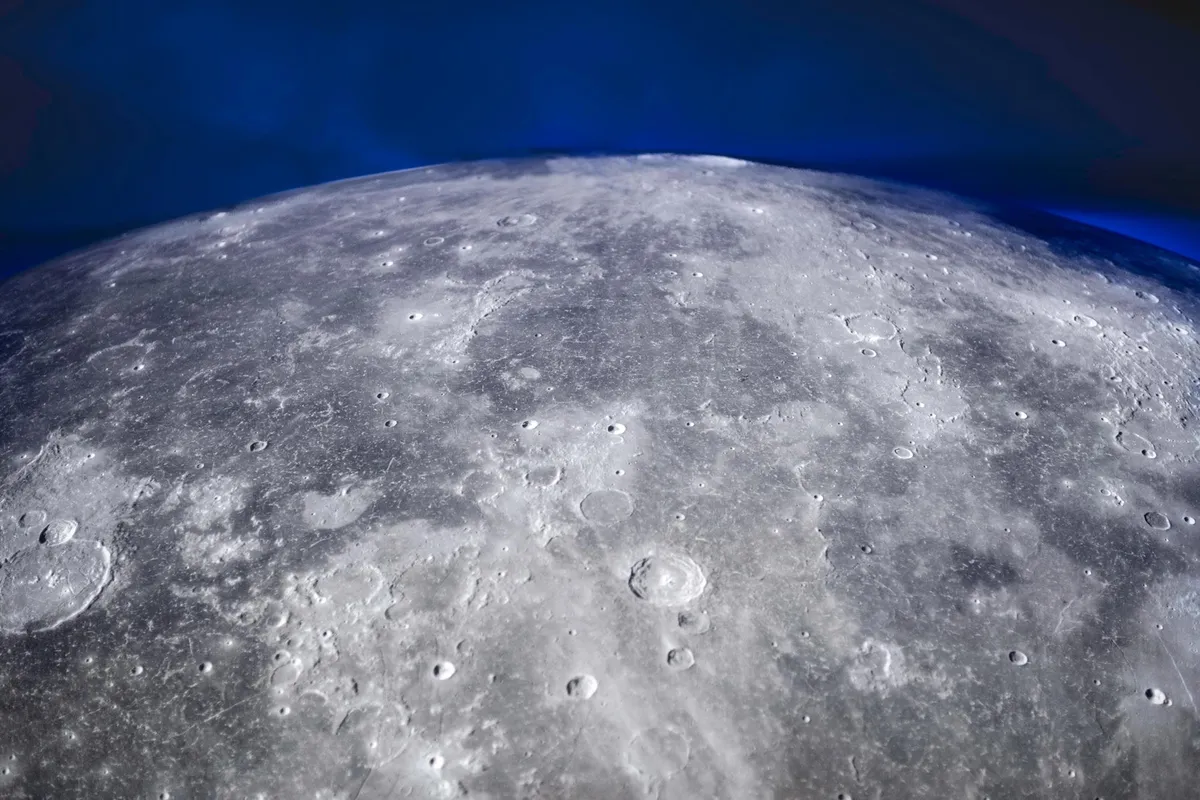
A space rock that briefly looked like it might collide with the Moon next decade won't, according to NASA. Asteroid 2024 YR4 will miss our lunar neighbor by 13,200 miles on December 22, 2032—a dramatic reversal from February, when it seemed to pose a genuine threat.
The clarity came from an unexpected source: the James Webb Space Telescope, which observed the faint asteroid from 280 million miles away. "We think this is certainly the faintest solar system object that has ever been observed," said Andy Rivkin, a planetary astronomer at Johns Hopkins Applied Physics Laboratory who led the tracking effort. The observations, gathered on February 18 and 26, were precise enough to recalculate the asteroid's orbit with confidence.
How We Got Here
The story began in late 2024 when the Asteroid Terrestrial-impact Last Alert System in Chile first spotted 2024 YR4. Initial data was imprecise—astronomers thought it might be 300 feet across and could hit Earth on December 22, 2032. By mid-February 2025, the risk estimate had climbed to 3.1 percent, the highest probability NASA had ever assigned to an asteroid of that size. The European Space Agency called it the "riskiest" asteroid ever detected.
We're a new kind of news feed.
Regular news is designed to drain you. We're a non-profit built to restore you. Every story we publish is scored for impact, progress, and hope.
Start Your News Detox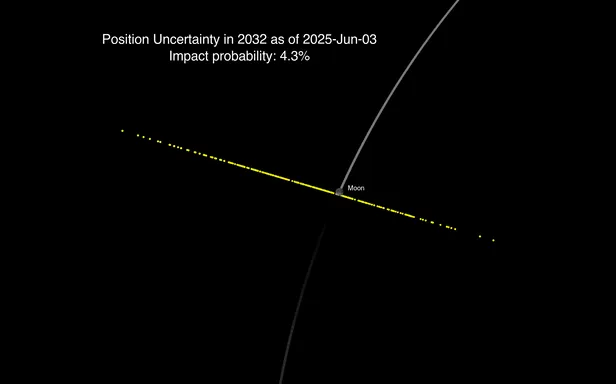
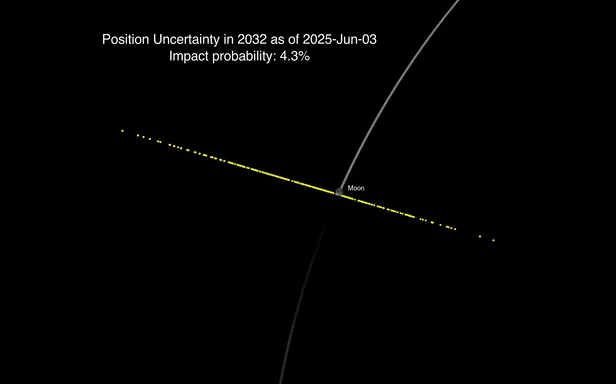
Then, within weeks, the threat collapsed. Better observations showed the asteroid was smaller—174 to 220 feet across—and Earth was safe. But the Moon remained in the crosshairs. For a brief window, 2024 YR4 appeared to have a 4.3 percent chance of lunar impact, which would have created a visible flash from Earth and potentially scattered debris toward satellites in near-Earth orbit.
What made this tracking so difficult was invisibility. After its initial discovery, the asteroid became too faint for conventional telescopes to follow. It would have remained unobservable from Earth or space-based facilities until 2028, leaving researchers with outdated trajectory data. JWST filled that gap—but just barely. The telescope caught the asteroid during a narrow window when it passed near background stars with known positions, allowing for precise angular measurements.
"When we saw it might hit the moon, we wanted to follow up," Rivkin explained. "JWST was the only facility that could do that before 2028."
The larger story here is about how we track threats we can barely see. Asteroid 2024 YR4 is so faint that even JWST—one of humanity's most powerful observatories—struggled to detect it. Yet we managed to rule out a collision with enough precision to move on. That's partly luck: the asteroid happened to drift past recognizable stars at exactly the right moment. But it's also a reminder that our detection systems are improving faster than the threats they monitor. We're getting better at finding small objects early and observing them thoroughly, even when they're at the edge of what's observable. For now, the Moon and Earth can both breathe easy.