For thirty years, astronomers have searched for alien life using one simple rule: find planets in the "habitable zone," that orbital sweet spot where liquid water can exist on the surface. It's worked well enough. But a new study suggests we've been drawing the map wrong—and missing worlds that could harbor life.
The problem is that exoplanets don't follow the script. Thousands of them orbit stars nothing like our sun, in places that the old models would have written off as too hot or too cold. The James Webb Space Telescope has even spotted water vapor in the atmospheres of planets that shouldn't have any liquid water at all.
So astrophysicist Amri Wandel at Hebrew University did something radical: he stopped treating the habitable zone as a fixed boundary and started asking what actually happens on real alien worlds.
We're a new kind of news feed.
Regular news is designed to drain you. We're a non-profit built to restore you. Every story we publish is scored for impact, progress, and hope.
Start Your News DetoxThe Dark Side of Tidally Locked Planets
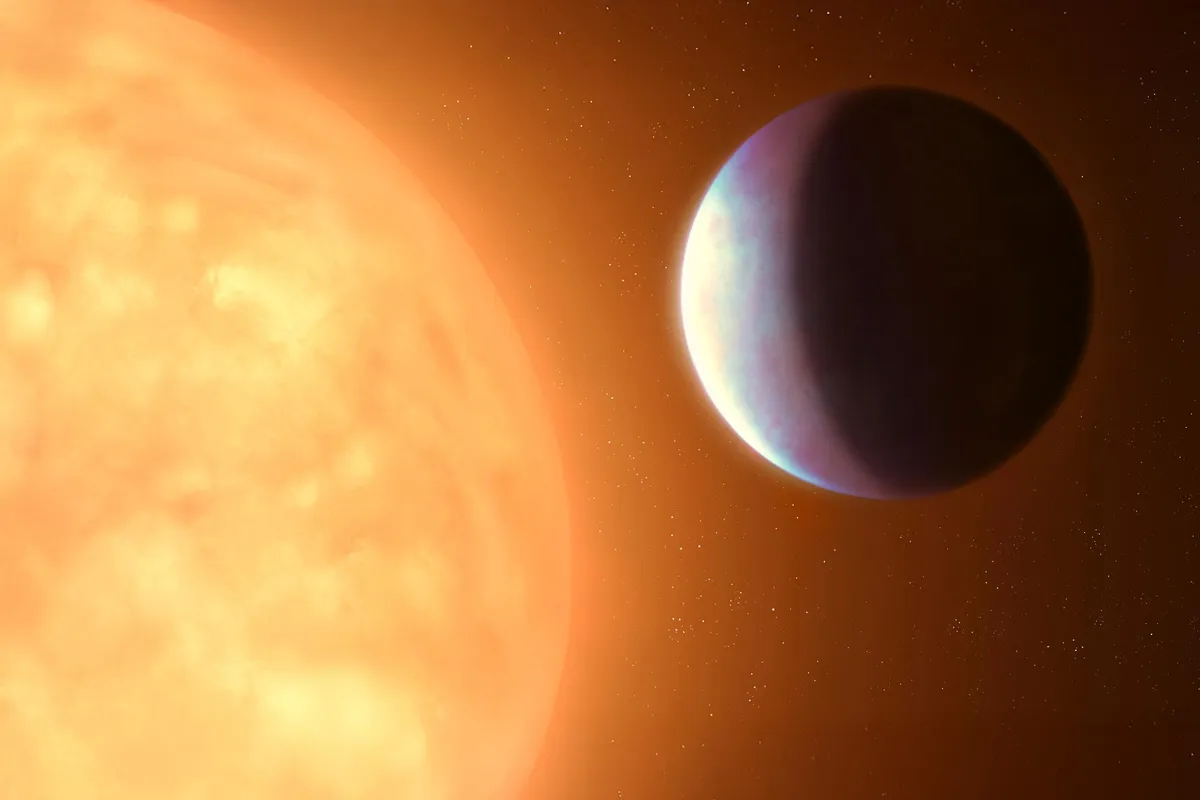
Wandel's research, published in The Astrophysical Journal, focuses on tidally locked exoplanets—worlds that always face their star the same way, like the moon faces Earth. One hemisphere bakes in permanent daylight while the other freezes in eternal night. Astronomers have mostly dismissed these as dead ends for life.
But Wandel's climate models tell a different story. Heat from the scorched day side doesn't stay put. It gets carried through the atmosphere to the dark hemisphere, warming parts of the night side enough to keep water liquid. This means planets orbiting close to M-dwarf and K-dwarf stars—much closer than traditional models would allow—could still host liquid water in their twilight zones.
It's a simple insight with big implications. Those James Webb detections of water vapor on hot Super Earths? They start to make sense. Those worlds weren't supposed to have any liquid water. But if heat moves the way Wandel's models suggest, they might have it pooled in cooler regions we can't see directly.
Ice Worlds with Hidden Oceans
The study goes further. Planets far beyond the traditional habitable zone—the genuinely frozen worlds—might still harbor liquid water beneath thick ice sheets. Geothermal heat from the planet's core, or friction from tidal forces, could melt pockets of water underneath the ice, creating subsurface lakes much like those we suspect exist beneath the ice on Europa and Enceladus.
This reframing doesn't just add a few new candidates to the search. It multiplies them. A habitable zone drawn on the assumption of surface liquid water captures only a fraction of worlds where life could actually exist. Expand that to include dark sides of tidally locked planets and subsurface oceans on frozen worlds, and the number of potentially habitable exoplanets jumps dramatically.
What makes this shift important isn't just the math. It's a reminder that our definition of "habitable" was always shaped by what we know—Earth, Mars, the solar system we can see. As we've found thousands of worlds that don't fit that template, we've had to ask whether the template was ever the real limit, or just the edge of our imagination. Wandel's work suggests the latter. The habitable zone was never really a zone at all. It was just the first place we knew to look.