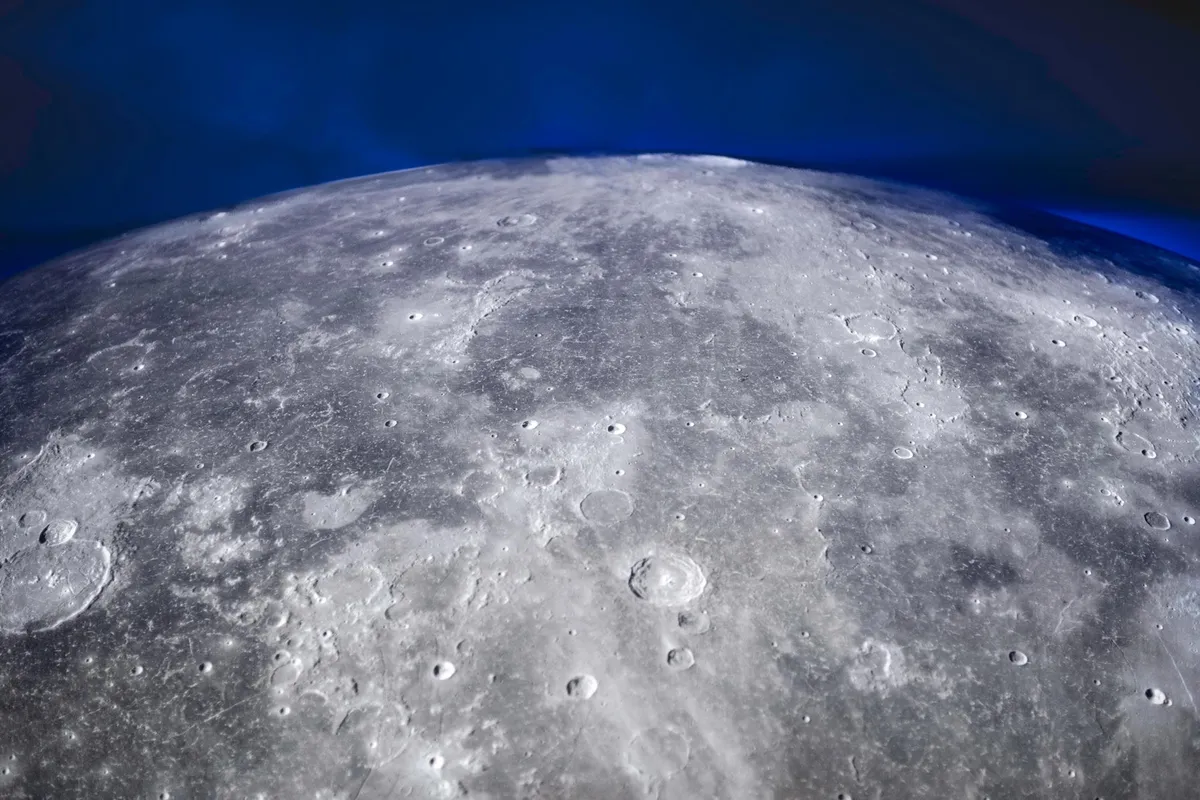
For decades, scientists couldn't agree on a basic fact about the Moon: did it have a strong magnetic field in its early days, or a weak one? The answer, it turns out, was both—and neither. A team from Oxford has just shown that the Moon did generate powerful magnetic fields, but only in rare, brief bursts lasting perhaps a few thousand years. For the vast majority of its 4.5-billion-year history, the Moon's field was weak.
The confusion came down to a problem that sounds almost mundane: where the Apollo astronauts happened to land. All six missions touched down in similar regions of the lunar mare—the smooth volcanic plains. These weren't random choices. Mission planners picked flat terrain for safety, which meant the astronauts collected far more titanium-rich basalts than would represent the Moon as a whole. When researchers analyzed those rocks back on Earth, the abundance of strong magnetic signatures led them to assume the Moon had maintained a powerful field for eons. They were reading the biased sample as if it were representative.
The breakthrough came from a simple but elegant observation: every rock showing strong magnetic signatures contained high levels of titanium—above 6 percent by weight. Rocks with less titanium consistently showed only weak magnetism. This correlation suggested the magnetic field wasn't a steady hum across billions of years, but a temporary phenomenon tied to specific geological events.
We're a new kind of news feed.
Regular news is designed to drain you. We're a non-profit built to restore you. Every story we publish is scored for impact, progress, and hope.
Start Your News Detox
What the titanium connection reveals
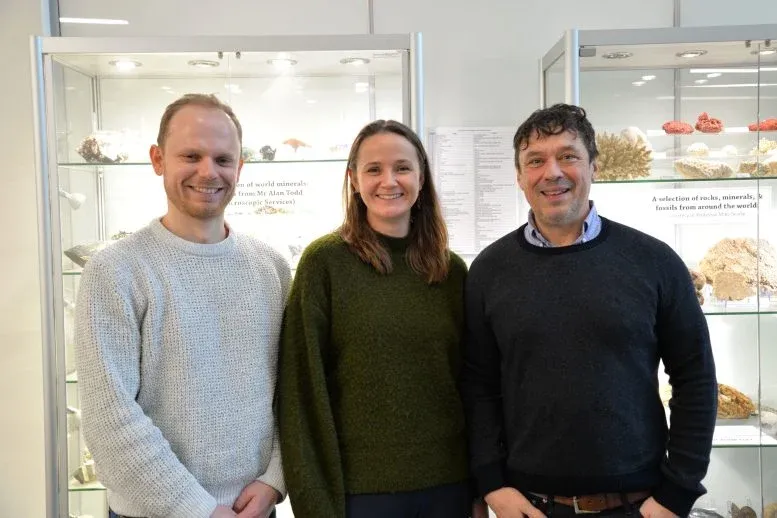
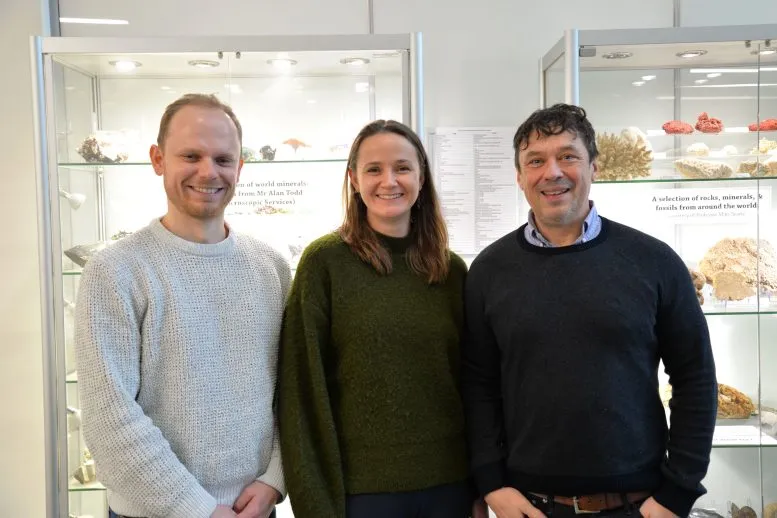
The Oxford team proposes that when titanium-rich material deep inside the Moon melted at the core-mantle boundary, it briefly generated those powerful magnetic fields. These melting events were connected to the eruption of titanium-rich volcanic rocks at the surface—the very rocks the Apollo missions happened to collect. "We now believe that for the vast majority of the Moon's history, its magnetic field has been weak," explains Associate Professor Claire Nichols, the study's lead author. "But for very short periods—no more than 5,000 years, possibly as short as a few decades—melting at the core-mantle boundary resulted in a very strong field."
What makes this finding particularly striking is how it illustrates a broader scientific lesson: the data you collect shapes the conclusions you draw, sometimes without you realizing it. Associate Professor Jon Wade offers a pointed analogy: "If we were aliens exploring the Earth and had landed here just six times, selecting flat surfaces, we would probably have a similar bias. It was only by chance that Apollo focused so much on the Mare region. If they'd landed elsewhere, we would likely have concluded the Moon only ever had a weak magnetic field."
Computer simulations confirm how powerful this bias was. If scientists had gathered a truly random sample of lunar rocks, the odds of capturing even one of these rare magnetic episodes would have been extremely low. The Apollo missions, in other words, got lucky—and that luck was mistaken for evidence of a very different lunar history.

The research, published in Nature Geoscience, doesn't just solve a decades-old puzzle. It also opens a roadmap for the Artemis missions, which will return humans to the Moon. By landing in different regions and collecting samples from diverse geological settings, future missions can test whether the Moon's magnetic history truly matches this new model. For the first time, scientists know what to look for and where the gaps in their knowledge actually are.