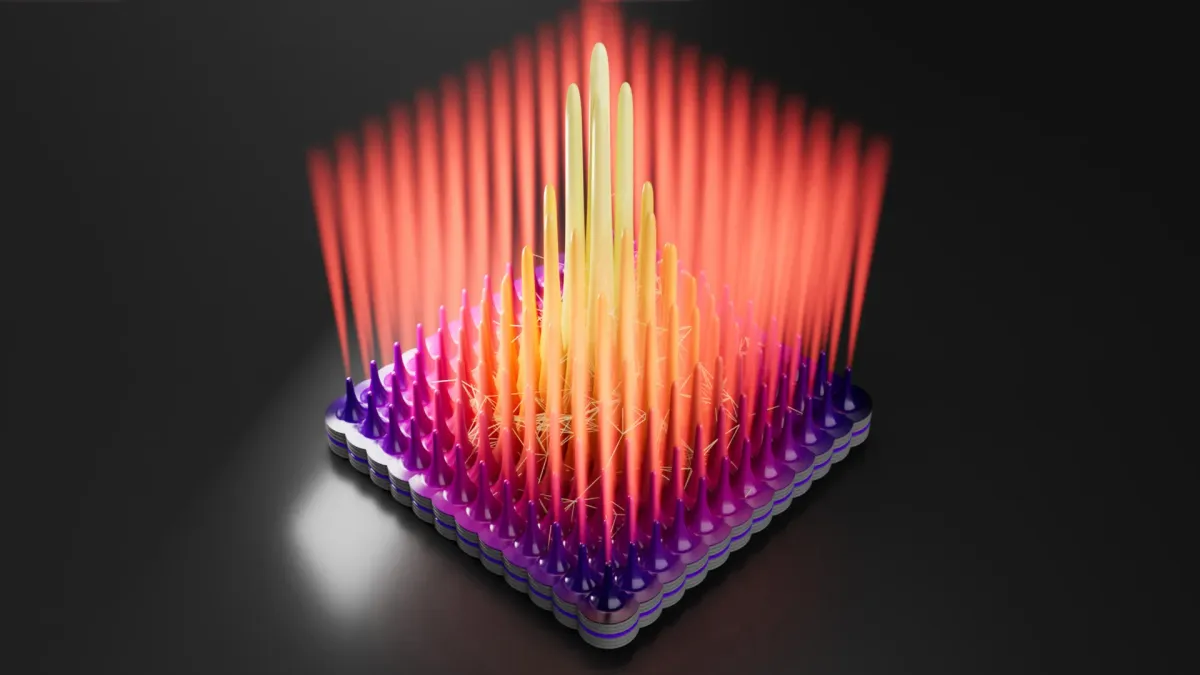
Scientists in the US have found a way to use the blue glow from a sea-dwelling algae to create light-emitting 3D-printed objects.
The algae, called Pyrocystis lunula, is a single-celled organism that glows blue. It's known for making sparkling displays in ocean waves.
Making Algae Glow
Giulia Brachi, a researcher at the University of Colorado Boulder, was trying to make the algae glow for longer periods. She first tried to mimic the stress of waves by slowly squeezing the algae, but it didn't work well.
We're a new kind of news feed.
Regular news is designed to drain you. We're a non-profit built to restore you. Every story we publish is scored for impact, progress, and hope.
Start Your News DetoxOther methods using mechanical stress can be hard to control. So, Brachi and her team tried a different approach. They knew that exposing algae to acid could lower the pH inside their cells, which triggers light production. Brachi added a slightly acidic solution to a flask of algae.
The algae in the flask began to glow like "living glitter." Brachi and her co-authors published their findings in Science Advances. They showed they could make the algae glow for up to 25 minutes at a time.
3D Printing with Living Light
The scientists then put the algae into a hydrogel, a jelly-like substance made with water. They used this mixture to 3D-print various shapes, including a crescent moon. All the shapes glowed a bright cyan blue.
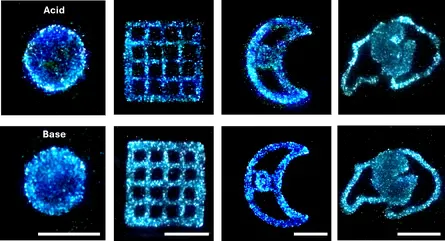 Scientists encapsulated the algae within a hydrogel and were able to 3D-print blobby shapes with it.
Bioluminescent algae contain an enzyme called luciferase. This enzyme reacts with a compound called luciferin to produce light. Both names come from the Latin word "lucifer," meaning "light bearer."
Professor Wil Srubar, also from the University of Colorado Boulder, noted that the algae are "pretty self-sustaining" as long as they have access to seawater.
Future Possibilities
Srubar suggested this "living light" could be used for glowsticks or glowing bracelets. It could also be embedded in biosensors that light up when they detect toxins in the environment.
Professor Chris Howe from the University of Cambridge, who was not involved in the study, called it "a really interesting first step." He noted that moving this technology from the lab to the real world will be a challenge. Howe added that using bioluminescence could reduce waste from disposable batteries in small, light-emitting devices.
Anthony Campbell, a professor emeritus at the University of Cardiff, expressed some skepticism. He noted that while acid is known to induce bioluminescence, he doubted the algae could survive long in the acidic solution used in the study, which had a pH of 4. This is similar to the acidity of a tomato, and "they don't like it, it stresses them," Campbell said.
Scientists are still unsure why algae like Pyrocystis lunula evolved to glow. One idea is that the light helps protect them from predators. Howe believes this is a "fairly plausible explanation," but it's not yet confirmed.
Deep Dive & References
Bioluminescent 3D-printed structures from Pyrocystis lunula - Science Advances