Solving one of science's hardest math problems is like trying to figure out where a pebble dropped just by looking at the ripples. For decades, both humans and supercomputers have largely thrown up their hands at inverse partial differential equations (try saying that five times fast). These are the mathematical equivalent of seeing the effect but having no idea about the cause.
But now, researchers at the University of Pennsylvania have developed an AI method called "Mollifier Layers" that's basically given math a much-needed spa treatment. Instead of just throwing more processing power at the problem, they've made the underlying math itself smoother, more elegant, and far less prone to a digital meltdown.
Think of it this way: if a regular AI tries to solve these equations, it's like zooming in on a really messy, jagged line. The closer you get, the worse the imperfections look, and everything becomes unstable. The Penn team realized they needed to smooth out that line before the AI started doing its calculations. Because apparently that's where we are now: making math more polite for our AI overlords.
We're a new kind of news feed.
Regular news is designed to drain you. We're a non-profit built to restore you. Every story we publish is scored for impact, progress, and hope.
Start Your News DetoxThe Ripples and the Pebble: What's the Big Deal?
Differential equations are the bedrock of how we understand change – population growth, heat transfer, even the weather. Partial differential equations (PDEs) kick it up a notch, describing how things change across both space and time. They're essential for everything from predicting hurricanes to understanding how your DNA is organized.
But inverse PDEs? They're the real brain-busters. Instead of predicting the future, they let scientists look at what's already happened (the ripples) and work backward to find the hidden forces that caused it (the pebble). Lead author Vivek Shenoy put it perfectly: "You can see the effects, but the real challenge is finding the hidden cause."
His team, for instance, was looking at how DNA folds inside cells. They could see the structures, but they couldn't reliably figure out the "epigenetic processes" — the chemical changes that dictate which genes are active. They needed a new way to rewind the scientific tape, and the existing math just wasn't cutting it.
Smoothing Things Over with Mollifiers
The solution came from a surprising place: a mathematical concept called "mollifiers," first introduced in the 1940s by mathematician Kurt Otto Friedrichs. These are essentially tools designed to smooth out noisy or irregular functions. The research team integrated a "mollifier layer" directly into their AI models.
This layer acts like a digital filter, smoothing the input data before the AI tries to calculate changes. This sidesteps the instability that plagues traditional methods, which tend to make a mess of noisy data and demand truly obscene amounts of computing power.
Ananyae Kumar Bhartari, a co-first author, noted that they initially thought the AI network itself was the issue. "But... we eventually realized the bottleneck was recursive automatic differentiation itself." It's like blaming the car when the road is just too bumpy. Smooth the road, and the car performs beautifully.
The result? A dramatic reduction in noise and a significant cut in the computing power needed. This means scientists can now solve these complex equations more reliably and without needing a supercomputer that costs more than a small island.
Unlocking DNA's Deepest Secrets
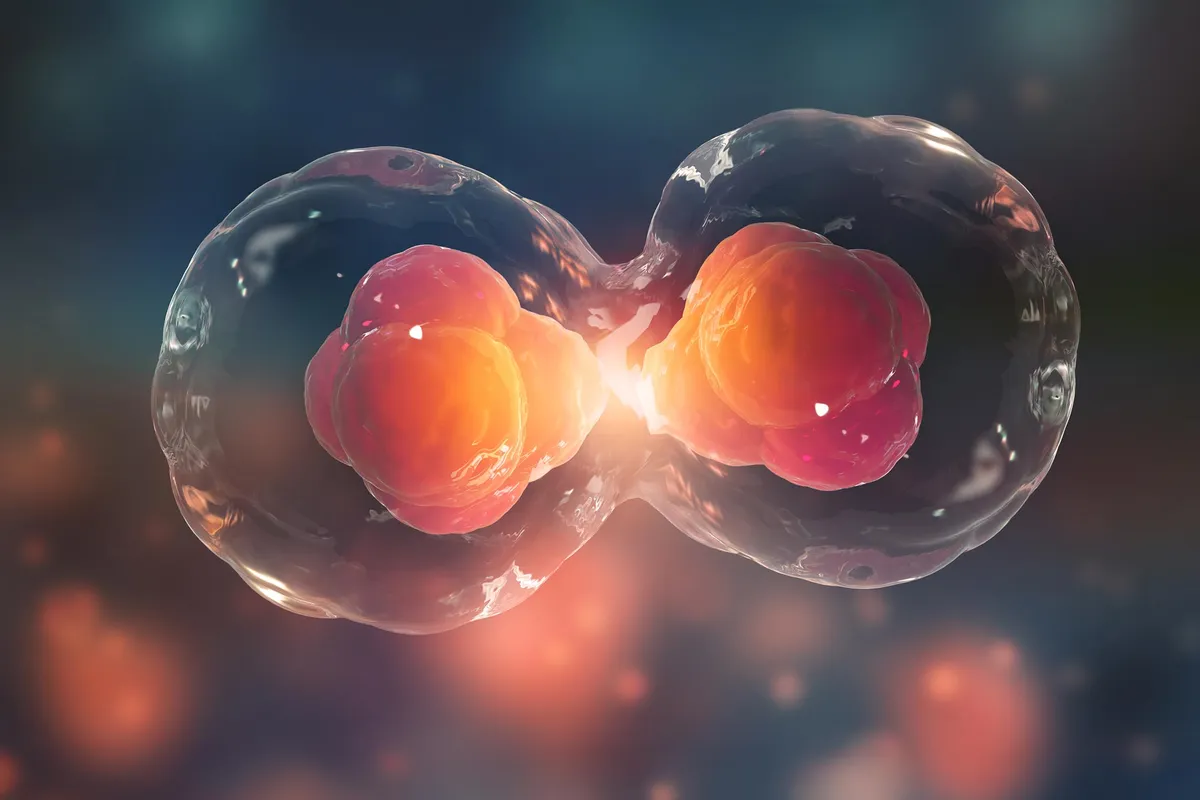
One of the most exciting immediate applications is in understanding chromatin — the intricate structure of DNA and proteins within our cells. These tiny structures (around 100 nanometers, for those keeping score) are the gatekeepers of gene expression, which in turn controls cell identity, function, aging, and disease.
By estimating the rates of these epigenetic reactions, the new AI method moves beyond just observing chromatin to predicting how it changes. Tracking these reaction rates could lead to entirely new treatments, because if you can control the rates, you might just be able to redirect cells to desired states. Which, if you think about it, is both impressive and slightly terrifying.
Ultimately, this isn't just about solving a tricky math problem. It's about moving from merely observing the universe's complex patterns to actually uncovering the hidden rules that generate them. And if you understand the rules, well, then you have the possibility of changing the game entirely. Let that sink in for a moment.