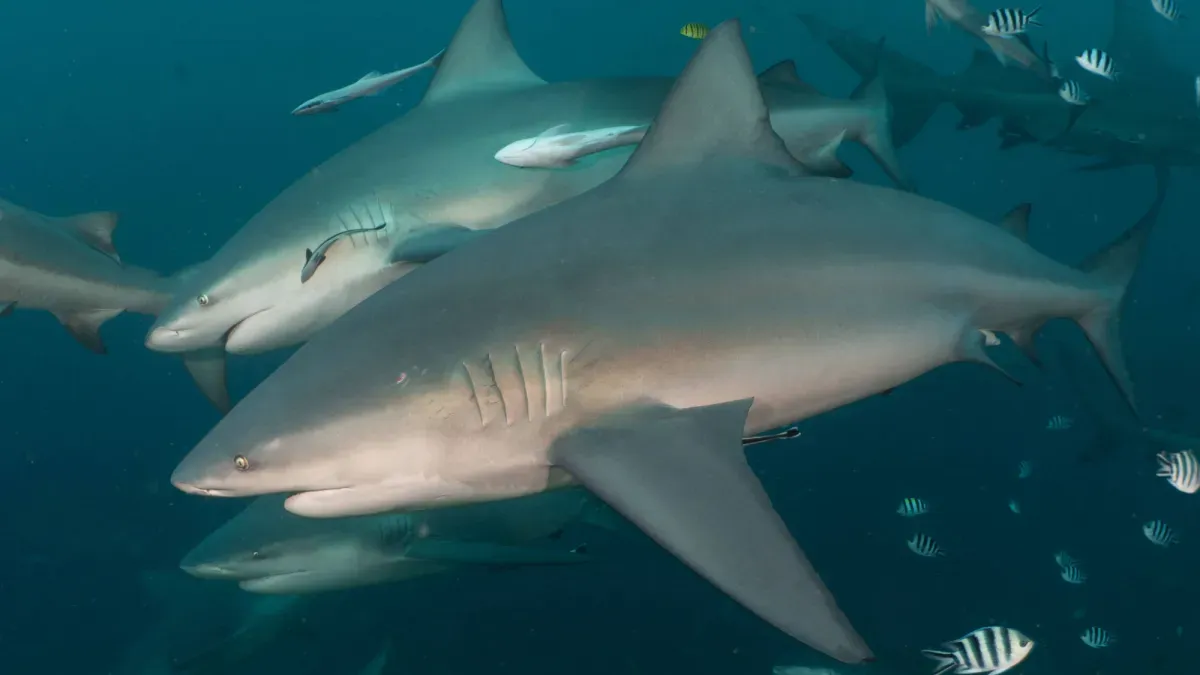
Bull sharks (Carcharhinus leucas) have a tough image, known for over 100 unprovoked attacks on humans, with 27 being fatal. They may even be the shark behind the Jaws story.
However, these 12-foot-long sharks, often seen as solitary, actually form social bonds. A new study in Animal Behaviour shows they choose specific "friends" instead of mixing randomly. They have preferences for who they spend time with.
Natasha D. Marosi, a study co-author and founder of Fiji Shark Lab, explained that sharks are similar to humans in how they form relationships. Humans have casual friends and best friends, and also avoid certain people. Bull sharks do similar things.
We're a new kind of news feed.
Regular news is designed to drain you. We're a non-profit built to restore you. Every story we publish is scored for impact, progress, and hope.
Start Your News DetoxShark Social Circles
For six years, a team from the University of Exeter, University of Lancaster, Fiji Shark Lab, and Beqa Adventure Divers watched this behavior. They studied sharks at the Shark Reef Marine Reserve in Fiji.
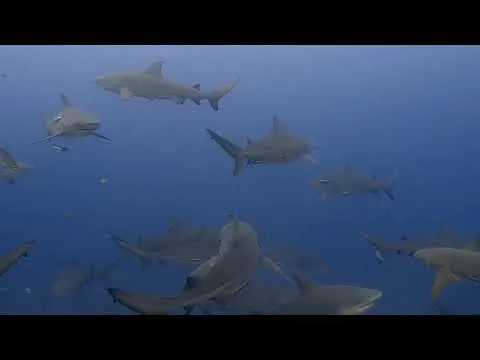
Marosi noted that the reserve is a protected area where many sharks gather year-round. This allowed the team to study individual sharks over time.
The researchers tracked 184 bull sharks across three age groups: sub-adult, adult, and advanced-adult. They looked at two types of relationships. Broad-scale associations were when sharks stayed within one body length of each other. Fine-scale interactions involved one shark leading while another followed, or sharks swimming side-by-side.
The study found that adult sharks often formed social ties. Sharks also tended to interact with others of similar size.
Darren Croft, a study co-author and behavioral ecologist, said that sharks have rich and complex social lives, contrary to popular belief. He added that sharks likely benefit from being social, such as learning new skills, finding food and mates, and avoiding fights.

Female Preference and Age Dynamics
Both male and female sharks preferred socializing with females. However, males generally had more social connections than females.
Marosi suggested that male bull sharks are smaller than females. Being more social might help them avoid aggressive encounters with larger individuals.
Adult sharks were at the center of the shark social network. Advanced adult and sub-adult sharks were less connected.
Marosi explained that older sharks have years of experience with hunting and mating. Socializing might not be as crucial for their survival as it is for sharks in their prime. Sub-adult bull sharks usually stay in near-shore areas, while juveniles live in rivers and estuaries.

Younger sharks generally don't need to avoid predators, including other adult bull sharks. However, the team noted some bolder sub-adults at the Reserve. These sub-adults have social ties with some adult sharks. Marosi believes these older sharks might help younger ones join the social network and learn new things. This suggests older adult sharks could be "gatekeepers" to the social network.
Understanding shark social bonds helps with marine policy and conservation. The Fiji Shark Lab is working with Fiji’s Ministry of Fisheries to use this information for conservation efforts. Just as bull sharks rely on their friends, they also need human help to protect their home.
Deep Dive & References
Bull sharks form social groups and prefer females to males - Animal Behaviour, 2026