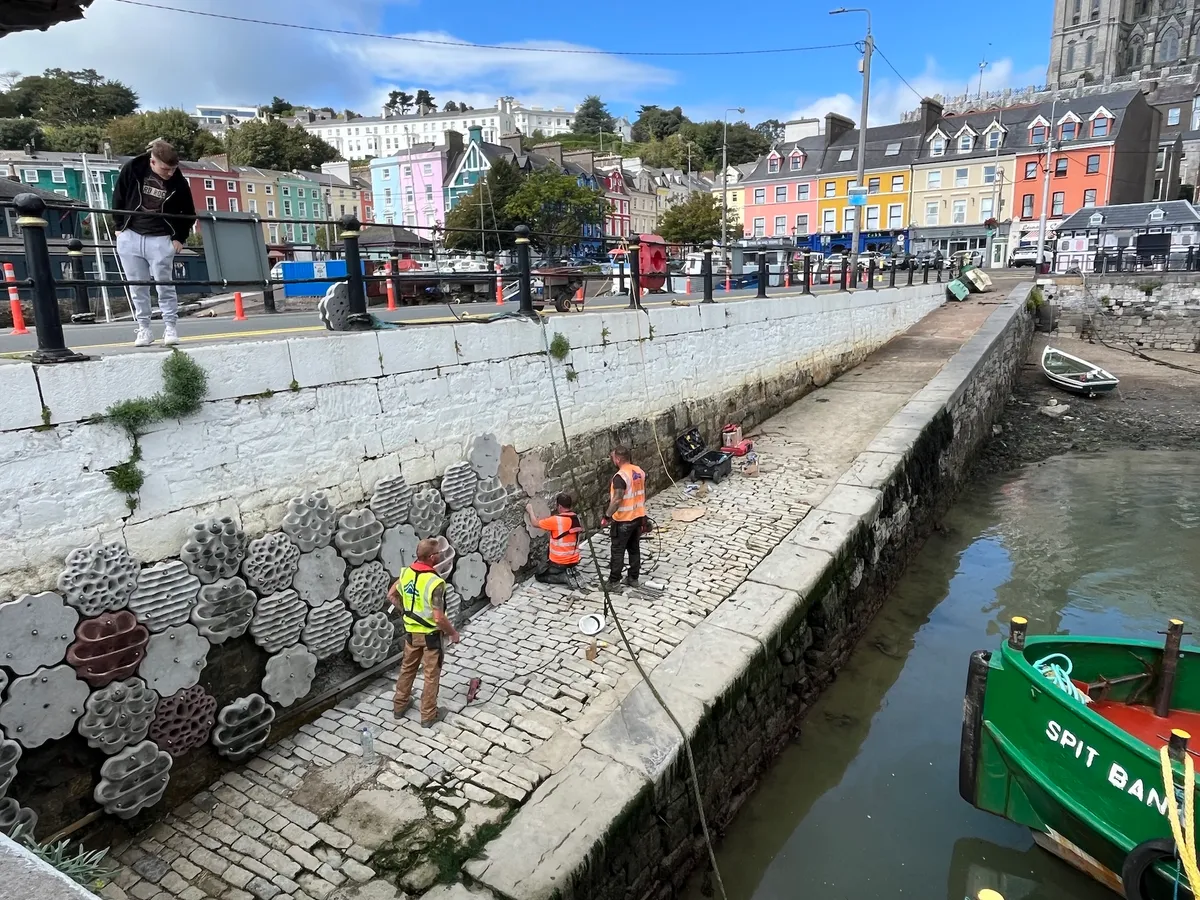
For centuries, seawalls have been the concrete bouncers of the coastline: keeping the ocean out, looking imposing, and generally being terrible hosts to anyone who actually lives in the water. But in Cobh, Ireland, a centuries-old slipway is getting a serious glow-up.
Here, 60 hexagonal concrete panels have been bolted onto a stone wall, turning a functional barrier into what can only be described as a luxury condo development for marine critters. This isn't just a pretty facade; it's a deliberate, science-backed makeover.

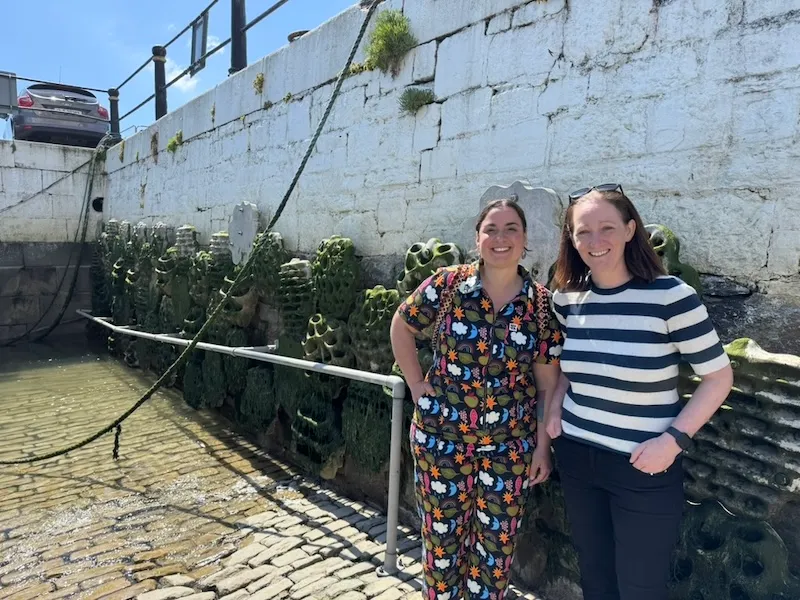
Some panels feature ridges and textures, while others boast an array of holes and crevices designed to hold water or allow it to filter through with the tide. The result? A bustling ecosystem. Green algae coats the surfaces, and marine snails like periwinkles and dog whelks are already sticking around like they've found their forever home.
We're a new kind of news feed.
Regular news is designed to drain you. We're a non-profit built to restore you. Every story we publish is scored for impact, progress, and hope.
Start Your News DetoxThis isn't just an Irish innovation, though it's Ireland's first such project. These panels are part of the "Living Seawalls" project, spearheaded by the Sydney Institute of Marine Science and Reef Design Lab in Australia. Their grand vision? To engineer panels, boulders, and pilings that don't just protect the shore, but actively support marine life. Think of it as making coastal infrastructure pull double duty: keeping the land safe, and providing prime real estate for everything from crabs to kelp.
Louise Firth, a senior lecturer at University College Cork and a lead researcher, proudly showcased the Cobh installation. It's a quiet revolution, transforming sterile concrete into vibrant, life-sustaining habitats. Because apparently, even seawalls can learn to be hospitable.