Scientists have grown chickpeas to seed in simulated lunar soil—something that shouldn't be possible. The trick wasn't better dirt or special equipment. It was borrowing life from Earth itself.
Lunar regolith is basically hostile to farming. It's packed with toxic metals, repels water, and contains zero of the living microbes that make Earth soil actually fertile. When researchers at the University of Sheffield grew chickpea plants in untreated lunar simulant, the results were predictable: stunted growth, yellowing leaves, plants that never made it to flowering.
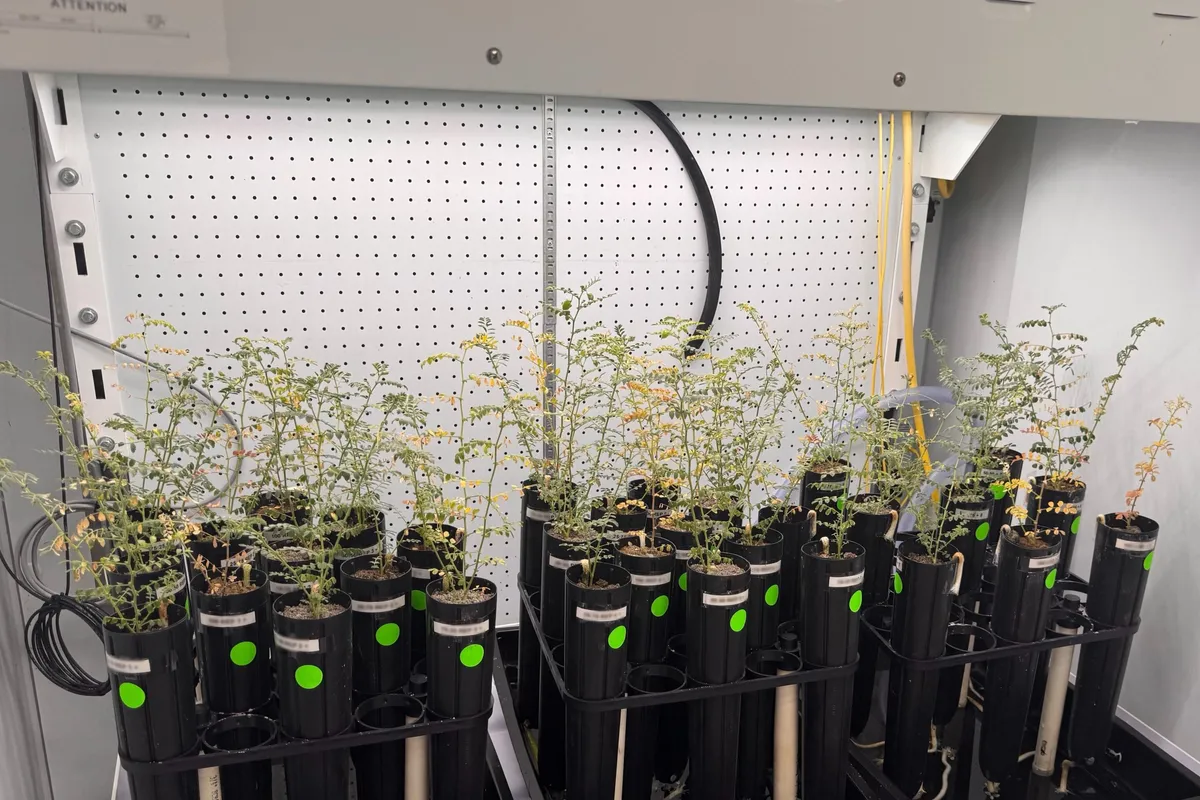
But Jessica Atkin's team tried something different. They added vermicompost—the nutrient-rich castings from red wiggler earthworms—and inoculated the soil with arbuscular mycorrhizal fungi (AMF), the same fungi that help plants on Earth absorb nutrients and tolerate toxic metals. The results, published in Scientific Reports, were striking: the chickpeas flowered and produced viable seeds. The individual seeds weighed as much as those from plants grown in normal potting mix on Earth.
We're a new kind of news feed.
Regular news is designed to drain you. We're a non-profit built to restore you. Every story we publish is scored for impact, progress, and hope.
Start Your News DetoxThis matters because it suggests a biological pathway to farming beyond Earth. Rather than trying to chemically engineer new soils from scratch, we might be able to use life itself—microbes and fungi already proven on Earth—to transform barren landscapes. The plants still showed stress compared to Earth-grown controls, and the treated lunar soil required both the fungi and the worm compost to work. But the fact that reproduction happened at all points toward something genuinely possible.
The Mars Window
A parallel study found something equally intriguing about Mars. Microbes placed in simulated Martian soil at 34% atmospheric humidity—matching actual Mars conditions—grew for the first 30 days. After 60 days the microbial DNA had declined to zero, but those first weeks of growth suggest that life wouldn't immediately die on Mars. It would just need the right conditions to persist.
The researchers, led by Jyothi Raghavendra, see this as a starting point. Water availability appears to be the critical variable. Mars has water ice, and there are hints of temporary liquid water in certain regions. The question now shifts from "can life survive Mars" to "under which specific conditions can it actually thrive."
What's quietly remarkable here is the timeline. These aren't theoretical papers about what might happen in 50 years. These are working experiments from 2026 showing that the biological strategies exist today. We're not waiting for new technology to arrive—we're testing whether Earth's proven agricultural biology can simply be transported.
The next phase will involve refining these conditions: testing different fungi and microbes, adjusting humidity and temperature, seeing whether life can sustain itself rather than just survive briefly. The chickpea seeds that grew in lunar soil won't feed a colony yet. But they're proof that the basic premise works. Growing food beyond Earth isn't a matter of inventing new biology. It's a matter of understanding which Earth biology to bring.