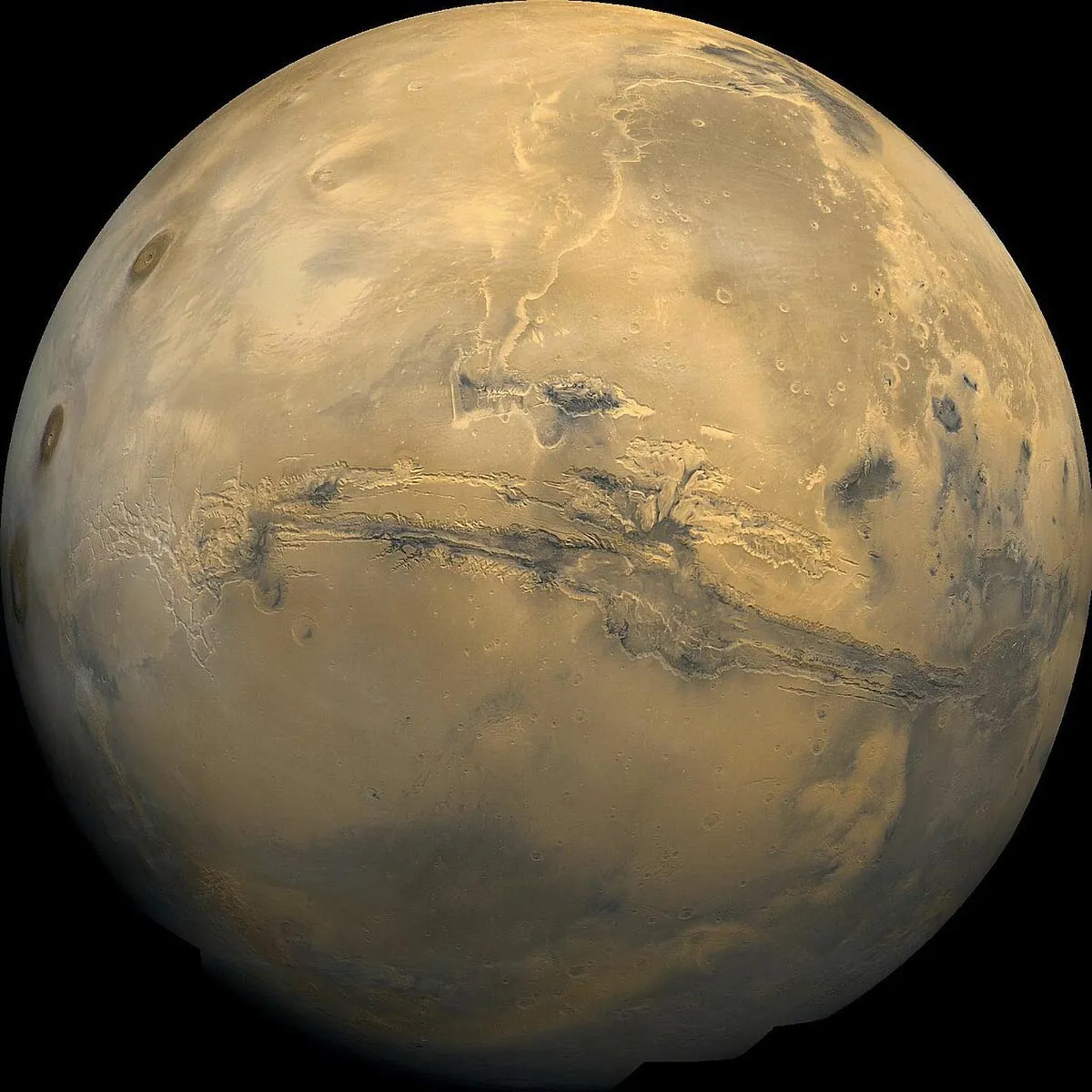
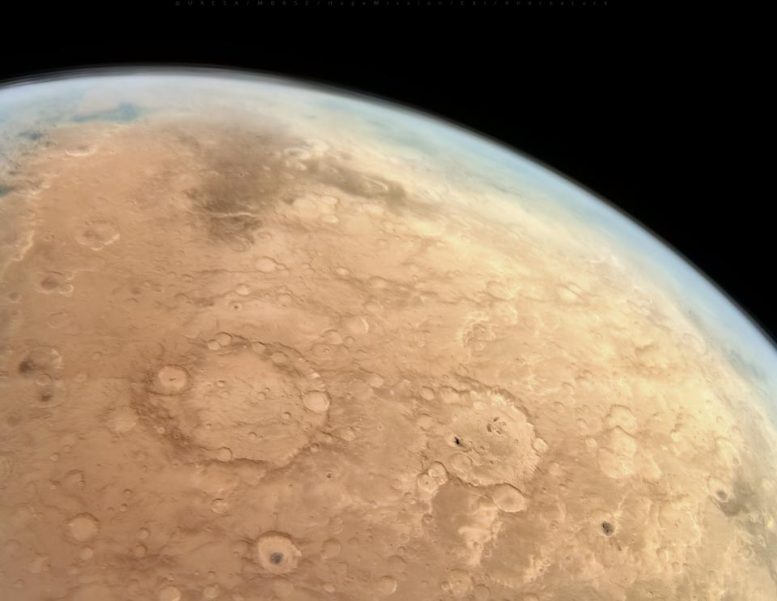
For decades, the idea of turning Mars into a habitable planet lived strictly in the realm of fiction. Now, a group of researchers led by Dr Erika DeBenedictis of Pioneer Labs is arguing that it deserves real scientific study — not as an immediate goal, but as a legitimate long-term research program worth systematic investigation.
This shift matters because the constraints have changed. Three decades ago, terraforming Mars wasn't just difficult; it was effectively impossible. Today, cheaper launch costs from companies like SpaceX, breakthroughs in synthetic biology, and better climate modelling have altered what might actually be achievable. The conversation has moved away from "can the laws of physics allow this?" toward harder questions: "should we do this, and if we do, what does the path actually look like?"
How It Could Work, in Stages
The researchers, who presented their work at the 2025 Green Mars Workshop, outline a phased approach that starts by imagining the end state and works backward. The first stage focuses on warming. By releasing specially designed aerosols or greenhouse gases, Mars's average temperature could rise by roughly 30 degrees Celsius within a few decades. That sounds abstract until you realize what it enables: Mars contains enough water ice to create an ocean nearly four million square kilometers in size. Warmer temperatures would let that ice melt, allowing liquid water to actually exist on the surface for the first time in billions of years.
We're a new kind of news feed.
Regular news is designed to drain you. We're a non-profit built to restore you. Every story we publish is scored for impact, progress, and hope.
Start Your News Detox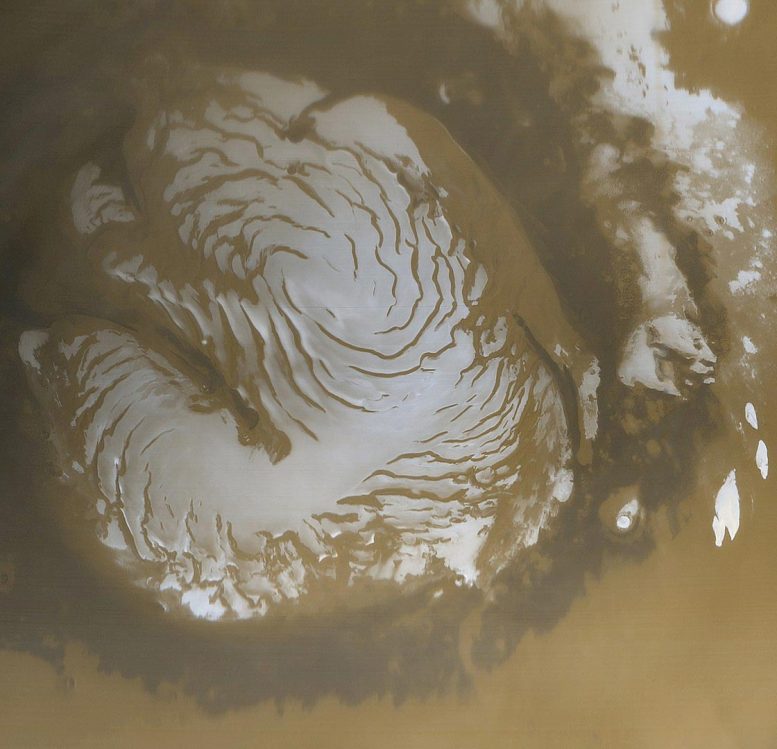
The next stage introduces life, starting microscopic. Synthetic biology would create extremophiles — microorganisms engineered to survive extreme heat, radiation, and low atmospheric pressure. Once released, these resilient microbes could spread across Mars in algae-like growth within a few decades. Through photosynthesis, they'd gradually alter the planet's atmosphere, marking the first real step toward an Earth-like environment.
The final phase stretches across centuries or millennia, building an oxygen-rich atmosphere thick enough for complex life. The researchers envision starting inside enormous domed habitats, 100 meters tall, where photosynthesis or water electrolysis generates breathable air. Beyond the domes, spreading plant life would gradually contribute oxygen to the broader atmosphere — though this natural process alone would take around a thousand years. Eventually, human explorers could step outside without suits.
The Harder Questions
But the research also surfaces critical unknowns. What's actually beneath Mars's ice sheets? How would dust storms behave in a warmer, wetter atmosphere? Do the materials needed for large-scale water electrolysis exist on Mars, or would they require expensive imports from Earth?
Beyond the technical challenges sit the ethical ones. Terraforming would be largely irreversible. Mars has a planetary history — billions of years of geological record — and transforming it would effectively end our chance to study that pristine archive. And if microbial life exists on Mars today, our interventions could destroy it.
The researchers argue that studying terraforming has immediate practical benefits for Earth. Technologies developed for Mars habitation — desiccation-resistant crops, sustainable closed-loop systems — could directly benefit our home planet. Green technologies for space might offer a pathway to maturing them for terrestrial use.
Importantly, the workshop summary doesn't call for launching terraforming missions tomorrow. Instead, it advocates for careful laboratory studies, detailed climate modelling, and perhaps small-scale experiments on future Mars missions to test localized warming strategies. Before we consider transforming an entire world, we need to thoroughly understand what we're working with and what we might be risking.
The conversation has shifted from "could we?" to "should we, and if so, how?" That's genuine, considered progress.
Study: "An Introduction to Mars Terraforming, 2025 Workshop Summary" - arXiv, 2025
Adapted from an article originally published in Universe Today.