For the last century or so, we've told ourselves a tidy story: dogs became the varied creatures we know today because Victorian breeders got serious about it. Chihuahuas, Great Danes, Border Collies — all products of industrial-era obsession with pedigree. A sweeping new study of 643 ancient and modern dog skulls just complicated that narrative in a way that actually makes the human-dog bond feel even deeper.
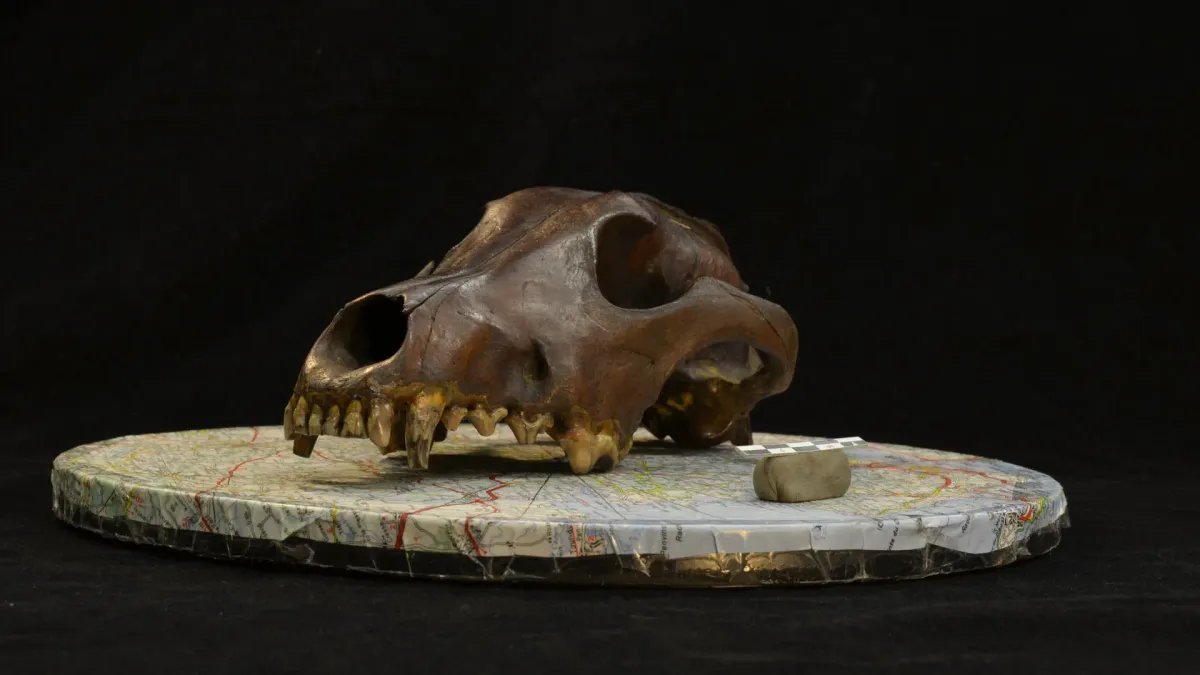
Researchers from the University of Exeter, French CNRS, and over 40 other institutions spent a decade analyzing canid remains spanning 50,000 years. What they found: dogs were already wildly diverse at least 11,000 years ago, long before anyone cared about kennel clubs. The variation wasn't a Victorian invention — it was already ancient history.
When Humans and Dogs Started Reshaping Each Other
The team used 3D imaging and geometric morphometrics to map exactly how dog skulls changed over time. The oldest confirmed domestic dog in their sample came from a Russian site called Veretye, dating back roughly 11,000 years. By the Mesolithic and Neolithic periods, dogs already displayed a striking range of skull shapes and body sizes. Size began shrinking noticeably between 9,700 and 8,700 years ago. Size variance increased from 7,700 years ago onward. Shape variation took off around 8,200 years ago.
We're a new kind of news feed.
Regular news is designed to drain you. We're a non-profit built to restore you. Every story we publish is scored for impact, progress, and hope.
Start Your News DetoxWhat does this timeline tell us? That early humans weren't passively living alongside dogs. They were actively shaping them — whether intentionally or not. A hunting community might have favored leaner, faster dogs. A settlement focused on guarding might have kept the larger, more intimidating ones around. Different roles in different places meant different selective pressures, all happening in parallel across continents and millennia.
"Diversity among dogs isn't just a product of Victorian breeders, but instead a legacy of thousands of years of coevolution with human societies," said Dr. Carly Ameen, one of the study's lead authors. It's a shift in perspective that matters. It means the relationship between humans and dogs didn't start with us deciding to breed them into specific shapes. It started with us living together so closely that we began to reshape each other almost by accident.
The study identified early domestic dogs in the Americas around 8,500 years ago and in Asia around 7,500 years ago — each population already beginning to diverge from its wolf ancestors in distinct ways. After those early appearances, variation exploded. What you see in the fossil record is not the invention of breed diversity, but the acceleration of a process that had already begun.
This research opens a quieter kind of wonder about domestication. We didn't impose ourselves on dogs from the outside. We grew up together, and in doing so, we changed each other's bodies, behaviors, and futures. The next question becomes: what else did we reshape simply by living closely with it.