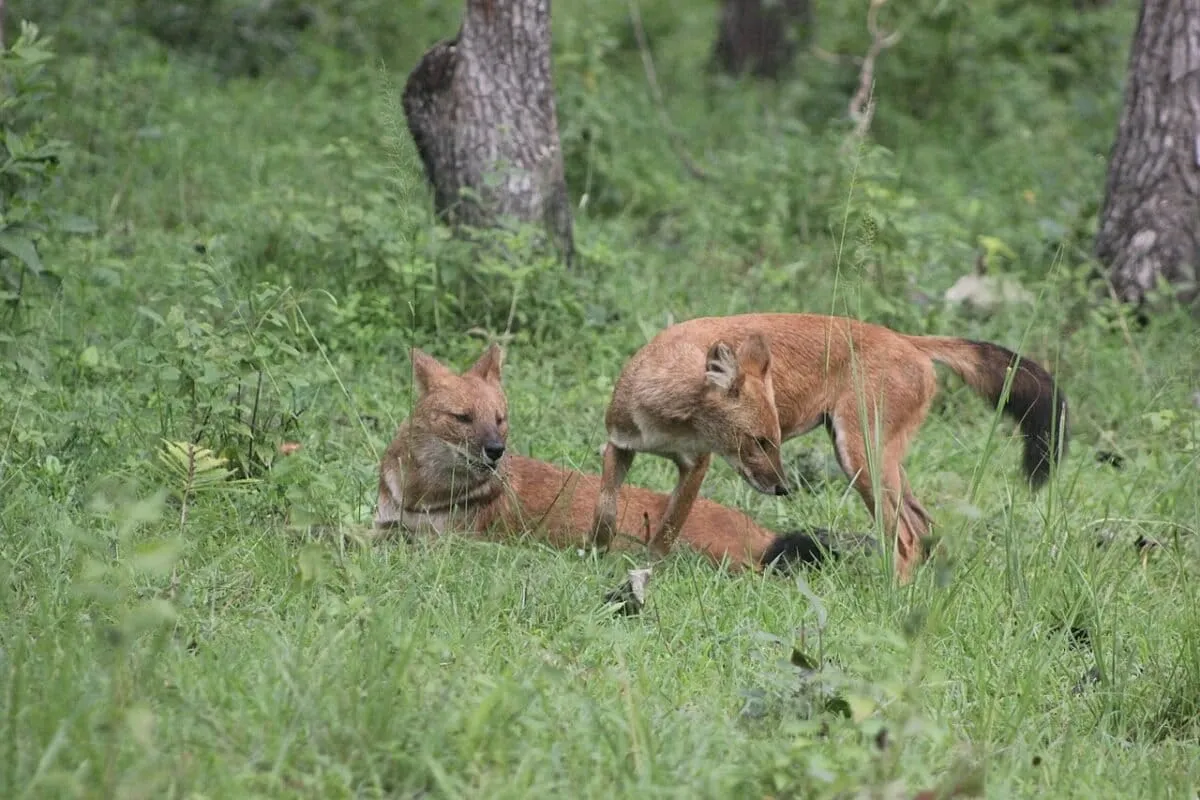
Turns out, even when you're an endangered Asiatic wild dog in central India, and there's a buffet of livestock practically next door, you still prefer a home-cooked meal of wild game. A new study just dropped this rather polite observation, suggesting these fascinating canids are far too discerning to just raid the nearest cow pasture.
This isn't just about good manners. It's a pretty big deal for conservation efforts. The research, spearheaded by the National Centre for Biological Sciences (NCBS) in Bengaluru and the Maharashtra Forest Department, basically confirms that if you want to save these dholes (Cuon alpinus), you'd better keep their preferred wild prey populations thriving. Because apparently, they're not going to settle for substitutes.

The Scat-ter Report
So, how do you figure out a wild dog's dinner preferences? You go through their trash, of course. Specifically, researchers and forest staff collected tiny pinches of dhole scat (that's polite for poop) from the Tadoba-Andhari Tiger Reserve during the monsoon and winter of 2022-2023.
We're a new kind of news feed.
Regular news is designed to drain you. We're a non-profit built to restore you. Every story we publish is scored for impact, progress, and hope.
Start Your News DetoxThen came the magic: DNA metabarcoding. Think of it as a CSI-level investigation for what went into the dhole's digestive system. This technique extracts genetic material from the scat and then cross-references it with a massive database of species DNA. It's like a highly specific, slightly gross ancestry test for dinner.
This method is a significant upgrade from the old ways, which often involved peering at prey hairs under a microscope. As molecular ecologist and co-author Abhinav Tyagi pointed out, those traditional methods were prone to human error and subjective interpretation. One person's deer hair might be another's… well, something else. Plus, as wildlife biologist Arjun Srivathsa added, you could easily miss or misidentify species entirely.

The DNA approach, however, cuts through all that ambiguity, offering a much clearer picture of who's eating what. Which, for the dholes, means a clear preference for the wild. Good to know they have standards, even if it makes our job of protecting them a little more specific.