A skeleton discovered on England's south coast nearly a decade ago has finally given up its secrets. The Beachy Head Woman, who died sometime between 129 and 311 AD during the Roman occupation of Britain, was likely born just miles from where she was buried — not in the Mediterranean or Africa, as earlier research suggested.
When scientists first extracted DNA from her bones in 2017, the results were tantalizing but frustratingly unclear. The genetic data hinted at Mediterranean origins, but the samples were too small and degraded to be certain. The findings never made it to print. The skeleton sat in storage, waiting for technology to catch up.
That moment came in 2024. Using advanced ancient DNA techniques developed over the past seven years, researchers returned to the bones and retrieved far more high-quality genetic material. This time, the picture became sharp.
We're a new kind of news feed.
Regular news is designed to drain you. We're a non-profit built to restore you. Every story we publish is scored for impact, progress, and hope.
Start Your News DetoxWhat the DNA revealed
Dr. Selina Brace, an ancient DNA specialist at the Natural History Museum in London, led the new analysis. When her team compared the Beachy Head Woman's genetic profile to known populations from Roman Britain and beyond, the results were unambiguous: her ancestry matched the local rural population of southern England far more closely than any distant region. No recent African ancestry. No Mediterranean roots. She was, almost certainly, British.
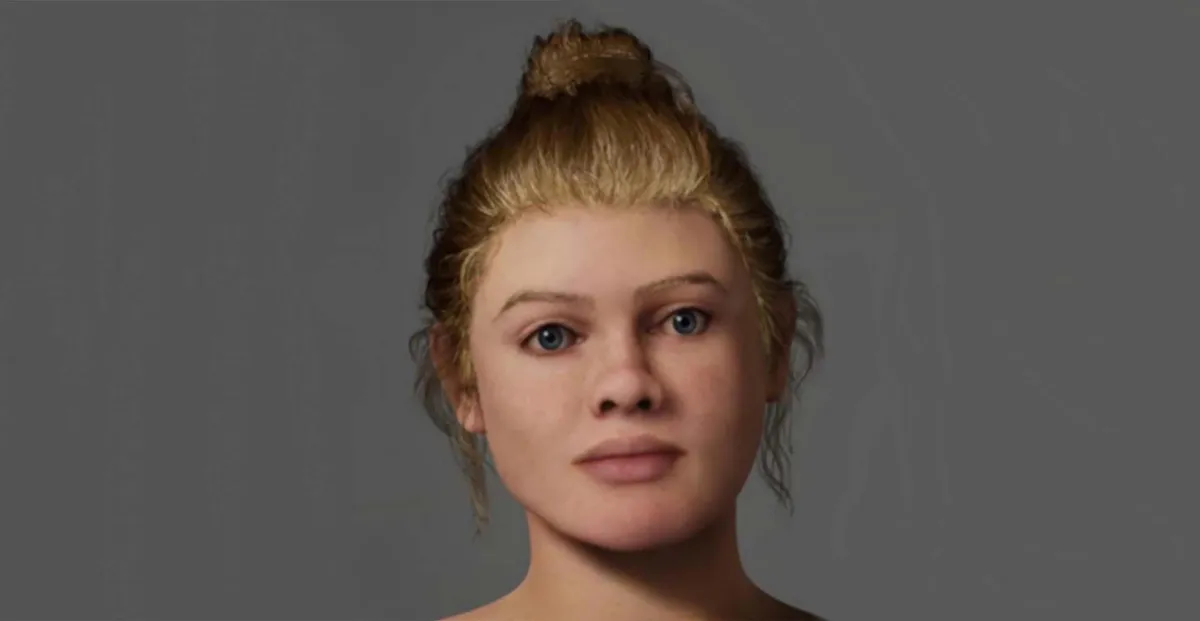
With this clearer genetic picture came other details. The forensic analysis predicted she had light skin, blue eyes, and fair hair — a striking contrast to earlier reconstructions based on incomplete data. Her digital facial reconstruction was updated accordingly, her image now reflecting what the DNA actually showed.
But genetics tell only part of the story. The skeleton itself held other clues. She was between 18 and 25 when she died, standing just over five feet tall. A healed wound on her leg suggested a serious injury she'd survived years before her death. Chemical analysis of her bones revealed high levels of seafood in her diet — she likely lived near the coast and ate from it regularly.
A snapshot of Roman Britain
The Beachy Head area was thoroughly Roman during her lifetime. A villa stood at Eastbourne. A fort occupied Pevensey. Rural settlements dotted the landscape at Bullock Down and Birling. The region was woven into the empire's network of roads, forts, and cities that connected Britain to the wider Mediterranean world.
Yet the Beachy Head Woman's DNA tells a quieter story. She wasn't a merchant from Rome or a settler from North Africa. She was local — part of the rural population that formed the backbone of Roman Britain, living her short life on the same chalk cliffs where her skeleton would eventually be found.
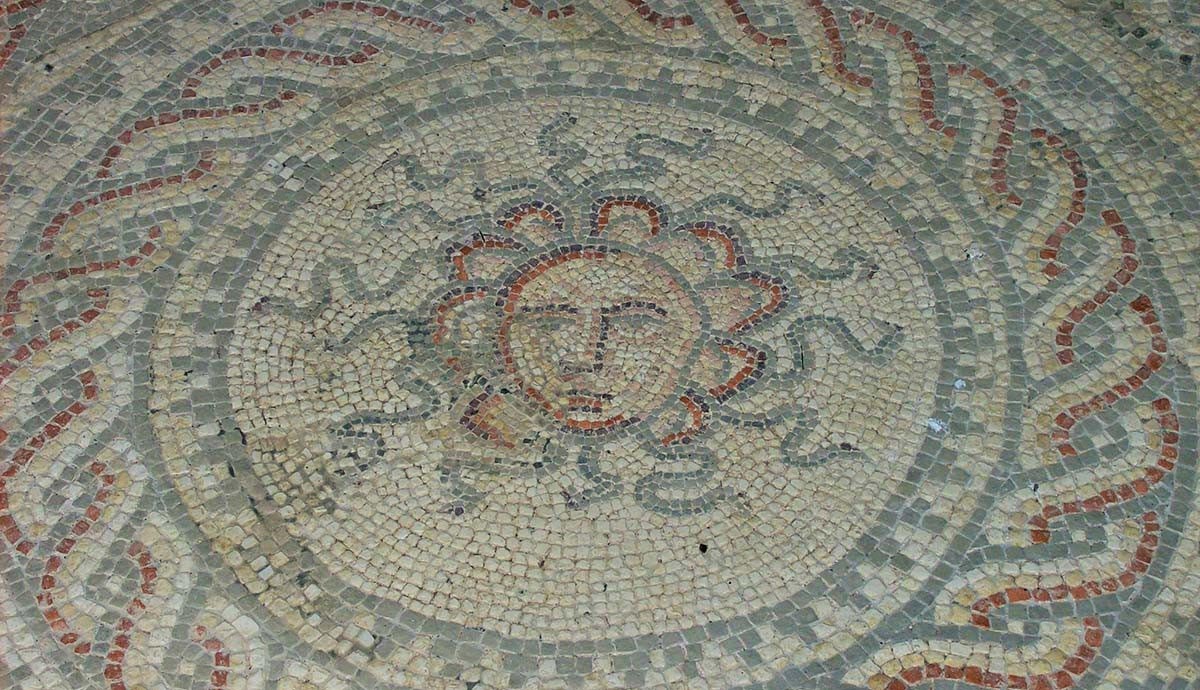
Roman sites like Bignor Roman Villa dotted England's south coast, yet the Beachy Head Woman was likely a local inhabitant rather than a settler from abroad.
The case of the Beachy Head Woman illustrates something fundamental about how science works. Initial findings based on limited data aren't failures — they're stepping stones. Dr. William Marsh, one of the researchers involved, noted that the team's earlier uncertainty wasn't a weakness but an honest reflection of what the evidence could support. "We show she carries genetic ancestry that is most similar to other individuals from the local population of Roman-era Britain," he explains. "By using state-of-the-art DNA techniques and newly published genomes, we were able to determine her ancestry with much greater precision than before."
As technology continues to advance, more skeletons will yield their secrets. The past isn't fixed — it's constantly being clarified, one DNA sample at a time.