Two skeletons found cradled together in southern Italy 12,000 years ago have just revealed their genetic secret — and in doing so, pushed back our understanding of rare inherited diseases by millennia.
Romito 1 and Romito 2, as archaeologists call them, were buried in an embrace. For decades, researchers puzzled over why both individuals were significantly shorter than their contemporaries. Romito 2, an adolescent, stood around 110 centimeters tall. The bones suggested a rare growth disorder, but without DNA, it remained speculation.
Now, an international team led by researchers at the University of Vienna and Liège University Hospital Centre has done something remarkable: they've diagnosed a genetic condition in people who died before written history existed.
We're a new kind of news feed.
Regular news is designed to drain you. We're a non-profit built to restore you. Every story we publish is scored for impact, progress, and hope.
Start Your News Detox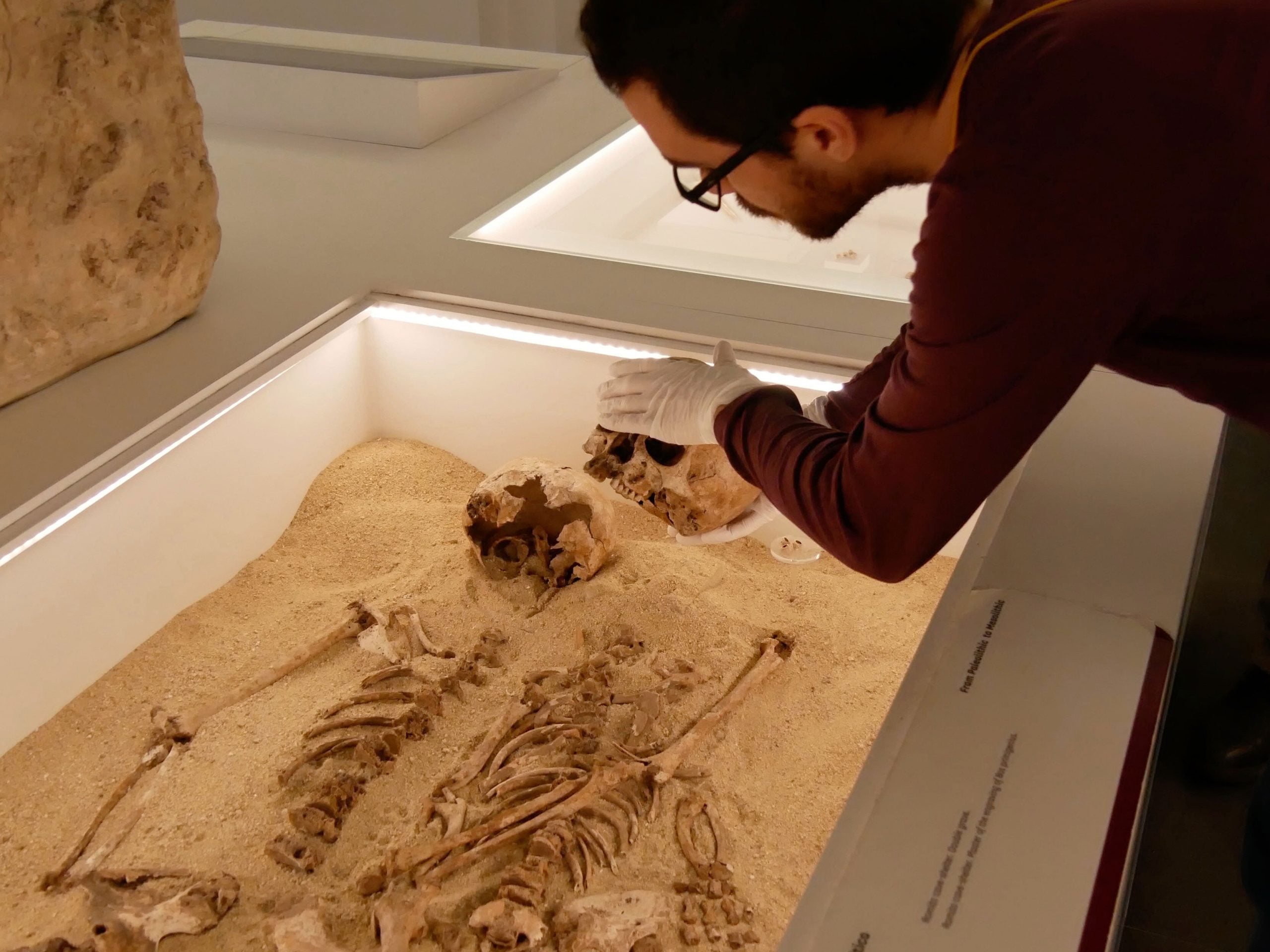
Extracting answers from ancient bone
The breakthrough came from DNA extracted from the petrous bone, a dense part of the inner ear that preserves genetic material far better than other skeletal tissue. When the team sequenced and analyzed this DNA, two things became clear: both individuals were female, and they were mother and daughter.
Romito 2 carried two copies of a mutated NPR2 gene — the gene responsible for bone growth. This confirmed a diagnosis of acromesomelic dysplasia, Maroteaux type, a condition that causes severe short stature and shortened limbs. Romito 1, the mother, carried one mutated copy, which explained her milder short stature.
This marks the earliest genetic diagnosis ever made in human remains. But the medical insight is only part of the story.
What survival tells us
The fact that Romito 2 survived into adolescence or adulthood despite severe physical limitations says something profound about her community. In an ice age environment where resources were scarce and mobility mattered for survival, this young woman lived long enough to grow up. That doesn't happen without deliberate care — help with food, assistance with movement, integration into group life.
"Her survival would have required sustained support from her group," says Alfredo Coppa of Sapienza University of Rome, one of the study's co-leaders. It's a quiet reminder that social support for people with disabilities isn't a modern invention. It's woven into human nature.
The research, published in the New England Journal of Medicine, opens a new frontier in understanding disease history. Ron Pinhasi, who co-led the study, notes that "by applying ancient DNA analysis, we can now identify specific mutations in prehistoric individuals. This helps establish how far back rare genetic conditions existed and may also uncover previously unknown variants."
Rare genetic diseases are often treated as modern medical puzzles. This burial shows they're as old as humanity itself — and so, it seems, is our impulse to care for those who need it.