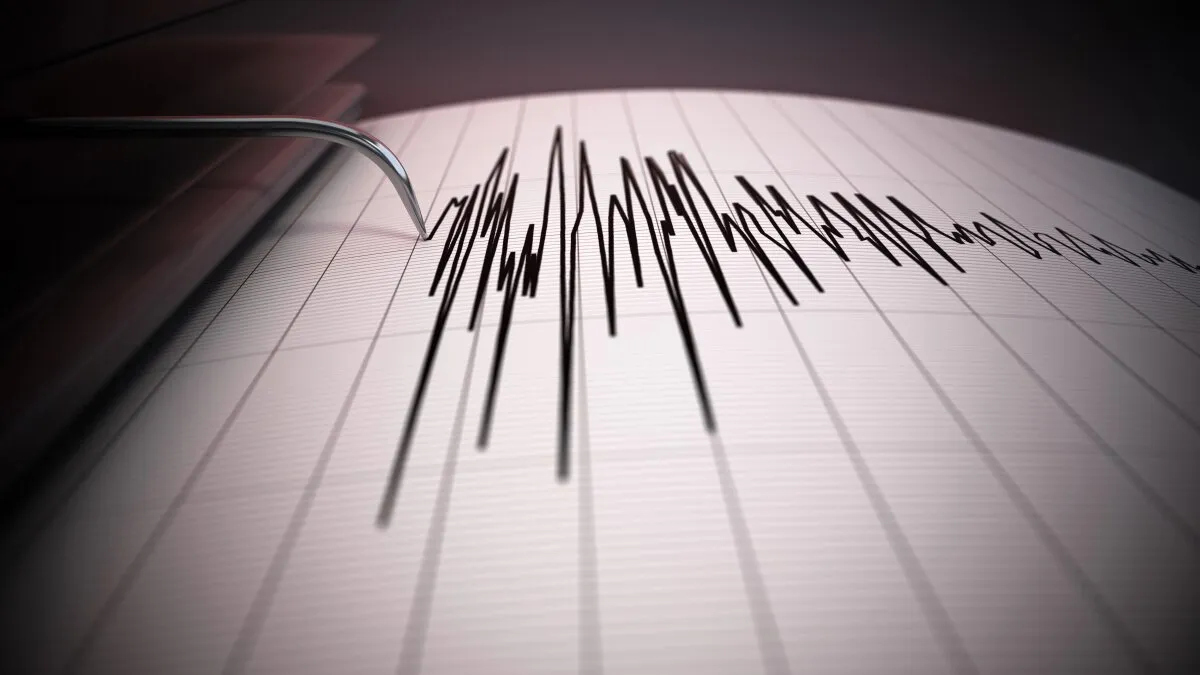
Just when you thought earthquakes couldn't get any more dramatic, scientists have uncovered a brand-new feature that sounds straight out of a disaster movie: the "whiplash" effect. Apparently, when a massive fault line decides it's done moving, it doesn't just stop politely. Oh no.
Researchers at Kyoto University, poking around in strong earthquake data, noticed something peculiar. The ground, after shifting violently in one direction, would briefly jerk back the other way. It's like slamming on the brakes in a car, only the car is the entire Earth's crust, and instead of just lurching, it snaps back with a vengeance. Let that satisfyingly terrifying image sink in.
Lead author Jesse Kearse explained that this discovery sprang from trying to make sense of seismic recordings right near fault lines. They wanted to understand not just how quakes start, but how they stop. And it turns out, the stopping is where things get really interesting.
We're a new kind of news feed.
Regular news is designed to drain you. We're a non-profit built to restore you. Every story we publish is scored for impact, progress, and hope.
Start Your News DetoxWhen the Earth Hits the Brakes
These newly observed "negative waves" — essentially the ground's recoil — appear right at the tail end of a large earthquake. And they're not just a little tremor; they're strong enough to significantly impact how severe a quake feels, especially with those massive strike-slip earthquakes.
If you're wondering what a strike-slip fault is, think of California's infamous San Andreas. It's a nearly vertical crack where two enormous blocks of earth mostly slide past each other horizontally. The US Geological Survey points out that about 90% of the world's quakes happen along boundaries like these, often in the "Ring of Fire." These new whiplash movements could be a big piece of the puzzle explaining why these particular quakes are so destructive.
The research team combined real-world ground motion data with satellite observations and sophisticated models. They essentially simulated what happens when a colossal strike-slip event suddenly grinds to a halt. The verdict? That sharp, backward jerk is directly linked to the plates slamming on the brakes. And just like in a car, the faster the stop, the stronger the whiplash.
This isn't just academic curiosity. If you live in an earthquake-prone zone, you know the stakes. Taiwan, for instance, just got hit with a 7.4-magnitude quake in 2024. This new understanding of how the ground behaves at the very end of a seismic event could be critical for engineers designing buildings in places like Taiwan, New Zealand, Chile, and Japan. They're already battling the initial shake; now they know they've got to account for the sudden, violent rebound, too.
The team's next step is to analyze large earthquakes globally, looking for these whiplash signatures. Because apparently, understanding how an earthquake says goodbye might be just as important as knowing how it says hello.