Archaeologists in Egypt recently made a discovery that's both ancient and utterly absurd: a piece of Homer's Iliad — the epic poem about the Trojan War — found tucked inside a 1,600-year-old mummy. Because apparently, even in Roman Egypt, a good story was worth taking to the grave.
This isn't just any old papyrus fragment; it's the first time a major literary text has been found used for embalming. Usually, these ancient wrap-around scrolls contained magical incantations or ritualistic mumbo jumbo. But no, this particular mummy apparently preferred a classic. Which, if you think about it, is both impressive and slightly terrifying.
The fragment was unearthed at Oxyrhynchus, a site now known as Al Bahnasa, where it had been chilling in a Roman-era tomb. So, somewhere between the Trojan Horse and a well-preserved corpse, a piece of Western literature got repurposed as... well, a body pillow.
We're a new kind of news feed.
Regular news is designed to drain you. We're a non-profit built to restore you. Every story we publish is scored for impact, progress, and hope.
Start Your News DetoxThe Ultimate Bookworm
The Iliad, written nearly 3,000 years ago, is practically the OG bestseller. Finding any scrap of it is a big deal, but finding it as part of a funerary process? That's a whole new chapter.
The Oxyrhynchus Archaeological Mission, led by Maite Mascort and Esther Pons from the University of Barcelona, discovered the 1,600-year-old papyrus. Fast forward to November and December 2025, when a team under Núria Castellano found a Roman-era mummy in Tomb 65, Sector 22. And there it was: a papyrus placed right on its abdomen during the embalming ritual. Forget your lucky penny; this guy had Homer.
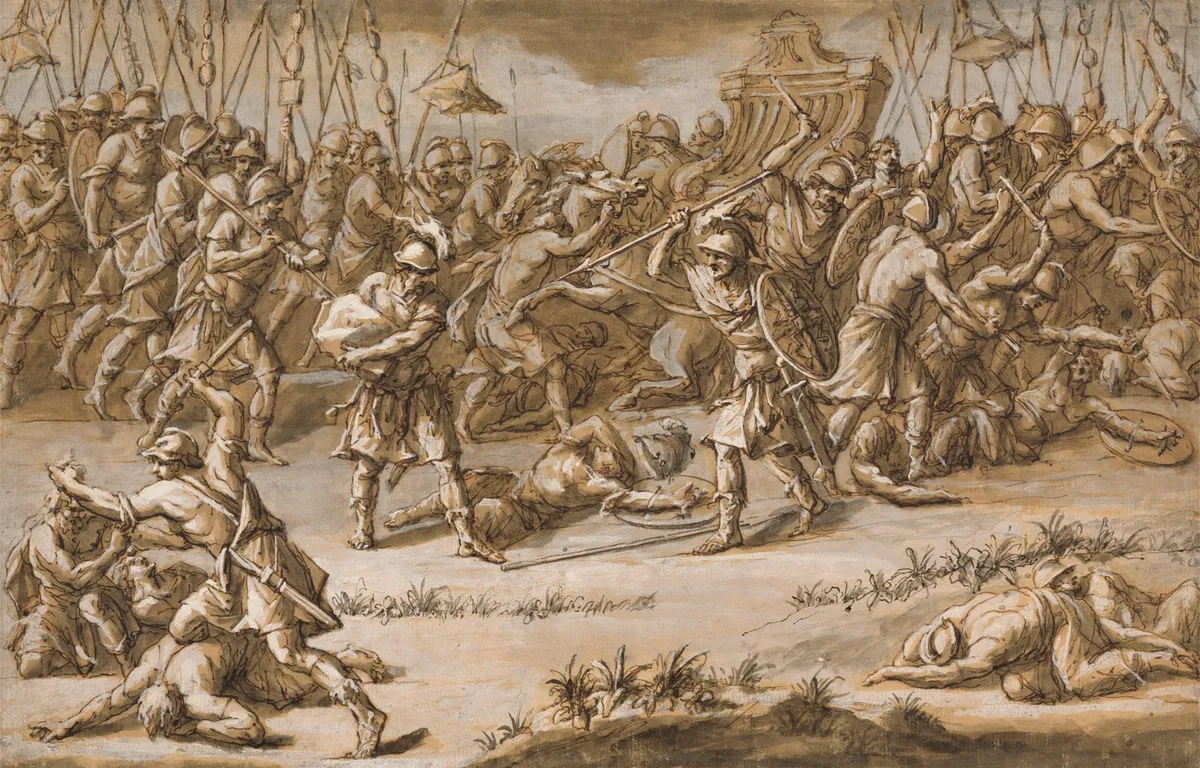
Further analysis in early 2026 by a team including conservator Margalida Munar and papyrologist Leah Mascia, confirmed it. Professor Ignasi-Xavier Adiego, director of the Oxyrhynchus project, identified the text as coming from the "Catalogue of Ships" in Book II of the Iliad. That's the famous bit where Homer lists all the Greek forces before the big war. Think of it as the ancient world's most epic roll call.
Professor Adiego noted that while finding Greek papyri in mummies isn't new, the content always was. This time, it's a literary masterpiece. It's almost like the ancient Egyptians were saying, "Yeah, magic is cool, but have you read this guy?"
The discovery was made in the Al Bahnasa necropolis, about 118 miles south of Cairo, a historically significant city in Greco-Roman Egypt. The site revealed a burial complex with three limestone chambers, Roman-era mummies, and some rather fancy — though sadly looted — wooden sarcophagi. The University of Barcelona's mission has been digging there since 1992, making it one of the longest-running Spanish excavations in Egypt. And sometimes, after decades of digging, you just find a mummy who was really into ancient poetry.