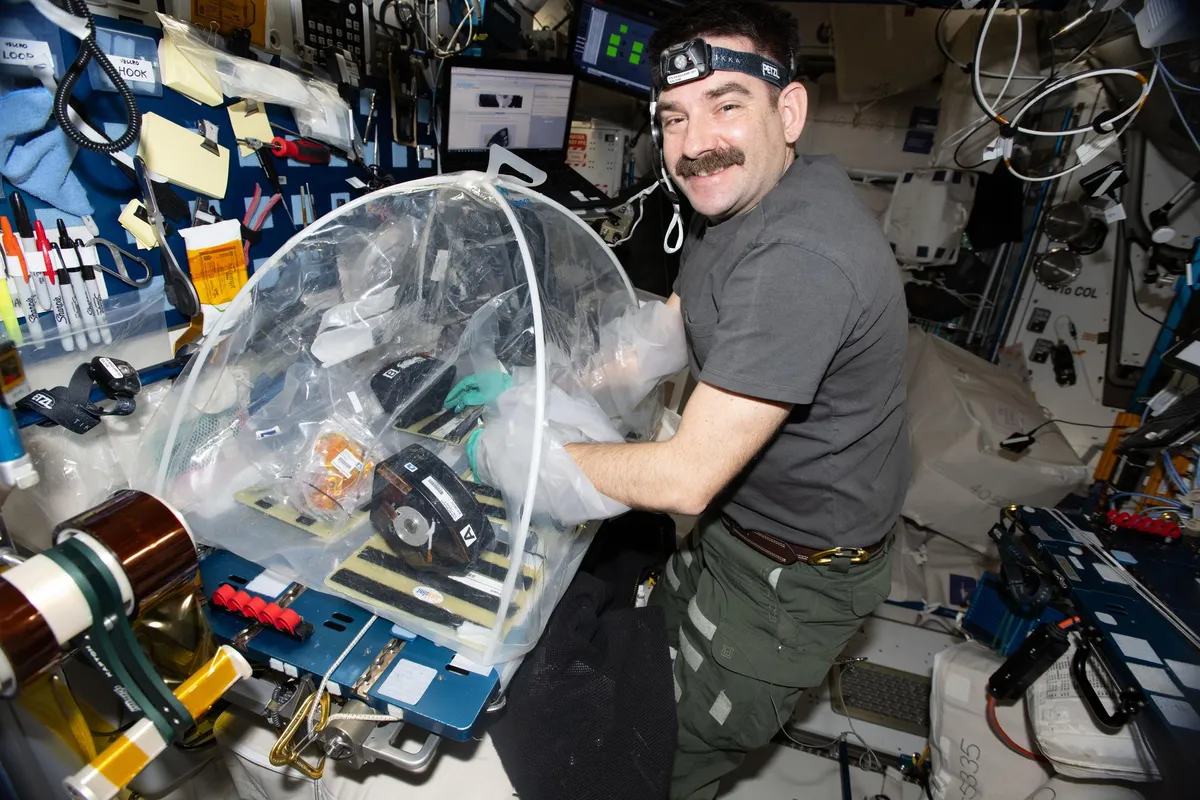
Expedition 74 astronauts on the International Space Station are studying how bacteria that cause pneumonia can harm the heart long-term. They are using the space environment to see how heart tissues, grown from stem cells, react to bacterial infections. This research aims to find new ways to manage heart health and infectious diseases.
Why Space Helps Study Infections
In space, bacteria often become more aggressive and harder to treat with drugs. Scientists are using these traits to make the bacteria's effects on heart cells more obvious. This helps them find important cell responses that would be hard to see on Earth. Pinpointing what makes infections worse in space could lead to new treatments.
Dr. Palaniappan Sethu, a professor at the University of Alabama at Birmingham, explained that by making the infection stronger, it's easier to tell the difference between infected and healthy cells. This helps identify small factors that make bacteria more harmful.
We're a new kind of news feed.
Regular news is designed to drain you. We're a non-profit built to restore you. Every story we publish is scored for impact, progress, and hope.
Start Your News DetoxThe Streptococcus pneumoniae bacteria causes community-acquired pneumonia (CAP), which leads to millions of deaths each year. More than 25% of adults hospitalized for CAP develop heart disease. Even after recovering from severe pneumonia, patients still face a higher risk of heart problems.
Benefits for Space Travel and Earth
This research is also crucial for future space missions. For over 25 years, the space station has been used to study how humans and microbes react to space. The knowledge gained will be vital for deep space travel.
Dr. Carlos J. Orihuela, a microbiology professor at the University of Alabama at Birmingham, noted that answering these questions is key for keeping astronauts healthy on long missions and for living beyond Earth. He expects their experiments to show new ways that space factors affect how diseases progress.
The space station allows researchers worldwide to tackle complex health issues on Earth and in space. Its unique environment helps with advanced studies of disease, testing new drugs, and developing diagnostic tools.