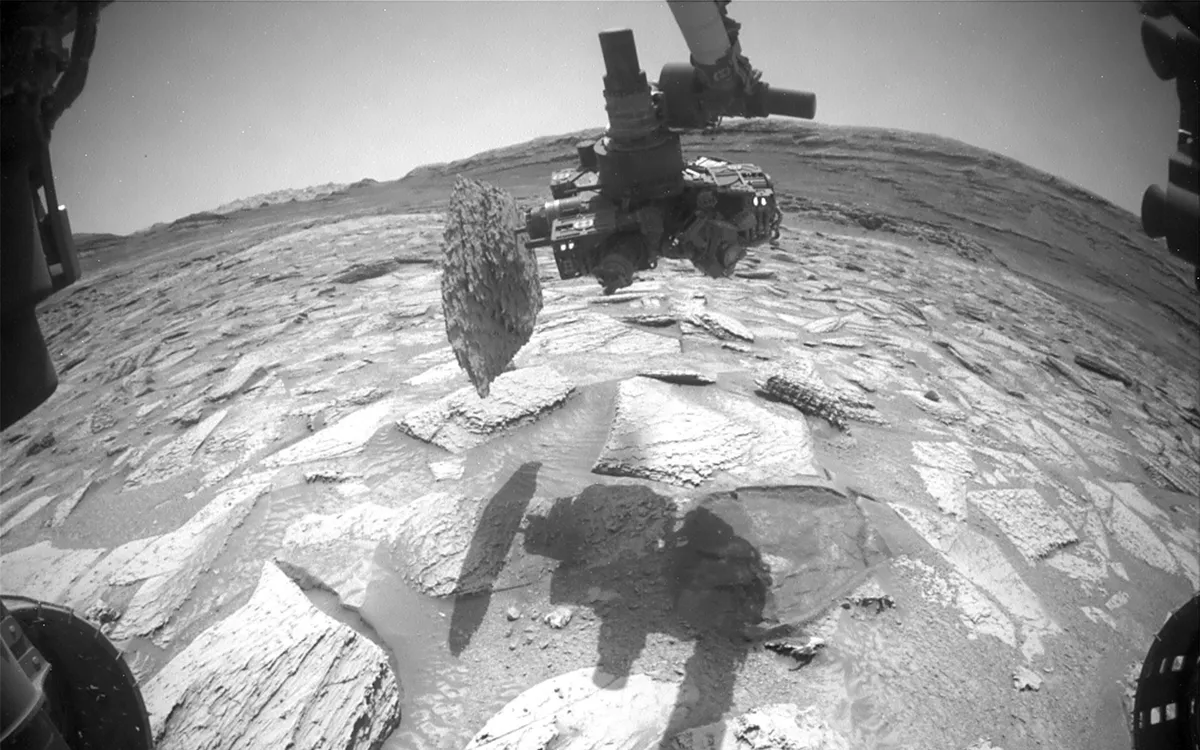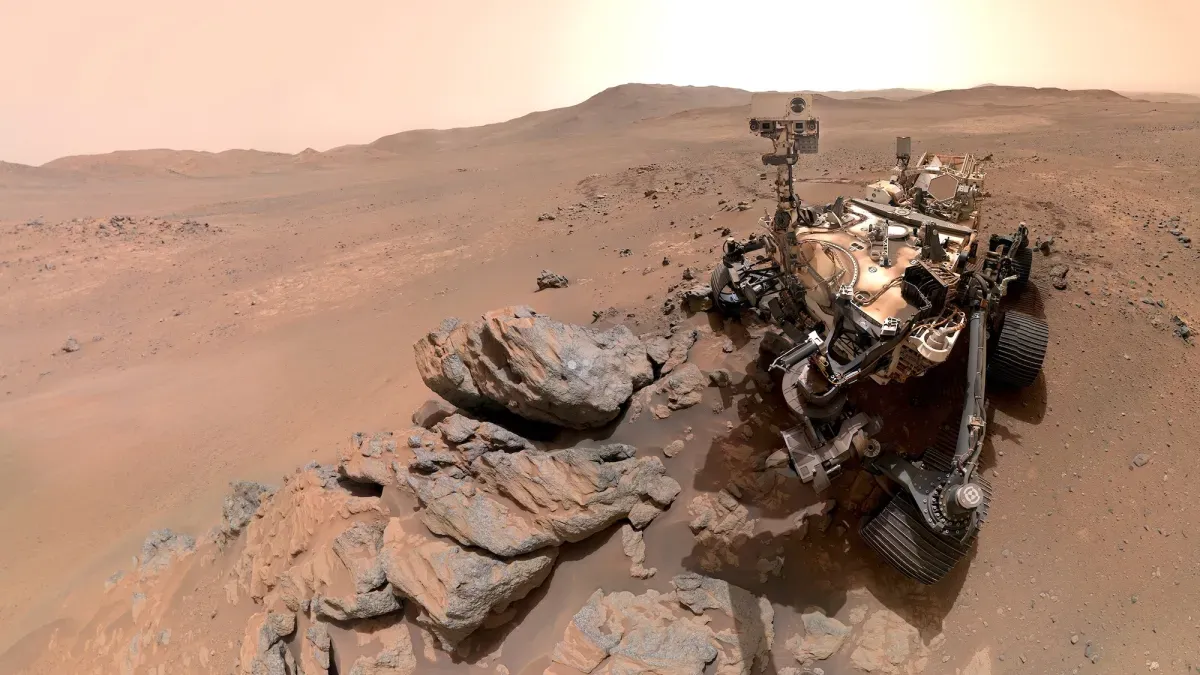
Five years in, and NASA's Perseverance rover is still out there, living its best life on Mars. Its latest move? A fresh selfie, the sixth since touching down in February 2021. This isn't just any selfie, though. It's a postcard from Lac de Charmes, way out on the Northern Rim, looking rather dapper next to some truly ancient, skyscraper-sized boulders.
The Martian Wild West, Complete with Geologic Drama
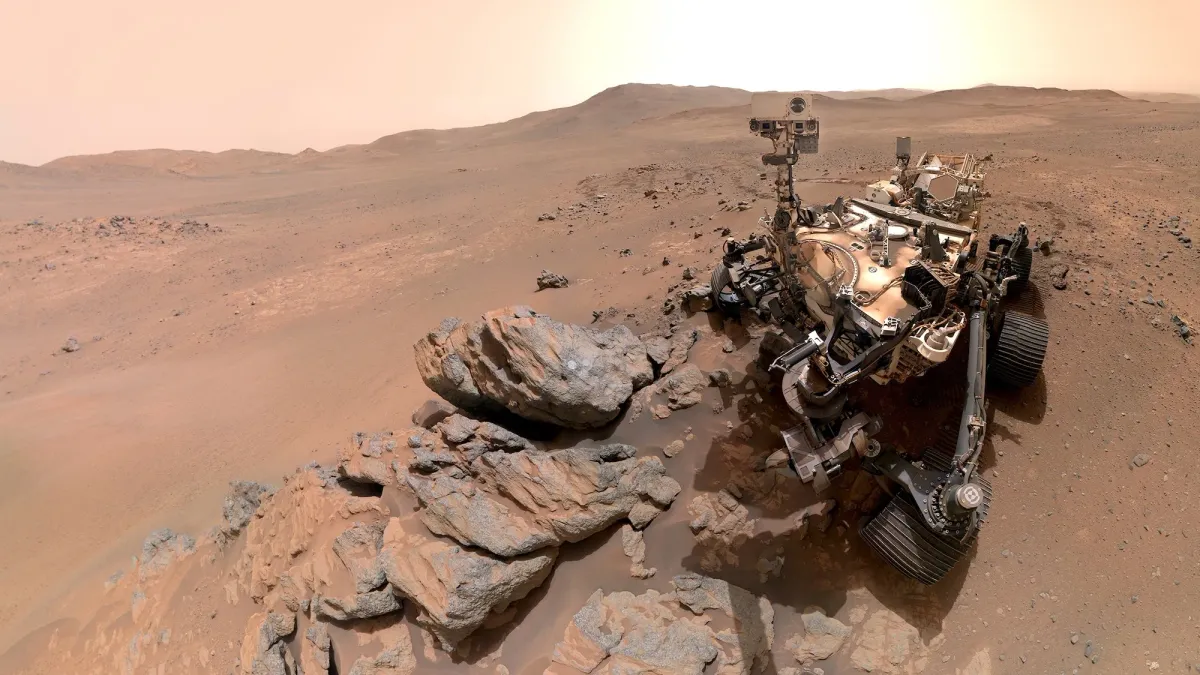
This epic self-portrait is actually a mosaic of 61 individual photos, stitched together from shots taken back in March. It shows Perseverance further west than it's ever been, in what project scientist Katie Stack Morgan affectionately calls the Martian "Wild West." Because apparently that's where we are now: robots taking selfies in space's equivalent of an old frontier town.
Before striking a pose, the rover got down to business, drilling into a rock named Arethusa. Scientists on Earth, no doubt glued to their screens, discovered Arethusa is packed with igneous minerals — meaning it's older than the Jezero Crater itself. These rocks are basically ancient history, formed millions of years ago from molten material deep underground. Just casually unearthing planetary prehistory, no big deal.
We're a new kind of news feed.
Regular news is designed to drain you. We're a non-profit built to restore you. Every story we publish is scored for impact, progress, and hope.
Start Your News DetoxSpeaking of the selfie itself, it was captured by the WATSON camera, perched on the rover's robotic arm. It took about an hour and 62 meticulously planned movements to get that perfect, clear shot. Dedication, thy name is Perseverance.
Beyond its personal branding efforts, Perseverance also used its Mastcam-Z camera to capture a panorama of the Arbot area. This 46-image masterpiece isn't just for show; it's a critical tool for NASA to map out the rover's next adventure. Because even a robot needs a good travel agent.

And those aforementioned skyscraper-sized boulders? Scientists call them "megabreccia." These colossal rock chunks were likely flung across the landscape during a meteorite impact a staggering 3.9 billion years ago. Which, if you think about it, is both impressive and slightly terrifying.
Studying these ancient giants is a huge step, according to Stack Morgan. If these rocks came from deep within Mars's crust, they could spill secrets about the planet's infancy — including whether it once had a magma ocean and what conditions made it a potentially habitable world. All this from a robot that just took a selfie. Your move, Earth.