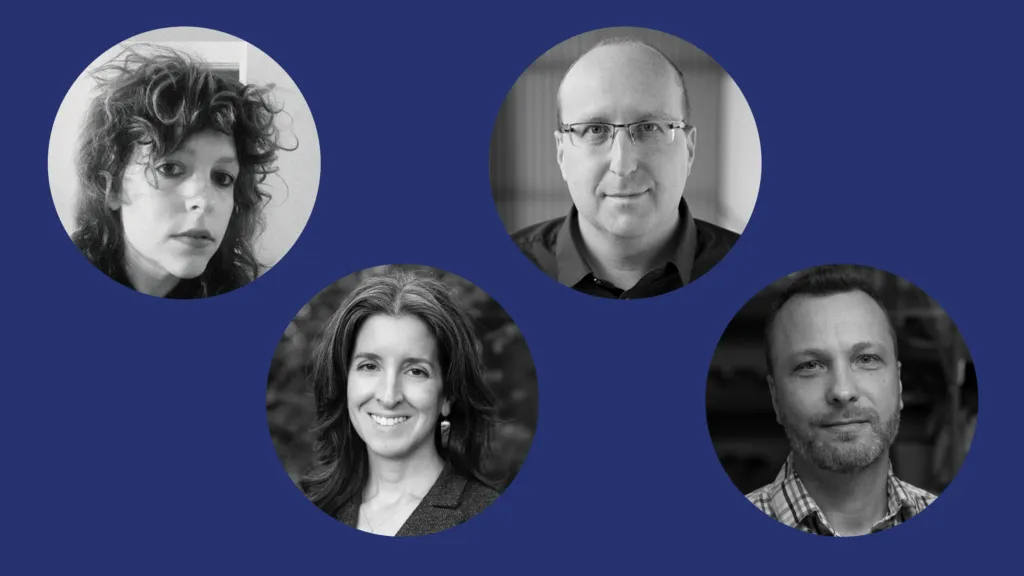
Imagine you're a professor, knee-deep in the glorious, messy work of understanding the universe, from the history of measles to the inner workings of a bat's brain. Now imagine someone hands you a significant chunk of change and says, "Keep going. We believe in you." That's essentially what just happened to four UC Berkeley academics.
Elena Conis, Hannah Zeavin, Rasmus Nielsen, and Michael Yartsev have been awarded the illustrious Guggenheim Fellowships. This isn't just a pat on the back; it's a serious stipend designed to let them dive even deeper into their independent research. Think of it as a research sabbatical, but with more prestige and fewer committee meetings. They were plucked from nearly 5,000 applicants, which, if you think about it, is both impressive and slightly terrifying.
Edward Hirsch, president of the Guggenheim Foundation, noted that these new fellows are basically the academic Avengers — top thinkers and creators across art, science, and scholarship. They're the ones making the rest of us feel slightly underachieved while simultaneously making the world a more interesting place.
We're a new kind of news feed.
Regular news is designed to drain you. We're a non-profit built to restore you. Every story we publish is scored for impact, progress, and hope.
Start Your News DetoxMeet Your New Favorite Intellectuals
Elena Conis, a history professor, is currently tackling a book on the history of measles and the public health debates surrounding it. Which, given measles' recent (and unwelcome) comeback tour in the U.S., feels less like history and more like a very timely warning.
Rasmus Nielsen, a professor of integrative biology and statistics, spends his days making sense of genomic data. He's basically the Sherlock Holmes of DNA, using computational methods to uncover secrets about evolution, population dynamics, and medical genetics. Because apparently, even our genes have a story to tell.
Hannah Zeavin, an associate professor of history, is digging into the fascinating (and occasionally unsettling) intersection of behavioral science, technology, and media. Her previous work includes teletherapy and how media warps our views on motherhood. Her new project, All Freud’s Children, sounds like the ultimate family drama, exploring psychoanalysis through the literal children of its founders. You can practically hear the therapy bills piling up.
And then there's Michael Yartsev, a professor of neuroscience and bioengineering. His lab has pioneered ways to record brain activity in freely flying bats. Yes, you read that right. He’s essentially getting a real-time peek into how a bat’s brain handles flying, socializing, and communicating in the wild. His fellowship will support his ongoing quest to understand how brains generate adaptive behavior in actual, messy, real-world situations. Because even bats have to deal with reality.
So, next time you're wondering what the smartest people in the room are up to, rest assured: they're probably solving problems you didn't even know existed, and doing it with a little help from Mr. Guggenheim.