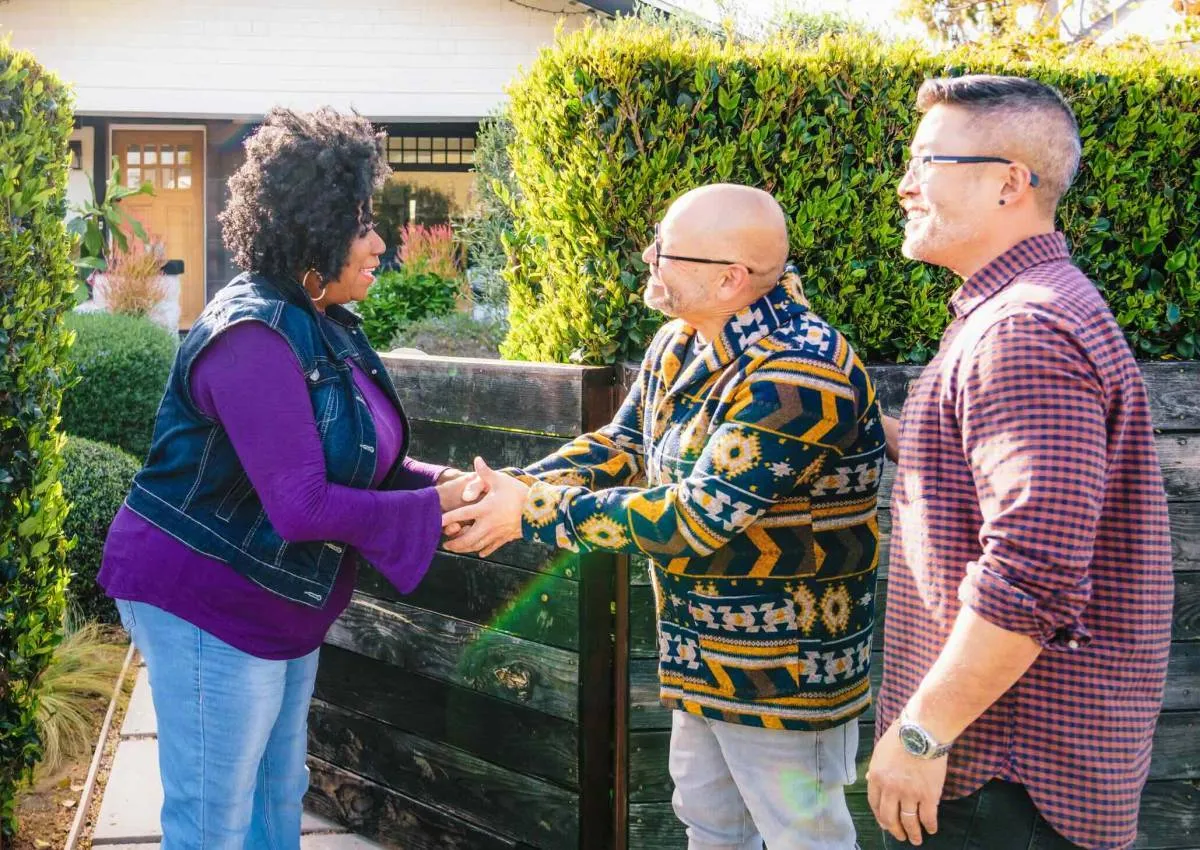
Moving is a fresh start, they say. A blank slate! A new adventure! What they don't often mention is that it also feels a bit like being dropped onto an alien planet where no one knows you, and if you, say, trip over a rogue garden gnome and vanish, it might be weeks before anyone notices. Just ask Liz Cahill, who moved to the Bay Area and immediately thought, "Wow, if I am dead in a ditch, like nobody will figure it out for a long time."
Turns out, Liz isn't alone in feeling utterly alone. Darilys Matos Acevedo, who grew up in Puerto Rico where strangers actually smile at each other, moved to Boston and instead "got glares." Because apparently, that's where we are now.
The Hidden Cost of Your New Address
Moving isn't just about packing boxes; it's about tearing up your invisible social safety net. That quiet hum of daily connections — the barista who knows your order, the neighbor who waves, the friend who'd water your plants without a second thought. All gone. And for 13 million American adults who move each year, that disruption is very, very real.
We're a new kind of news feed.
Regular news is designed to drain you. We're a non-profit built to restore you. Every story we publish is scored for impact, progress, and hope.
Start Your News Detox
A study by the US Chamber of Connection found that 40% of movers struggle with social connection, facing 35% more barriers than their settled counterparts. Imagine being so isolated that after 15 years in a building, you can't find one person to water your plants for vacation. Someone's actual, mortified experience.
Building a new network is a time sink: 200 hours for a close friend, 90 for a regular friend, and a mere five for a casual acquaintance. When you move, you hit reset on all of it. Which is why moving ranks up there with divorce and job loss on the stress scale. It's not just the logistics; it's the quiet erosion of identity, the "Who am I here?" moment.
But here's the twist: that first year after a move is also the best time to make new connections. It's called the "habit discontinuity effect," where old routines are broken, making you more open to new ones. Newcomers are actually more likely to join groups and reach out. So why doesn't it happen more often? Because we're all playing a game of "invite chicken."

Research by Nicholas Epley shows we constantly underestimate how much strangers want to connect and overestimate how awkward it'll be. Both sides hold back, assuming the other isn't interested. Both sides are usually wrong. Which, if you think about it, is both impressive and slightly terrifying.
The Welcome Committee Gets Weird (in a Good Way)
What if welcoming new people wasn't just a nice thought, but a community-wide mission? The US Chamber of Connection recruited 250+ volunteers across 25 states for their "Welcome Committee," training them in the subtle art of connection. Many joined because they'd been Liz. Or Darilys. They'd felt the void and wanted to fill it for others.
These volunteers got creative. Lindsay turned her garage door into a community message board. Kaitlin started a traveling tin of homemade baked goods, where each recipient had to bake something and pass it on. Sarah hosted a gathering for everyone else named Sara(h) in her town. Courtney organized a dog-meet-up in her backyard. Nithya left flowers and handwritten notes for her five nearest neighbors, inviting them for coffee.

People were basically tapping into their inner Mrs. Fisher, the neighbor who brought Vanessa Elias's family a pie when she was six. Decades later, Elias still remembers that pie. Because sometimes, a pie is more than just a pie.
Four Ways to Be That Pie-Delivering Legend
After all the experiments, four main themes emerged for making newcomers feel less like they're in a ditch and more like they belong:
1. Take the First Step
Stop waiting. Seriously. Everyone's sitting at home, assuming others are busy, when everyone else is also sitting at home, assuming you're busy. It's a lose-lose. Someone just has to go first. That neighbor who was "too nervous" for Hazel's coffee? He came. The guy "dragged along" to Elizabeth's gathering? Last to leave. People often overestimate the awkwardness and underestimate the joy. Be the person who corrects that judgment.
2. Work Together
Everything's easier with a wing-person. Erin, who hosted a neighborhood gathering, immediately wished she'd had a co-planner. Research backs this up: you're more likely to start and keep being kind if you're not doing it alone. The Welcome Committee volunteers themselves said the group motivated them. So grab a buddy.
3. Build a Rhythm
Repetition is the secret sauce. Hansen has hosted a monthly porch gathering for two years. Now, his neighbors are spontaneously planning bike rides and organizing support for a sick child. Why? Because seeing the same faces repeatedly builds comfort, trust, and those crucial "weak ties" that make a neighborhood feel like, well, a neighborhood. The first gathering gets them in the door; showing up again builds the community.
4. Look for Spontaneous Opportunities
The best moments often just happen. A neighbor left Kaitlin cookies with a "happy spring" note. Annie saw a moving van, walked over, and introduced herself as a Welcome Committee member. The mover wished he could live there. These unexpected gestures bypass all the usual social calculations and just signal warmth. Being noticed is key to feeling like you belong. And if you have a clear role, like Annie's "Welcome Committee member" — even better. It removes all ambiguity.
Turns out, helping others isn't just good for them; it's good for you. That "helper's high" is real. Liz Cahill, who once felt like no one would find her in a ditch, is now that person who takes a chance on others. Because every friendship starts with talking to a stranger. Someone just has to go first. And that someone could be you.