A century ago, physicists studying quantum mechanics weren't thinking about medical devices or the internet. They were asking a simpler question: how does the universe actually work.
Then something unexpected happened. That "useless" curiosity-driven research became the foundation for almost everything that followed. The laser — born from abstract theory about light and matter — is now essential to precision surgery, telecommunications, and dozens of industries that didn't exist when the research began.
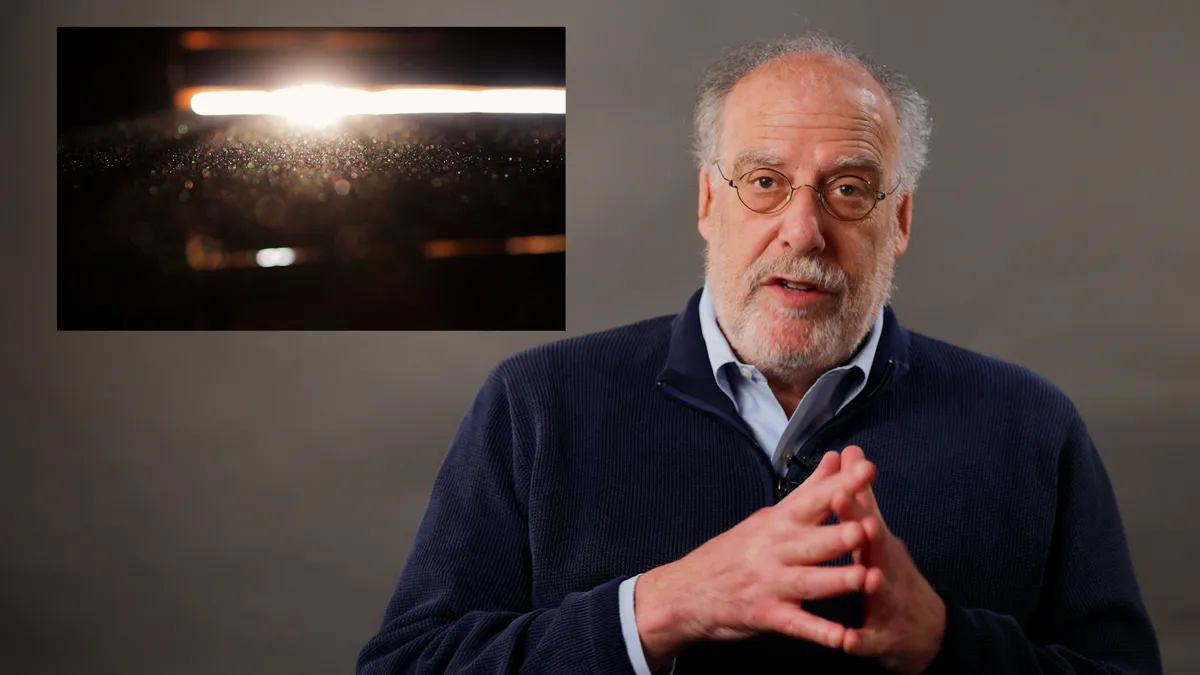
"Basic science drives the really big discoveries," says Steve Kahn, dean of mathematical and physical sciences at UC Berkeley. "Those paradigm changes are what really drive innovation."
We're a new kind of news feed.
Regular news is designed to drain you. We're a non-profit built to restore you. Every story we publish is scored for impact, progress, and hope.
Start Your News DetoxThe laser is the clearest example of this pattern. Physicists weren't trying to invent one. They were simply exploring quantum mechanics, following the logic wherever it led. The applications came later — a whole tree of them, branching out in directions no one could have predicted.
This is how breakthroughs actually work. Someone asks a fundamental question. Years of work follow. Then, suddenly, the answer reshapes an entire industry.
But there's a problem. Federal funding for basic science is tightening. Researchers who pursue knowledge for its own sake — not for immediate commercial return — are facing a harder climate. The pressure to justify every research dollar in terms of near-term applications is growing.
Yet history keeps proving the same point: the research that looks most useless today often becomes indispensable tomorrow. The question isn't whether basic science pays off. It's whether we're willing to fund the years of exploration before we know what the payoff will be.
Berkeley has long been built on this principle — a place where asking big questions isn't just encouraged, it's part of the institution's identity. The campus has produced entire new fields of study, not because researchers were chasing commercial applications, but because they were chasing understanding.
Kahn frames it simply: "It's part of what it means to be human." The impulse to understand how things work, to follow curiosity even when the destination is unclear. That impulse has given us lasers, and countless technologies we haven't invented yet.