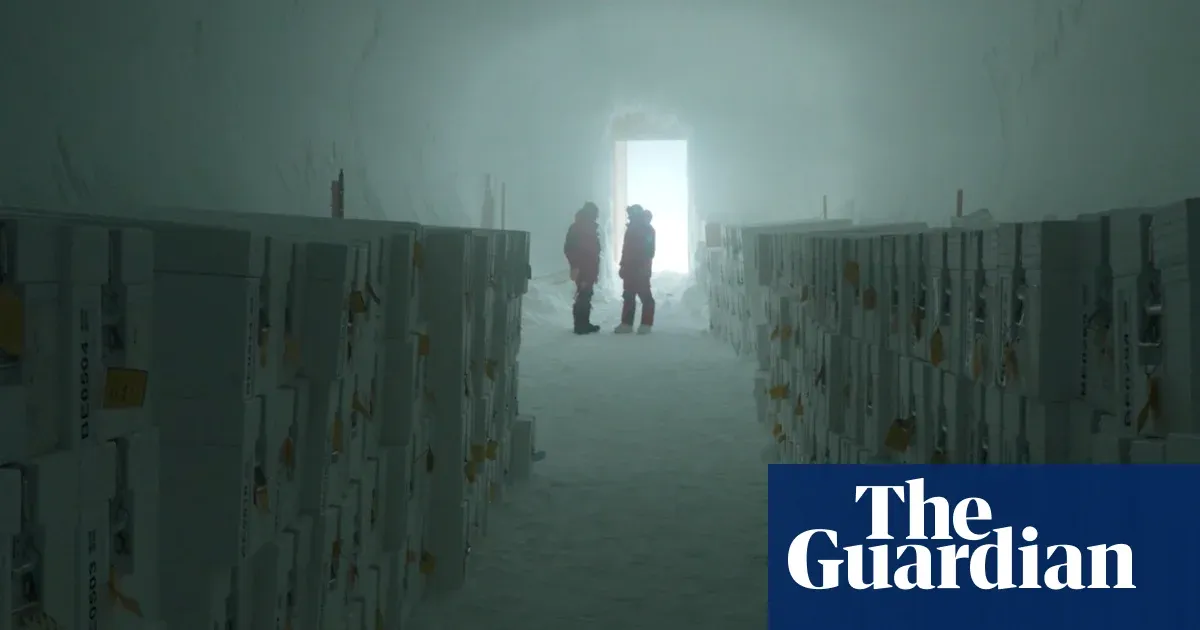
Last month, the Ice Memory Foundation opened the first sanctuary for mountain ice cores on Earth — and it's in Antarctica, where temperatures never rise above -12°C even on the warmest January days.
The sanctuary is literally carved into ice. Cores arrive from disappearing glaciers around the world, transported by ship and stored in this ultra-cold vault. The first samples came from two Alpine glaciers in steep decline. After a 50-day sea journey, they reached Concordia station, a French-Italian research base on the Antarctic plateau, where the average temperature hovers at -52°C.
These cores are thin — about 10 centimeters in diameter, often more than a meter long — but they're archives. Trapped inside are tiny bubbles of atmosphere from centuries past, pollen grains that map how plant life shifted across generations, even chemical traces of historical events like the lead pollution surge during the Roman empire. A single core holds thousands of years of climate and environmental data locked in frozen layers.
We're a new kind of news feed.
Regular news is designed to drain you. We're a non-profit built to restore you. Every story we publish is scored for impact, progress, and hope.
Start Your News DetoxRacing to save what's vanishing
The problem is straightforward: glaciers are melting faster than scientists can study them. As the climate crisis accelerates, the mountains that hold these irreplaceable records are shrinking. The cores themselves contain the only direct physical evidence of what Earth's atmosphere looked like before industrial measurement began. Once a glacier is gone, that history is gone.
The Ice Memory Foundation's mission is to extract cores from endangered glaciers worldwide and store them in this Antarctic sanctuary before it's too late. The location matters. Antarctica's stable, perpetually frozen environment means these samples can survive intact for centuries — a living archive of our planet's past even after the glaciers themselves have vanished into memory.
It's a race against time, but it's a race with a plan. Scientists are gathering these cores now, preserving the evidence of what we've lost and what we need to understand about how climate actually changes.