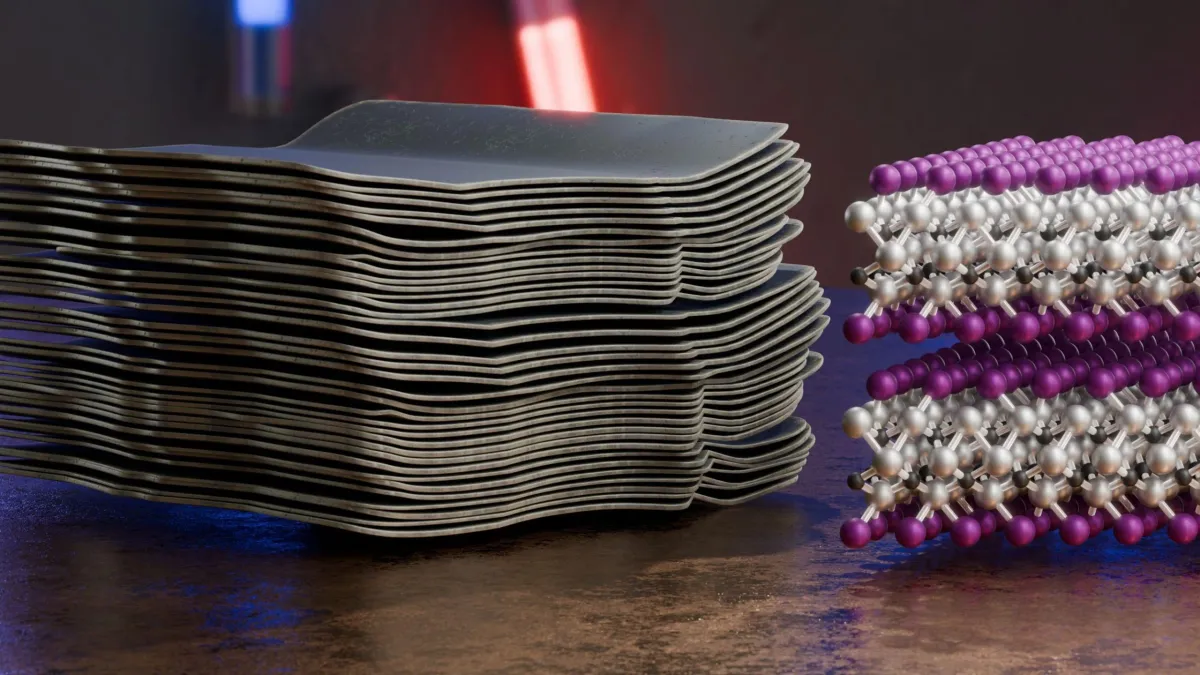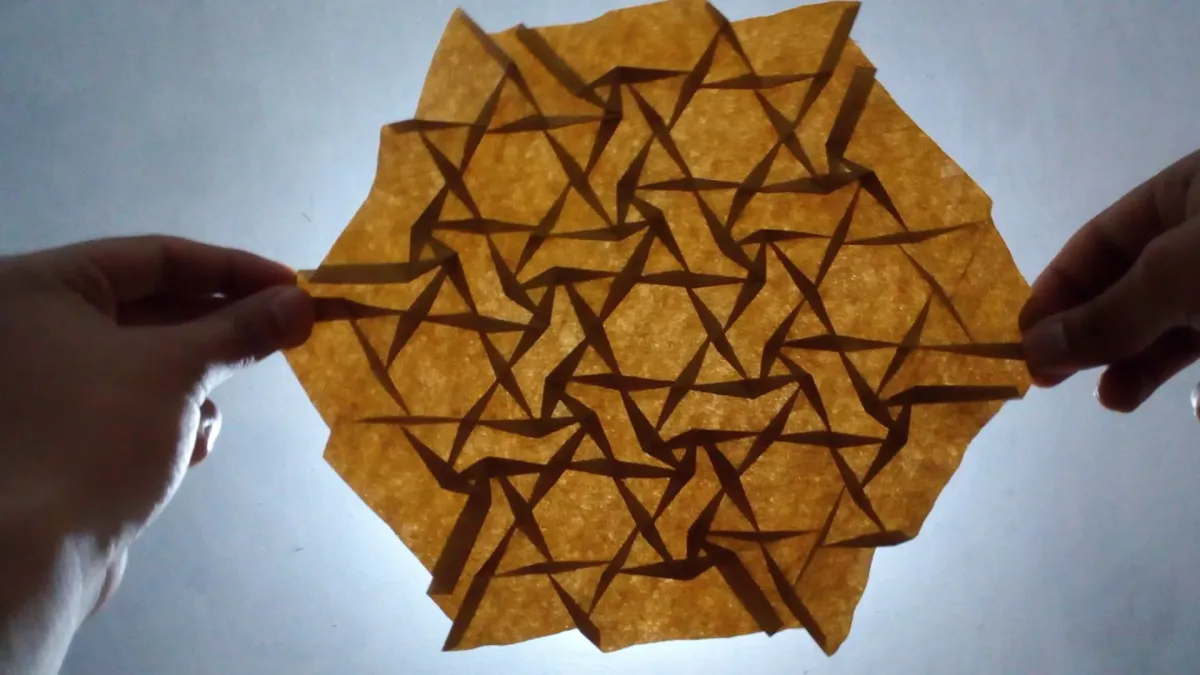
McGill University engineers have created something that sounds like science fiction but works like origami: ultra-thin graphene oxide sheets that fold, reshape, and sense their own movement without motors or rigid joints.
The breakthrough comes from a team led by Hamid Akbarzadeh and Marta Cerruti, who solved a problem that's kept graphene-based soft robots stuck in the lab. Graphene oxide has enormous potential—it's lightweight, flexible, and responsive to its environment—but it's been too brittle to fold repeatedly and too difficult to manufacture at scale. The new material changes that equation.
The team engineered graphene oxide films that are both strong and flexible enough to be folded into origami-like shapes without cracking. These paper-thin structures can then be programmed to move in response to their surroundings. In one demonstration, the folded graphene opened and closed as moisture in the air changed—no external power needed, just the material responding naturally to humidity. In another test, the researchers embedded tiny magnetic particles into the graphene, allowing them to control the structures remotely with a magnetic field.
We're a new kind of news feed.
Regular news is designed to drain you. We're a non-profit built to restore you. Every story we publish is scored for impact, progress, and hope.
Start Your News DetoxBut the real innovation is built into the material itself. As the graphene bends and folds, its electrical conductivity changes. This means the structures can sense their own motion in real time, eliminating the need for separate sensors bolted on afterward. "These advances enable robust, reconfigurable and multifunctional GO metamaterials capable of complex motion, user-defined shape changes, integrated sensing and real-time feedback," Akbarzadeh explained.
From Lab to Practical Use
What makes this different from previous graphene research is manufacturability. The team demonstrated they could produce these materials at scale using relatively simple processes—folded sheets rather than complex assemblies. That's crucial. Soft robotics has been full of elegant lab demonstrations that never reach hospitals, factories, or homes because they're too finicky or expensive to mass-produce.
The potential applications are specific and near-term: medical devices that could move gently through the body without rigid components, wearable systems that adapt to skin movement, and small robots designed for confined or sensitive environments where traditional machinery would cause damage. A soft robotic gripper in a surgical setting, for instance, could manipulate delicate tissue without the crushing force of metal joints.
The research, published in Materials Horizons and Advanced Science, represents a shift from "what if we could" to "here's how we actually do it." That's when progress stops being a future promise and starts becoming something engineers can build with.