Imagine a tiny chip that can grab light and twist it, revealing secrets no one could see before. Harvard engineers just built one, and it's pretty clever.
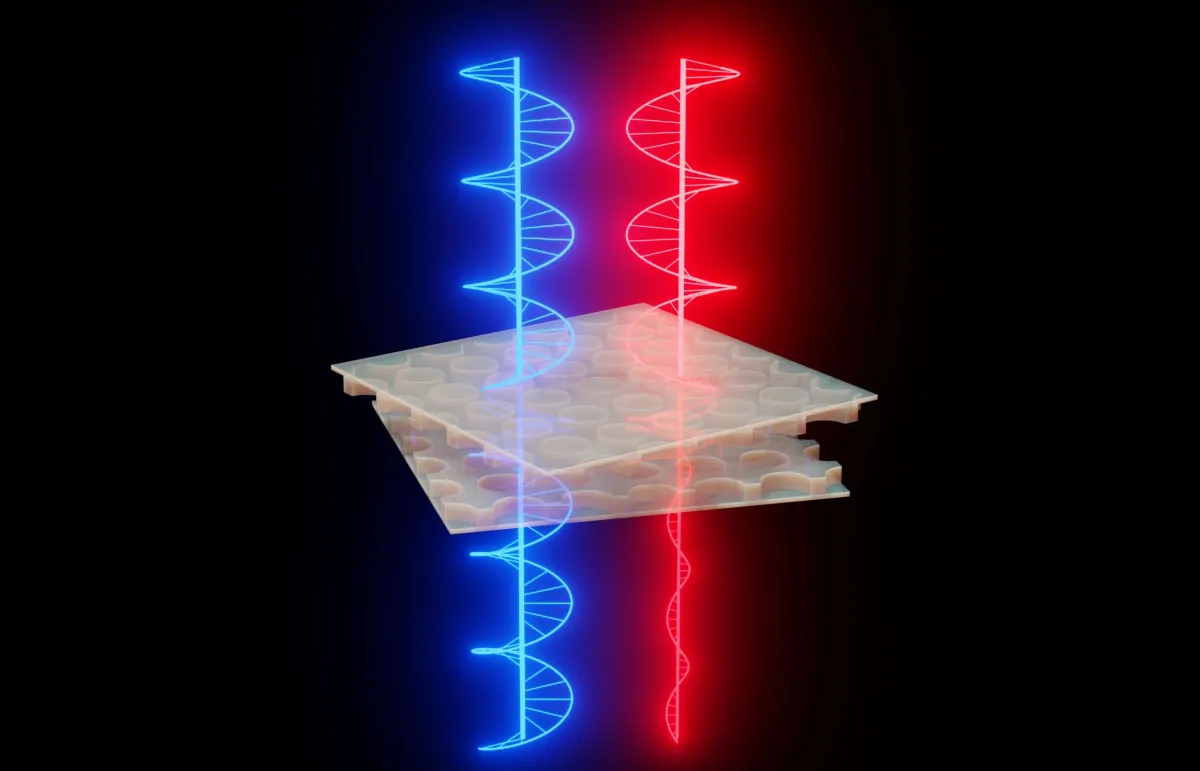
This new device can actively control something called the "handedness" of light. Think of it like your left and right hands — they're mirror images, but you can't perfectly stack them. Light has a similar property, and this chip can actually manipulate it.
This isn't just a lab trick. It’s a big deal because many things in nature, especially molecules, also have a "handedness." Sometimes, a molecule's left-handed version can be totally different from its right-handed twin, even dangerous.
We're a new kind of news feed.
Regular news is designed to drain you. We're a non-profit built to restore you. Every story we publish is scored for impact, progress, and hope.
Start Your News DetoxFor instance, back in the 1950s, a drug called thalidomide had a right-handed form that helped with morning sickness. But its left-handed form, a mirror image, caused severe birth defects. Seriously wild how a tiny structural difference can have such huge impacts.
Scientists often use special light to study these mirror-image molecules. But old methods were rigid. They could only spot a limited range of light's "twist."
A New Way to See
That's where the Harvard team, led by graduate student Fan Du and Professor Eric Mazur, stepped in. Their new chip is tunable. That means it can adjust how it responds to different types of twisted light without needing new parts.
The device uses two ultra-thin layers of material, called photonic crystals, stacked on top of each other. These crystals have tiny structures that control light. The magic happens when they twist these layers and bring them super close. This creates a new, twisted structure that can "read" the handedness of light.
They even added a tiny mechanical system that can change the twist angle and the gap between the layers. This lets them fine-tune the chip's ability to tell left-twisted light from right-twisted light, on the fly. That's like having a universal key for all kinds of molecular locks.
This is still a proof-of-concept, but it opens the door to some seriously cool stuff. Imagine devices that can quickly identify different molecules for medical tests, or new ways to send information using light. It’s like giving scientists a brand-new set of glasses to see the world.