A new study suggests that if life ever existed on Mars, we might actually find it — frozen in time, waiting beneath the ice.
Researchers from Penn State and NASA discovered that organic molecules from dead microbes break down far more slowly when trapped in pure ice than when mixed with Martian soil. In lab conditions mimicking the Red Planet, amino acids from E. coli bacteria survived more than 50 million years of cosmic radiation exposure when locked in water ice. The same molecules degraded ten times faster in samples mixed with Mars-like sediment.
The finding matters because it fundamentally changes where we should look for ancient Martian life — and whether we'd recognize it if we found it.
We're a new kind of news feed.
Regular news is designed to drain you. We're a non-profit built to restore you. Every story we publish is scored for impact, progress, and hope.
Start Your News DetoxThe experiment
NASA Goddard scientist Alexander Pavlov's team placed bacteria samples into sealed test tubes of pure water ice, then exposed them to a gamma radiation chamber cooled to minus 60 degrees Fahrenheit (similar to icy regions on Mars). They simulated 50 million years of cosmic ray exposure — equivalent to what the Martian surface actually experiences. The results were clear: more than 10% of the amino acids survived in pure ice, compared to near-total degradation in sediment-mixed samples.
The mechanism is surprisingly straightforward. "While in solid ice, harmful particles created by radiation get frozen in place and may not be able to reach organic compounds," Pavlov explains. Ice acts like a protective vault, keeping destructive radiation particles immobilized rather than allowing them to circulate and damage fragile biomolecules.
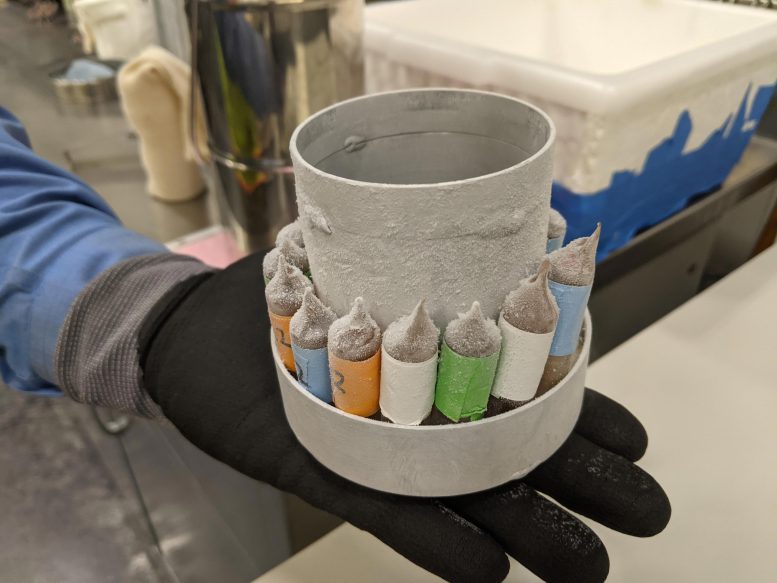
The team also tested samples at even colder temperatures matching Europa and Enceladus, the icy moons of Jupiter and Saturn. Those conditions slowed deterioration further, suggesting that searching for biosignatures on icy worlds is more scientifically sound than previously thought.
What comes next
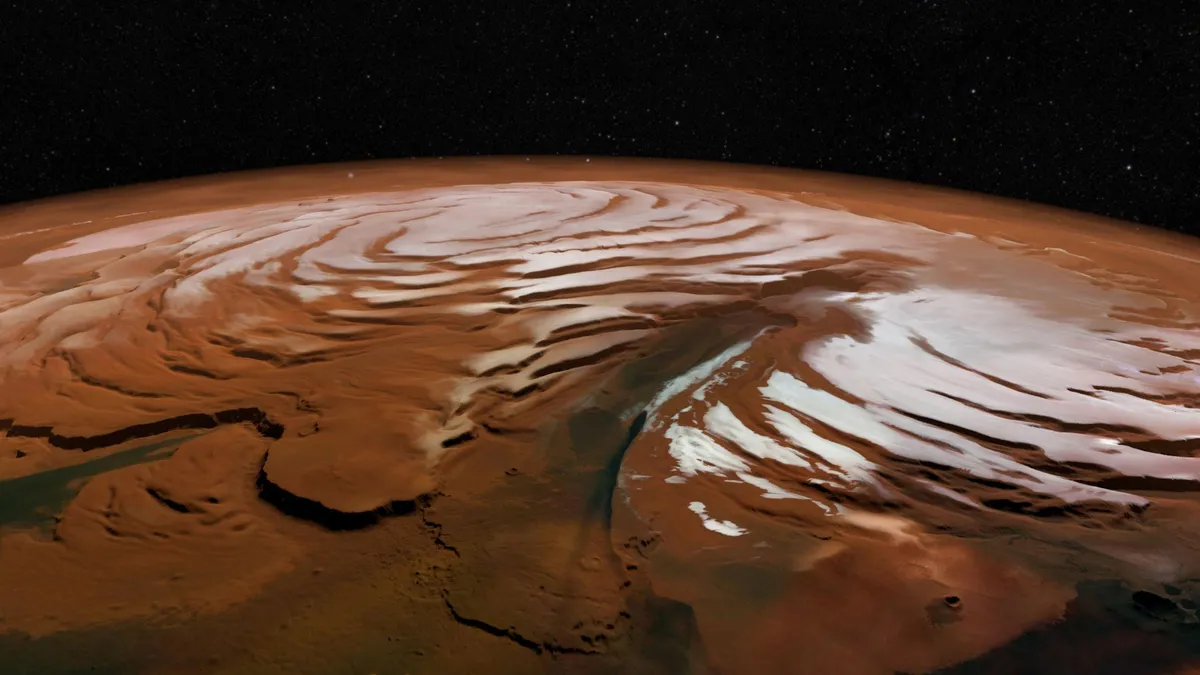
This research reframes the hunt for Martian life. Previous missions like the 2008 Mars Phoenix lander confirmed that ice exists just below the Martian surface in the polar regions — abundant, accessible, and now potentially rich with preserved evidence of past microbial life. Future missions will need drills or scoops powerful enough to reach that subsurface ice. The findings also strengthen the case for NASA's Europa Clipper mission, which will soon explore the ice shell and ocean beneath Europa's frozen surface, looking for conditions that could support life today.
The real implication is this: we're not looking for fresh fossils or intact organisms. We're looking for chemical fingerprints — fragments of proteins, DNA, or other biological molecules that can survive millions of years locked in ice. That's a far more realistic search target, and one that pure Martian ice might actually preserve.