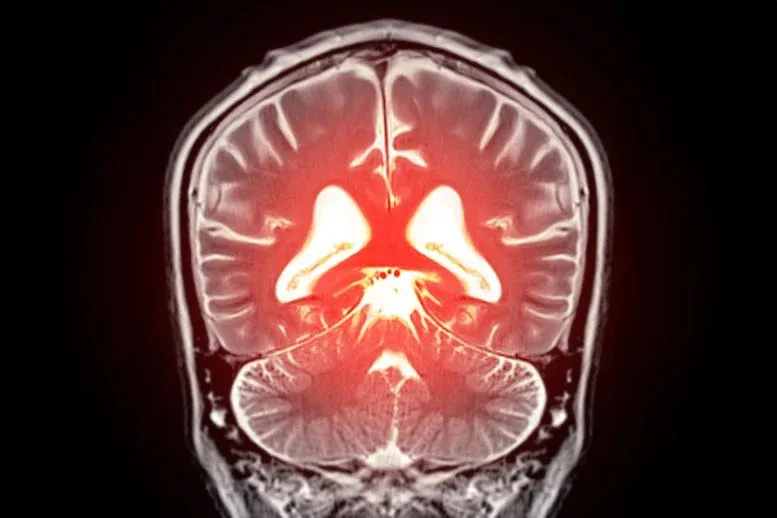
Research suggests that hidden brain wiring might help people keep their thinking skills sharp even as their gray matter shrinks.
The Brain's Hidden Connections
When people get older, they can lose gray matter in their brains. This gray matter is important for processing information. However, some people with similar amounts of gray matter loss have very different thinking and memory abilities.
Scientists at the Mark and Mary Stevens Neuroimaging and Informatics Institute (Stevens INI) at the Keck School of Medicine of USC think that the condition of "superficial white matter" might explain this difference. This is the brain's short-range wiring that connects nearby brain regions.
We're a new kind of news feed.
Regular news is designed to drain you. We're a non-profit built to restore you. Every story we publish is scored for impact, progress, and hope.
Start Your News DetoxA study looked at brain scans and cognitive tests from 459 adults in India, all age 60 or older. This was one of the first studies to look at superficial white matter in a diverse group from a lower-income country.
Superficial white matter is a thin layer of nerve fibers right under the brain's outer gray matter. It helps nearby parts of the brain talk to each other.
Yingxu Liu, a scholar at the Stevens INI and lead author, explained that gray matter processes information, and superficial white matter helps these regions communicate. The study suggests that good thinking skills depend on both how much gray matter is left and how healthy its connections are.
How Healthy Wiring Helps
The researchers used a special MRI scan to measure how water moves through brain tissue. This helped them see details like "neurite density," which shows the small parts of nerve cells that send and receive signals. They also looked at "free water," which can signal problems like inflammation.
The participants also took tests for language, memory, problem-solving, and visual skills. The study found that healthier superficial white matter was most consistently linked to better language skills. This was especially true in brain areas involved in recognizing words and speaking fluently.
This animation shows the relationship between superficial white matter and language ability in older Indian adults, with brighter colors indicating stronger associations. Credit: Stevens INI
Gray matter loss was still the strongest predictor of thinking abilities. However, the impact of gray matter loss on thinking changed depending on the health of the superficial white matter. If this wiring was in poorer condition, gray matter loss was more strongly linked to worse language skills. If the wiring was healthier, the link was weaker.
Leon Aksman, a professor at the Stevens INI and senior author, noted that this suggests superficial white matter might offer a kind of "resilience." Two people with the same amount of gray matter loss might not have the same thinking problems if their local brain connections are different.
Different Groups, Different Links
The study used data from the Longitudinal Aging Study in India (LASI-DAD). Many participants had low literacy or lived in rural areas, groups not often included in brain studies.
The link between superficial white matter and language was stronger in people who couldn't read well, had no formal education, or lived in rural areas. This doesn't mean these social conditions caused brain changes. Instead, it suggests that a person's life experiences, education, and environment might affect how their brain ages.
Since the study looked at people at one moment in time, it can't say whether changes in superficial white matter happen before gray matter loss or thinking decline. Future studies will track these changes over time and look at other factors like blood vessel health and inflammation.
Arthur W. Toga, director of the Stevens INI, emphasized that understanding brain aging requires studying diverse populations. By looking beyond just gray matter and including underrepresented groups, this research helps identify factors that might protect thinking skills throughout life.
Deep Dive & References
Superficial white matter and gray matter jointly support cognition among older adults in India - Alzheimer’s & Dementia, 2026