For centuries, historians bought into a Greek philosopher's ancient hot take: Roman women were basically just... housekeepers. You know, making sure the toga laundry was done and the olive oil was stocked for dinner. But new research suggests we've been wildly underestimating the vilica — the Roman female farm manager who was actually overseeing some seriously profitable agricultural operations.
Turns out, those ancient women weren't just tidying up. They were knee-deep in the business of making wine and olive oil, which, if you think about it, was pretty much the tech industry of ancient Rome. And these weren't quaint little backyard operations. We're talking industrial-scale production.
The Misunderstood Manual
The confusion largely stems from a 1st-century CE farming manual by Lucius Junius Moderatus Columella. He describes the roles of the male vilicus and the female vilica, who were typically enslaved and managed the estate. But here’s the kicker: when Columella started talking about the vilica, he quoted an Athenian philosopher named Xenophon, who lived four centuries earlier and believed women's "natural" place was indoors, supervising domestic tasks.
We're a new kind of news feed.
Regular news is designed to drain you. We're a non-profit built to restore you. Every story we publish is scored for impact, progress, and hope.
Start Your News DetoxModern historians apparently stopped reading there. What they missed? Columella explicitly stated four times that these were Xenophon's ideas, not his own. It was basically an ancient citation, saying, "Here's what some guy thought, but now let me tell you what actually happened."
The Wine Bosses of Yore
Columella's actual description of the vilica's duties was far more impressive. She was responsible for the entire wine and olive oil production process. This wasn't just a side gig; these were the most valuable goods a Roman estate produced.
Imagine: pressing grapes, adding flavorings and preservatives like wormwood (because apparently that's where we were then), overseeing fermentation, and ensuring the final product didn't turn into vinegar. Which, given the lack of temperature control, was a constant, terrifying threat. Columella even noted that the vilica performed offerings to the gods to prevent spoilage. Because when your entire year's profit is at stake, you try everything.
Archaeological evidence shows these operations could churn out 50,000 to 100,000 liters of wine or oil a year. We're talking massive machinery and buildings, all under the vilica's watchful eye. This was serious business, not just a domestic chore.
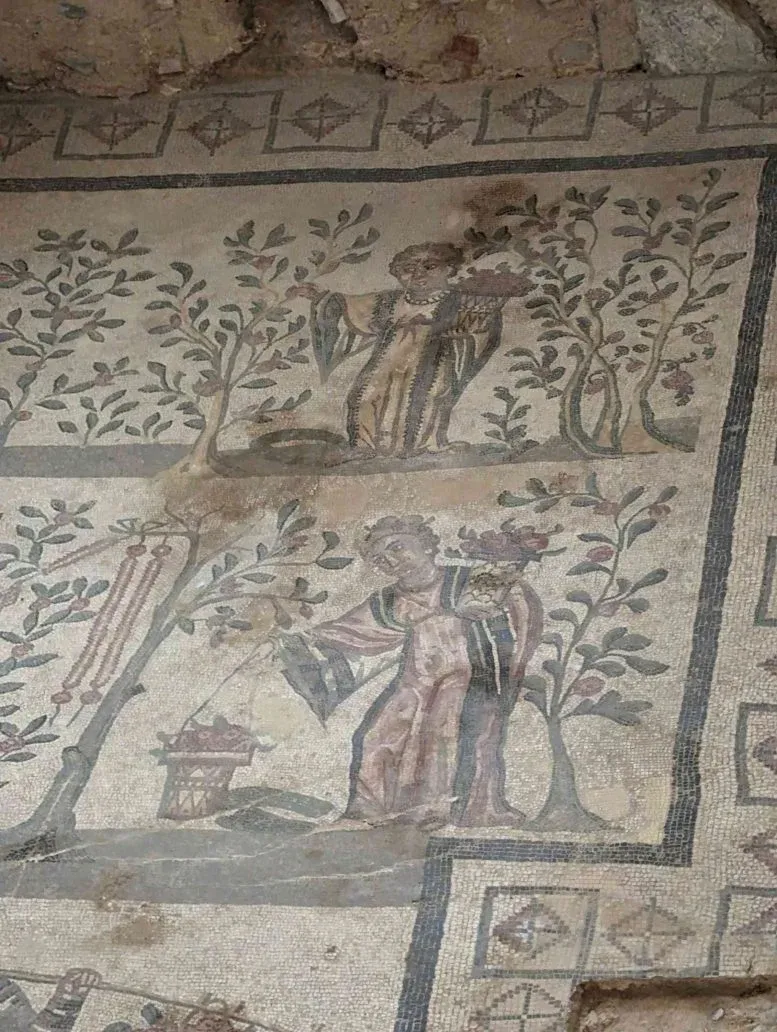
Even Cato the Elder, two centuries before Columella, listed both male and female farm managers as essential for vineyards. He noted the vilica's tasks included managing poultry and processing seasonal products, and even making sacrifices for the farm's success. A Roman mosaic even depicts a woman making offerings for abundant crops, just as Cato instructed, standing alongside a male figure — likely the vilica and vilicus working in tandem.
So, the next time someone tries to tell you Roman women were just homemakers, you can confidently inform them that some were actually running complex, high-stakes agricultural empires. And probably doing a pretty good job of it, too.