Turns out, your brain might be a lot tougher than anyone gave it credit for. Forget the old idea that every single brain connection is a precious, irreplaceable memory vault. New research on mice is suggesting our long-term memories are far more resilient.
Traditionally, we’ve pictured memories as being stored in synapses—the tiny connections between brain cells (neurons). These synapses live on even tinier bumps called dendritic spines. Learn something new, and these spines grow, forming stronger, longer-lasting connections. Lose those connections, as happens with diseases like Alzheimer's, and memories fade. Simple, right?
Well, not so fast.
The Hibernation Memory Hack
Scientists decided to play a little trick on mice: they put them into an artificial hibernation. And here’s where it gets wild: during this deep, sleepy state, the mice lost about half of their synapses. Big ones, small ones, gone. But when they woke up? They still remembered tasks they’d learned before.
We're a new kind of news feed.
Regular news is designed to drain you. We're a non-profit built to restore you. Every story we publish is scored for impact, progress, and hope.
Start Your News DetoxEven more astonishing, the spines that vanished during hibernation actually grew back in their original spots, effectively rebuilding the broken brain circuits. It’s like their brains had a blueprint and just started putting things back together.
So, how did memories survive such a massive synaptic purge? A small, tough group of surviving synapses seems to be the key. These formed clusters, acting like little memory anchors, keeping patterns of brain activity (called engrams) alive. The more of these clusters a mouse had, the better it performed on its learned tasks after waking up.
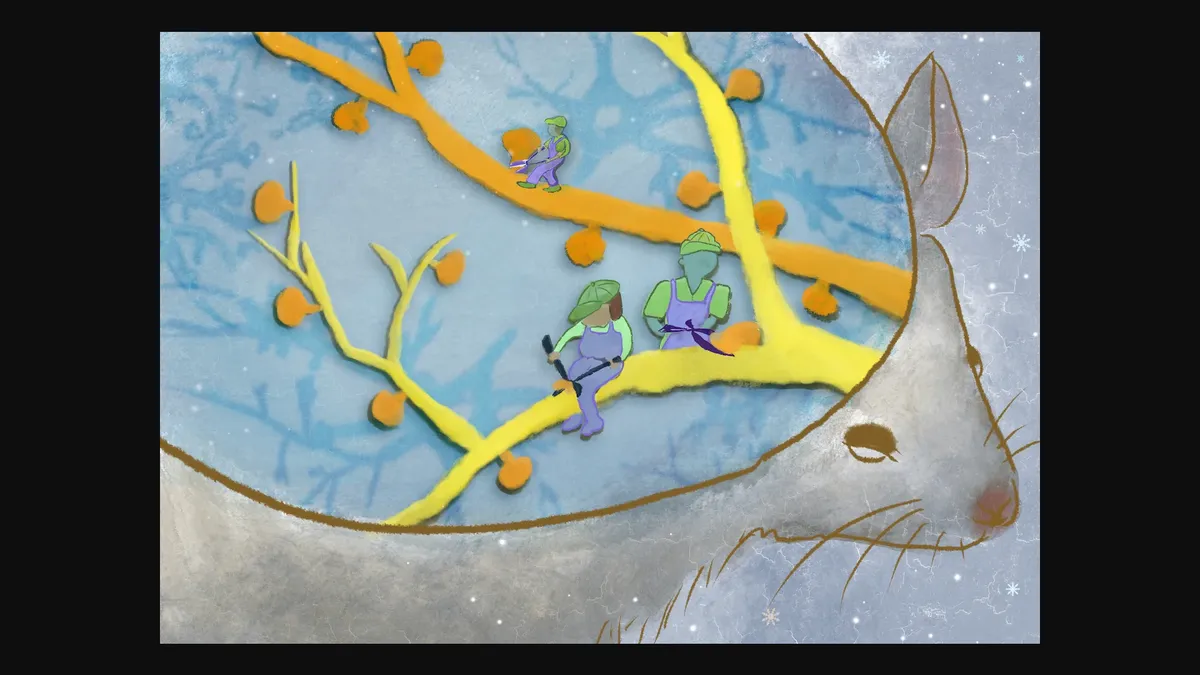
"Astonishing," said Yu-Ju Lin, a study author from Japan's Okinawa Institute of Science and Technology. She noted that if every engram synapse was truly essential, those memories should have been wiped. Clearly, the brain has other plans.
This suggests memories aren't quite so fragile. They might be spread across a larger network, with a few crucial synapses acting as a kind of backup system, ready to help reconstruct the rest.
Now, artificial hibernation is definitely an extreme scenario, so we're not claiming a cure for Alzheimer's just yet. But it does show the brain’s incredible potential to bring memories back from the brink, even after significant connection loss.
The Brain's Ever-Shifting Landscape
We often think of neurons as the brain's computing units, sending and receiving signals. And those little spines? They're constantly changing, allowing synapses to gather data and store memories. The classic saying is: "Neurons that fire together, wire together." Stronger connections, bigger spines, lasting memories.
For personal memories—who, what, when, where—these changes typically start in the hippocampus, a brain area critical for forming and recalling memories, and often an early target for Alzheimer's.
Scientists used to believe all this required incredibly stable brain circuits. But here’s the kicker: the brain is actually a constantly remodeling construction site. Synapses are always shifting, and even the neurons involved in a specific memory can change over time. So, if your physical memory traces are always in flux, why don't your memories just vanish? This new study aimed to crack that particular code.
To do it, the team put mice into that artificial hibernation. It drastically lowers body temperature and metabolism, slowing the brain to save energy. And as it slows, synapses start to shrink.
Yet, hibernating animals keep their memories. Chipmunks, for example, somehow remember where they buried their winter stash. This makes hibernation a fascinating way to study how memories cling on through massive brain changes.
"The brain is complex," explained Kazumasa Tanaka, another study author. He hoped hibernation would simplify things enough to study these systems more clearly. They trained mice on two memory tasks: associating a chamber with a mild shock, and navigating a maze for a sugary treat. Then, two days of hibernation.
Synapses vanished fast. Over half were gone within a day, including the big ones we thought were so crucial for long-term memory. But when the mice woke up, they still froze in fear in the shock chamber and found their sugary reward in the maze. And about 80% of those lost spines? They grew right back in their original spots.
This recovery was unique to hibernation. Another group of mice given anesthesia and a drug that blocks synaptic changes (known to cause amnesia) also lost synapses, but never recovered their memories. The difference? Those core groups of very strong, clustered synapses in the hibernating mice. These clusters, where one neuron connected to many neighbors like a central hub, somehow kept memories intact even as everything around them disappeared.
Tanaka suggests this means only specific clusters of synapses truly matter for long-term memory, and the rest might just be… extra. How these clusters do it, how the brain creates and maintains them, and whether they hold multiple memories are still open questions. But understanding their resilience could lead to new ways to fight synapse loss in early disease.
Beyond medicine, this could inspire brain-like computer chips or even new AI models. For now, it offers a beautifully simple, yet profound, idea: a memory might not need every single synapse that helped create it. It might just need the right ones to rebuild the rest.