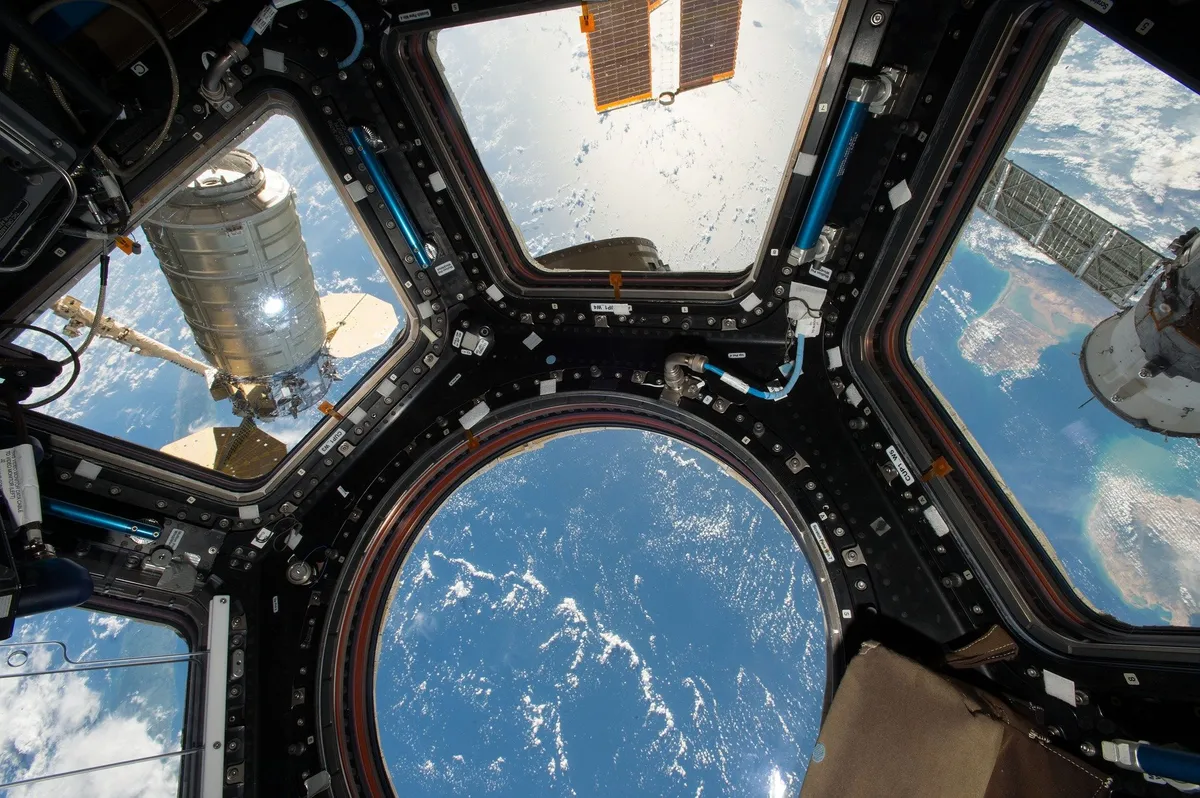
On Earth, our brains are constantly making micro-calculations: Don't drop that. Hold this tighter. It's an automatic reflex honed over millennia, all thanks to gravity. But what happens when you take that perfectly calibrated brain and launch it into orbit, where 'down' is more of a suggestion than a rule?
Turns out, your brain holds a grudge. Even after months floating around the International Space Station, astronauts still grip objects as if they're fighting an invisible force trying to yank things to the floor. Their brains, bless 'em, keep expecting gravity to show up and do its thing.
Philippe Lefèvre and his team spent nearly two decades (yes, two decades) coordinating with space agencies and waiting for rocket launches to figure this out. They studied how astronauts adapted their grip when moving between Earth and the great beyond. The findings, published in JNeurosci, are both fascinating and slightly hilarious.
We're a new kind of news feed.
Regular news is designed to drain you. We're a non-profit built to restore you. Every story we publish is scored for impact, progress, and hope.
Start Your News DetoxThey discovered that gravity leaves a remarkably stubborn imprint on the brain. Astronauts consistently overcompensated their grip in space, basically squeezing objects harder than necessary. It's like your brain is muttering, "Better safe than sorry, what if this drifts off into the void?" Which, to be fair, is a legitimate concern in space.
And the reverse is true too: upon returning to Earth, astronauts initially under-gripped objects, having gotten used to the whole 'things just float' situation. They slowly readjusted, but it highlights how deeply ingrained our terrestrial reflexes are.
This isn't just about dropping your space sandwich, though. The researchers suggest our grip strength is intimately tied to the brain's rapid-fire predictions about potential accidents. In space, those predictions are wildly off, at least initially. It takes a while for the brain to update its operating system for zero-G.
So, the next time you effortlessly pick up a glass of water without thinking about it, spare a thought for the astronauts. Their brains are still wrestling with the cosmic question: to grip, or not to grip, that is the question.