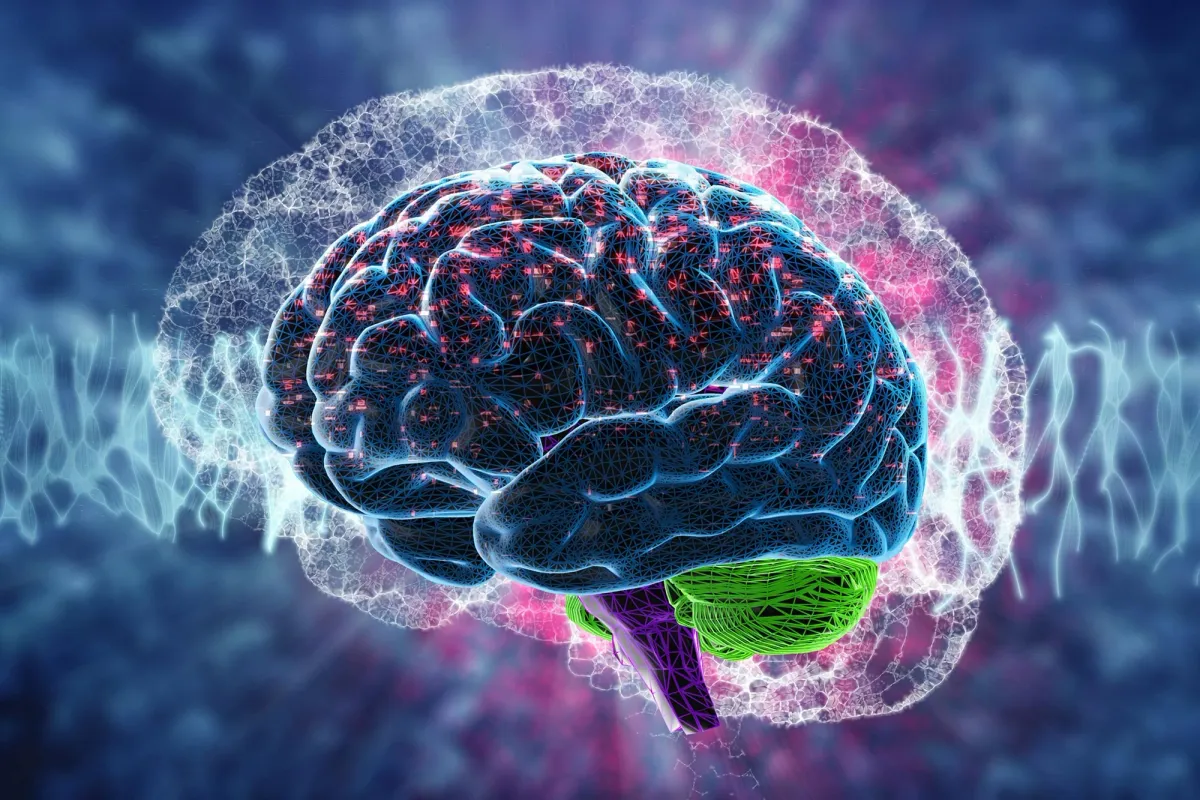
Your brain starts as one cell. By the time you're born, it's become a network of roughly 170 billion cells, each in precisely the right place. For decades, neuroscientists assumed this happened through chemical signals—molecules that whisper to cells about their location. But new research suggests something simpler is doing much of the work: ancestry.
Neuroscientists at Cold Spring Harbor Laboratory have proposed that cells organize themselves partly by staying near their relatives. "The only thing a cell 'sees' is itself and its neighbors," explains Stan Kerstjens, a postdoc in the lab. "But its fate depends on where it sits." A cell that ends up in the wrong place becomes the wrong type of neuron, and the whole system breaks down. So every cell faces two questions: Where am I? Who do I need to become?
The puzzle has always been distance. Chemical signals fade as they travel. If a brain cell deep inside the growing brain relied only on chemical gradients to find its position, the signal would be too weak to work. Yet somehow, cells far from the surface know exactly where they belong.
We're a new kind of news feed.
Regular news is designed to drain you. We're a non-profit built to restore you. Every story we publish is scored for impact, progress, and hope.
Start Your News Detox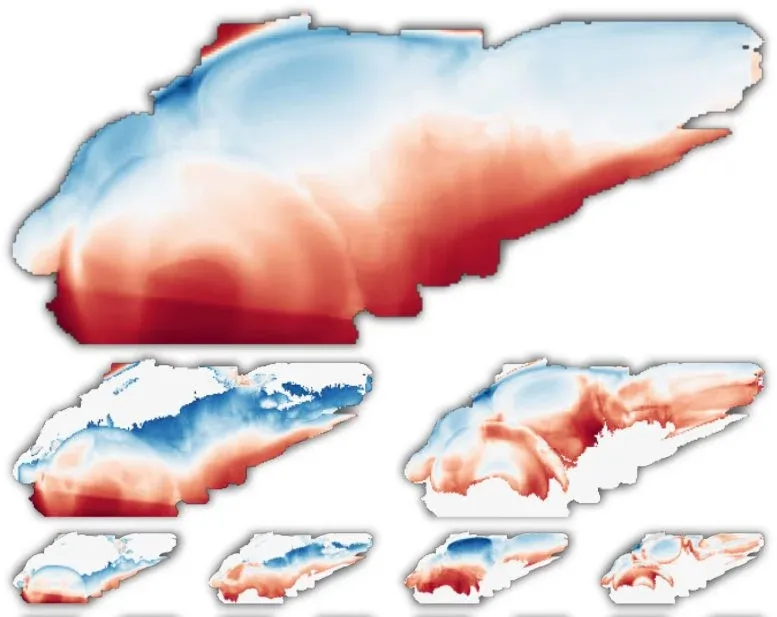
Kerstjens offers an analogy: think of how human populations spread across a country over generations. Descendants settle near their parents. Over time, people who share ancestry cluster in neighboring regions—creating large-scale geographic structure without anyone coordinating at a national level. The brain, he suggests, works the same way. Cells that descend from the same parent cell tend to stay close together, creating neighborhoods of related neurons.
A Principle That Scales
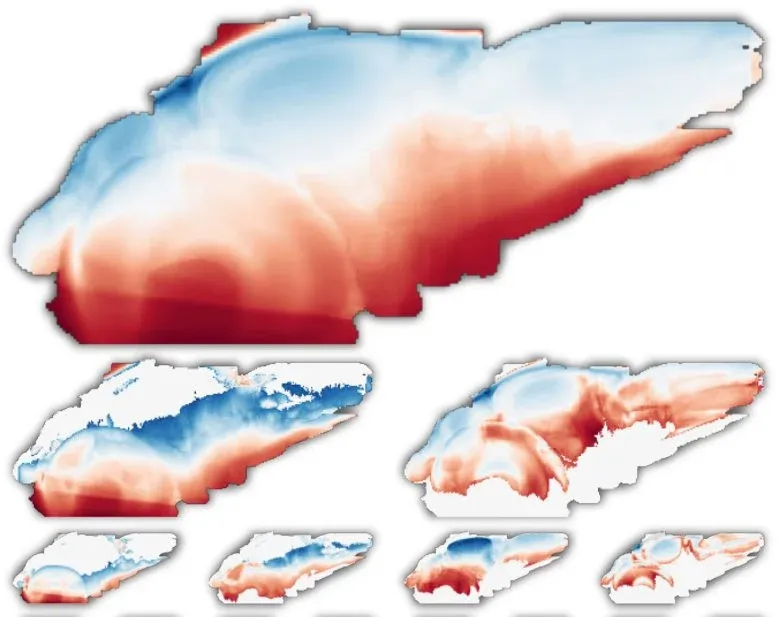
The team tested this idea with mathematical models, then analyzed gene expression in individual cells from developing mouse brains. They confirmed their findings in zebrafish—brains of different sizes, same principle. The results show that chemical signaling doesn't act alone. Instead, it works alongside lineage-based organization: cells inherit positional context from where their ancestors divided and migrated.
This matters beyond the brain. The same principle could explain how other growing tissues organize themselves, and it might even apply to tumors—which are, in some sense, cells that forgot their place. More speculatively, it could inform how we design self-replicating AI systems that pass information forward like brain cells do.
But the real significance is philosophical. We still don't fully understand how a collection of cells becomes conscious. How did the brain accumulate its capability not just over development, but over millions of years of evolution. This finding—that organization can emerge from simple rules about kinship and proximity—is one piece of that larger puzzle. It suggests that complexity doesn't always require complexity to build it.