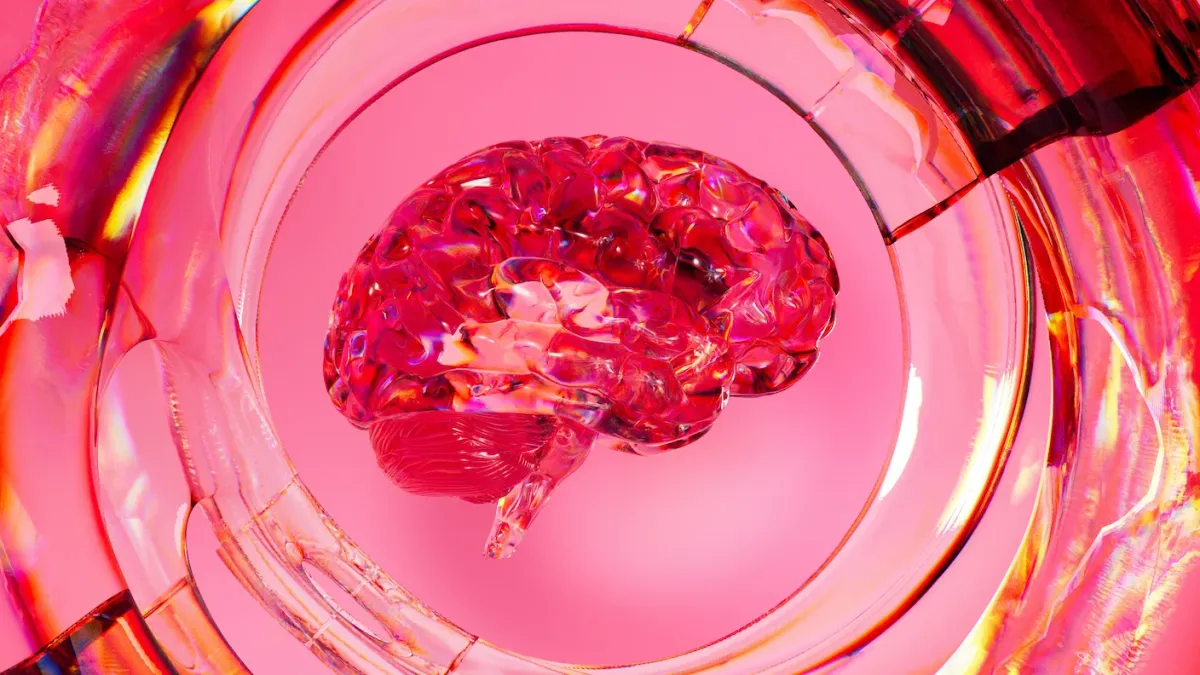
Imagine a perfect digital copy of your brain, running on a computer, predicting exactly how you'd react to a new medication or a tricky puzzle. Sounds like sci-fi, right? Well, scientists are building these "digital twins" of the brain to simulate everything from disease progression to treatment responses. The only problem? Until recently, they've been about as unique as a stock photo.
Turns out, your brain isn't just a generic organ; it's got a one-of-a-kind "brain fingerprint" — a unique wiring diagram that makes you, well, you. Most digital brain models, however, have been more like a universal remote: functional, but not really tuned to your specific channels. This is a bit of an issue when these models are being used to test treatments before they ever touch a human patient. If the model isn't truly you, the predictions could be wildly off, or worse, misleading.
Why Your Brain Loves a Good Fight
Here's where it gets interesting: new research suggests that for a digital brain twin to actually be useful, it needs to embrace a little internal drama. Specifically, competition between different brain systems. For decades, most brain simulations assumed everything was all sunshine and cooperation, forcing neighboring regions to play nice. This led to overly synchronized brain states that rarely happen in the real world, unless you're perhaps a synchronized swimmer.
We're a new kind of news feed.
Regular news is designed to drain you. We're a non-profit built to restore you. Every story we publish is scored for impact, progress, and hope.
Start Your News DetoxBut think about it: when you're trying to focus on a single task, or switch gears between activities, different parts of your brain are vying for limited resources. Your brain can't do everything at once. It's like a high-stakes game of musical chairs, and only the most relevant systems get to sit down.
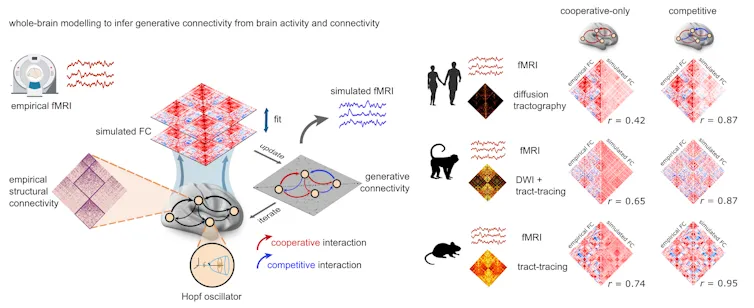
An international team of researchers, studying humans, macaque monkeys, and mice (because apparently, the brain's a universal battleground), found that the most realistic models need both cooperation within specialized circuits and good old-fashioned competition between different circuits. When they compared models where everything was cooperative to models that allowed regions to excite or suppress each other, the competitive models won, hands down, across all three species.
This competitive dynamic isn't just about accuracy; it's about stability. It allows different systems to take turns, avoiding runaway activity and keeping things energy-efficient. Which, if you think about it, is both impressive and slightly terrifying, given how much energy modern AI systems guzzle. And the best part? These competitive models were far better at capturing each individual's unique "brain fingerprint."
From Bench to Brain (and Beyond)
This discovery has massive implications. For starters, it could bridge the notorious gap between animal research and human treatments. Currently, about 90% of promising neuropsychiatric drugs fail in human trials after looking great in animal studies. Imagine a digital twin that could accurately predict how a treatment would affect your brain, before you ever take a pill.
If you needed brain intervention for, say, epilepsy or a tumor, your digital twin could explore different drugs or electrical impulses, mapping out the precise impact on your unique brain activity. This moves us light-years beyond today's trial-and-error approach. It's a bit like having a personalized brain-whisperer in a computer.
And it's not just about medicine. Understanding how brains organize themselves across species, with all their cooperative and competitive glory, could be the secret sauce for building the next generation of AI — models that are less like calculating machines and more like the wonderfully messy, intelligent human mind. So, the next time your brain feels like a battlefield, just remember: it's probably doing its best work.