Shared Tastes in Mating Calls
Animals use many methods to attract mates, like colorful feathers or complex dances. Sound is also a key part of this. Many species make special calls to show they are ready to reproduce.
New research shows that humans often find the same animal mating calls appealing as the animals themselves. This is true even though these calls were not meant to attract humans. The study was published in Science.
Logan James, a lead author and animal communication researcher, noted that humans might enjoy these sounds because we share basic ways of processing sound with these animals.
We're a new kind of news feed.
Regular news is designed to drain you. We're a non-profit built to restore you. Every story we publish is scored for impact, progress, and hope.
Start Your News DetoxTesting Preferences
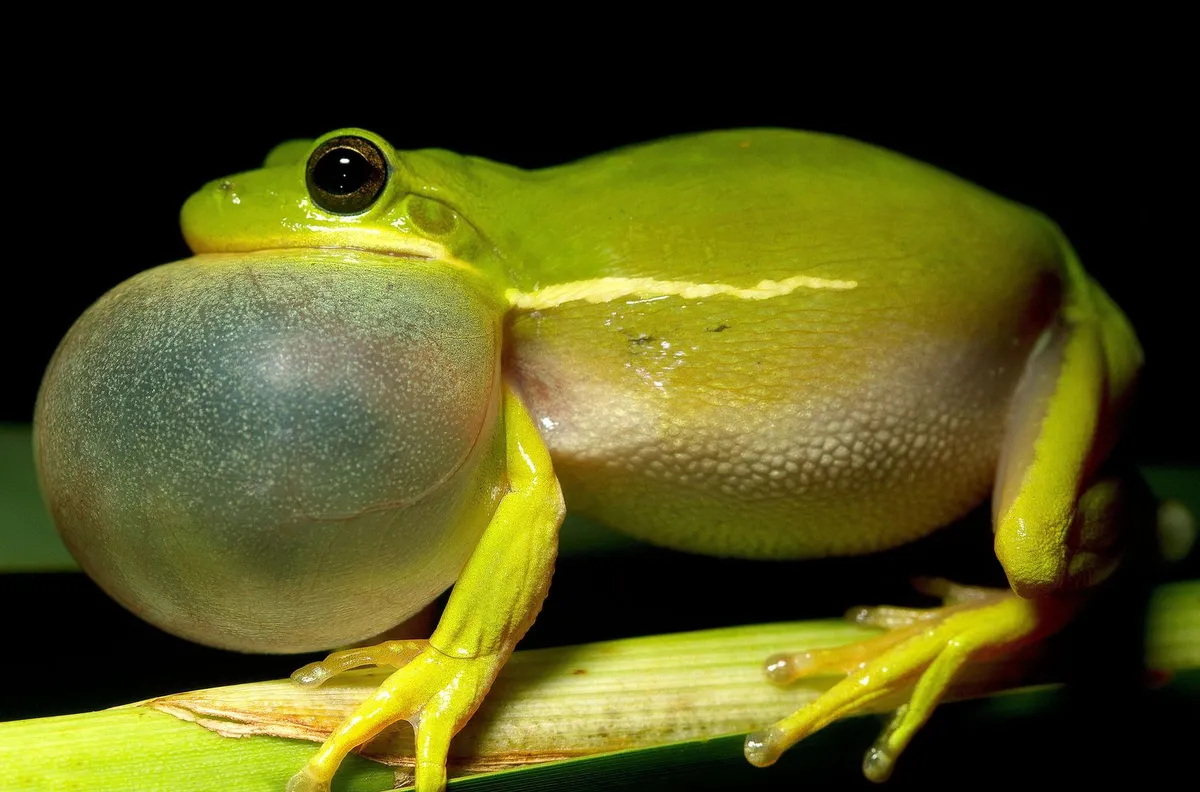
Animals often prefer certain mating calls. For example, female túngara frogs like more complex sounds from males. Other animals, like blood-sucking flies and fringe-lipped bats, also prefer these complex frog calls.
James and his team wanted to see if humans shared these preferences. They set up an online survey with over 4,000 participants worldwide. People listened to 110 pairs of mating calls from 16 species, including amphibians, mammals, birds, and insects. They then picked which sound they liked more. The researchers already knew which sound the animals preferred.
The results were surprising. Humans often chose the same mating calls that the animals preferred. The stronger an animal's preference for a sound, the more likely humans were to choose it. Humans also responded faster when they heard the sound animals liked more.
Both humans and animals seem to prefer calls with extra features like trills, clicks, and chucks. They also favor lower-frequency sounds. These findings held true regardless of a person's musical background or knowledge of animal sounds.
One interesting finding was that people who listened to more music daily tended to agree more with the animals. This suggests a link between general music listening and shared acoustic preferences.
Why We Agree
Researchers believe these shared preferences might come from similar ways humans and animals detect and process sound. Our physiological setups for hearing are alike.
Future studies could explore if humans share other sensory preferences with animals, such as visual cues or smells. Researchers also want to understand why humans sometimes disagreed with animal preferences, like with the calls of the gelada monkey.
This research supports Charles Darwin's 1871 idea that animals "have nearly the same taste for the beautiful as we have." While Darwin focused on visual traits, this study suggests a broader shared "taste for the beautiful" that includes sounds.
Deep Dive & References
You probably agree with the animals on which bird calls, frog noises and cricket chirps are most attractive – new research - The Conversation What animal are you? Humans and animals tend to like the same mating calls - Scientific American The Descent of Man, and Selection in Relation to Sex - Charles Darwin, 1871 Acoustic preferences are shared across humans and animals - Science, 2026 The Music Lab: HAVOC - Online Game