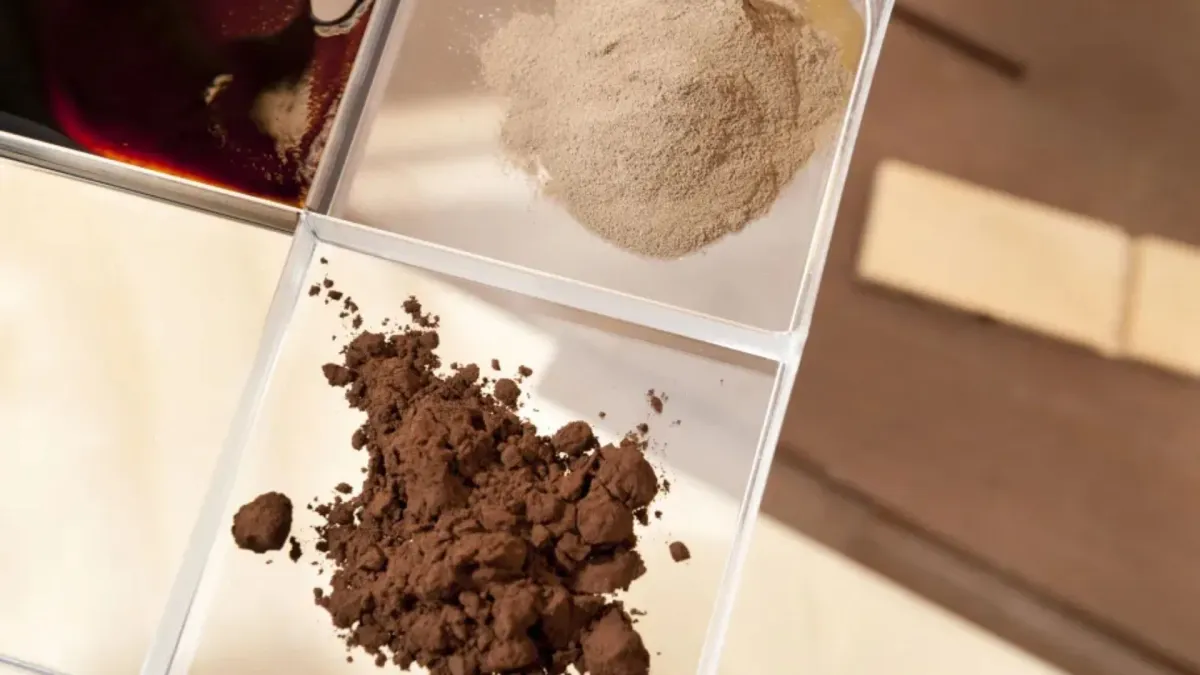
Researchers at Wageningen University have done something materials science said was impossible: they've created a substance that combines the toughness of plastic with the reshapeability of glass.
The material, called a compleximer, is amber-colored and behaves in ways that contradict decades of established theory. Drop it and it bounces. Heat it and you can reshape it like glass. Crack it and you can repair it by warming the damaged area with a hairdryer, letting the material knit itself back together.
For a long time, materials scientists operated by a simple rule: the easier a material is to process, the more brittle it becomes. Glass can be blown and molded beautifully, but it shatters. Plastics are tough but difficult to reshape once set. You couldn't have both. Professor Jasper van der Gucht and his team at WUR proved that rule wrong.
We're a new kind of news feed.
Regular news is designed to drain you. We're a non-profit built to restore you. Every story we publish is scored for impact, progress, and hope.
Start Your News DetoxThe trick is in the molecular structure
The breakthrough comes down to how the material holds itself together at the molecular level. Normal plastics use chemical bonds—permanent glue that locks long molecular chains in place. Compleximers work differently. Half the chains carry a positive charge, half carry negative. They attract each other like magnets, but these aren't permanent bonds. The charges hold the chains together from a distance, leaving space between them. That molecular breathing room is what gives the material its unusual combination of properties.
Because the bonds are physical rather than chemical, they can break and reform. Heat the material and the chains slide past each other, allowing it to be reshaped. Cool it down and the magnetic forces reassert themselves. Damage it and those same forces can pull the material back together if you apply gentle heat.
The practical implications are straightforward. A compleximer roof panel that cracks doesn't need replacement—it needs a hairdryer and a few minutes. Garden furniture, phone cases, building materials: anything made from this stuff becomes repairable in ways conventional plastics aren't. You're not throwing it away because a corner broke.
Right now, compleximers are made from fossil-based raw materials. But the WUR team is already working on biobased versions. Senior researcher Wouter Post notes that the real promise isn't just repairability—it's the possibility of designing these materials to break down biologically once they reach the end of their useful life. Van der Gucht is prioritizing that work over the coming years, seeing this as a stepping stone toward materials that are both durable and genuinely sustainable.
The material exists in the lab. The next phase is scaling it up and testing it in real-world applications. That's where the real test begins.