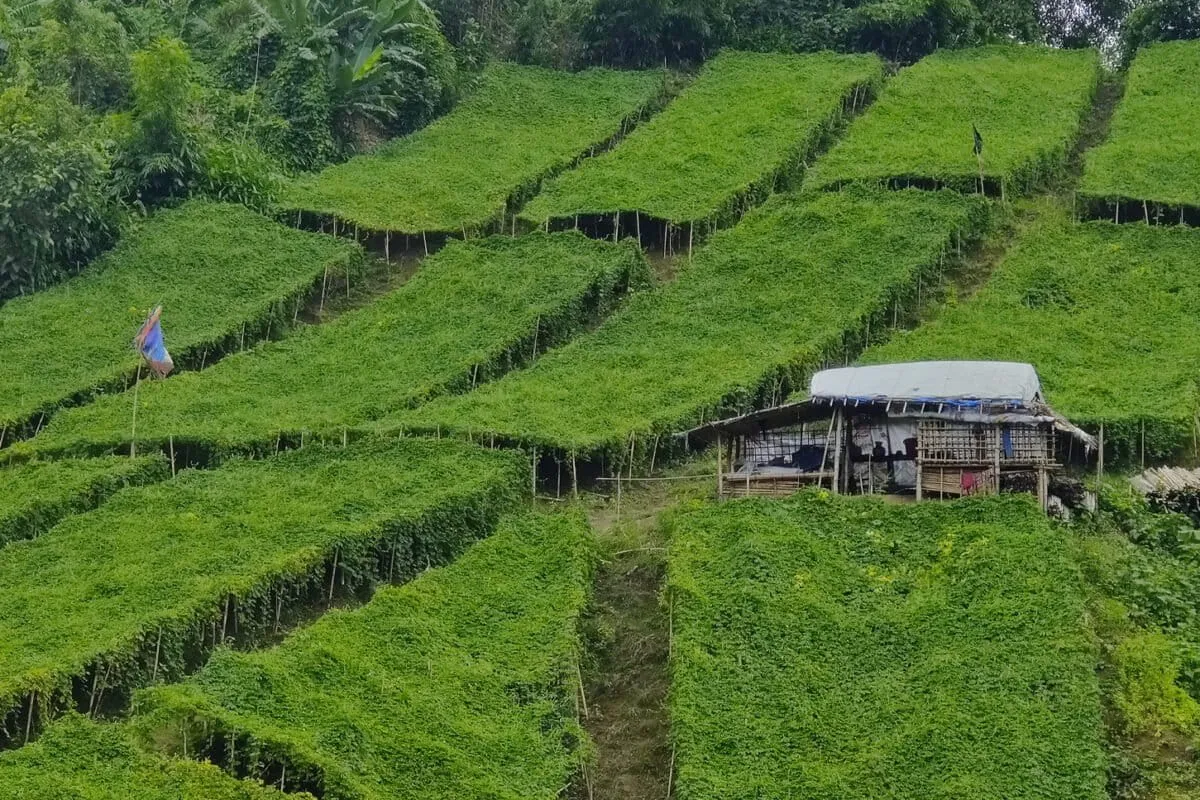
In Bangladesh's Chittagong Hill Tracts, farmers are doing something rather clever. Faced with dwindling land and tired soil, they're ditching centuries-old farming methods for something that looks a lot like a high-rise apartment for vegetables. It's called the machan system, and it involves growing crops on bamboo trellises, several feet off the ground. Because, apparently, even vegetables need to get above it all sometimes.
For generations, Indigenous communities like the Chakma, Marma, and Mro relied on jhum farming. Think of it as rotational agriculture: clear a patch of forest, farm it, then let it chill for up to two decades to recover. A nice, long nap for the soil.

But here's the rub: more farmers mean less napping. The rest period for these crucial plots has shrunk to a mere two or three years. Imagine trying to recover from a marathon in a weekend. The soil is exhausted, yields are plummeting, and heavy rains are just washing everything away. In Bandarban, the land dedicated to jhum farming has shrunk from 22,363 acres in 2014 to 20,436 acres by 2025. That's a lot of lost acreage.
We're a new kind of news feed.
Regular news is designed to drain you. We're a non-profit built to restore you. Every story we publish is scored for impact, progress, and hope.
Start Your News DetoxEnter the machan system, which is less about clearing land and more about building upward. Farmers are constructing intricate bamboo trellises that lift vine crops — your cucumbers, bitter gourds, and beans — 4 to 5 feet into the air.
Why Higher is Healthier
Turns out, a little elevation goes a long way. Farmer Tipu Tanchangya put it plainly: crops snuggled close to the soil are basically a buffet for pests, a petri dish for fungal infections, and a prime target for waterlogging when the monsoons hit. It’s a tough life down there.

The machan system, by contrast, gives these plants some much-needed breathing room. It's like moving your produce into a penthouse apartment with better air circulation and fewer creepy crawlies. The result? Healthier crops, less disease, and presumably, happier farmers. Who knew a little bit of bamboo could make such a difference?