Eight and a half billion years ago, a galaxy was being torn apart by its own neighborhood — and we're only just now watching it happen.
Astronomers using the James Webb Space Telescope have spotted the most distant "jellyfish galaxy" ever observed, a discovery that's rewriting what we thought we knew about how galaxies evolved in the young universe. The find came from researchers at the University of Waterloo sifting through data from the COSMOS field, a patch of sky chosen specifically because it sits far from the Milky Way's crowded plane and offers an unusually clear view of the distant universe.
What Makes a Galaxy Look Like a Jellyfish
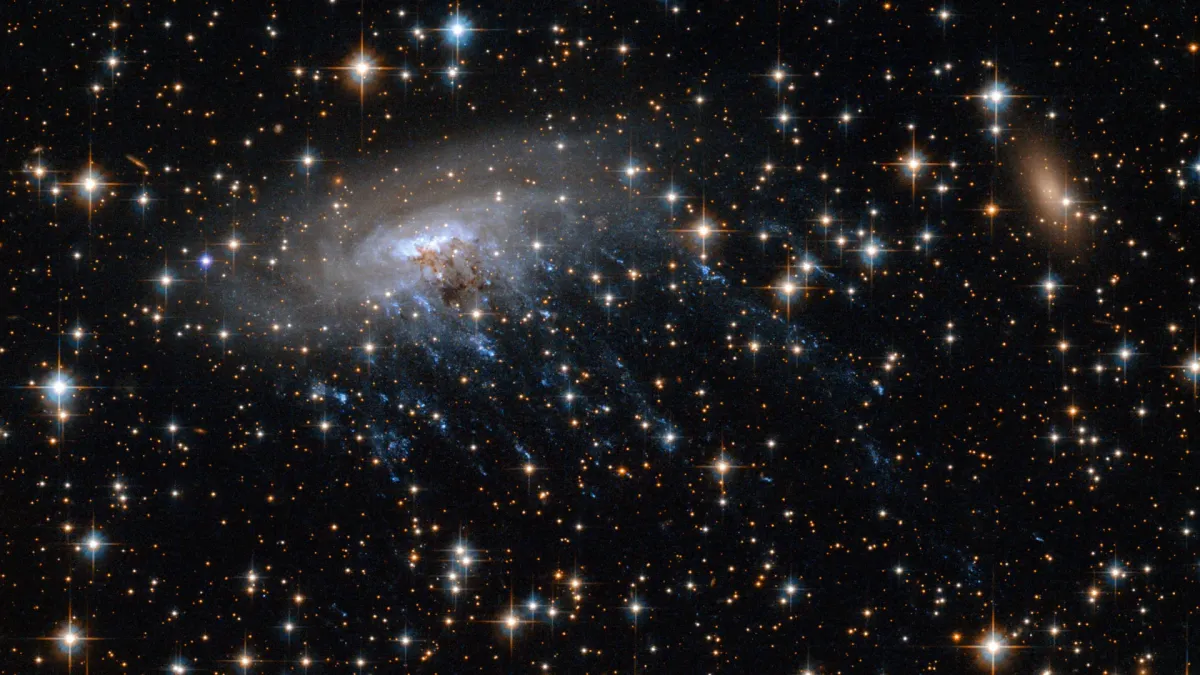
Jellyfish galaxies get their name from something visceral: long, flowing streams of gas that trail behind them like tentacles. These galaxies don't move peacefully through space. They race through galaxy clusters so densely packed and so scorching hot that the surrounding gas acts like a cosmic headwind. As these galaxies plow forward, that pressure pushes their own gas backward, stripping it away in long, elegant strands. Astronomers call this ram-pressure stripping, and it's one of the most violent transformations a galaxy can experience.
We're a new kind of news feed.
Regular news is designed to drain you. We're a non-profit built to restore you. Every story we publish is scored for impact, progress, and hope.
Start Your News DetoxWhat makes this particular galaxy remarkable isn't just its distance — light from it has traveled 8.5 billion years to reach us. It's what's happening in those trailing streams. Scattered along the stripped gas are bright blue clumps: extremely young stars, born not inside the galaxy itself, but in the gas that was forcibly ejected. "We were looking through a large amount of data with the hopes of spotting jellyfish galaxies that haven't been studied before," said Dr. Ian Roberts, the Waterloo researcher who led the discovery. "Early on in our search of the JWST data, we spotted a distant, undocumented jellyfish galaxy that sparked immediate interest."
That spark matters because this galaxy shouldn't exist — at least not according to what astronomers believed about the early universe. For years, the leading theory held that galaxy clusters were still assembling themselves 8.5 billion years ago, and that ram-pressure stripping was rare, something that happened mainly to galaxies in the dense clusters we see today. This discovery suggests the universe was already brutal far earlier than expected.
"The first is that cluster environments were already harsh enough to strip galaxies, and the second is that galaxy clusters may strongly alter galaxy properties earlier than expected," Roberts explained. The implications ripple forward through cosmic history. If galaxies were being transformed this violently this early, it changes our understanding of how the "dead" galaxies we observe today — the ones that stopped making stars billions of years ago — actually died. We may have been looking at the wrong timeline.
Roberts and his team have already applied for more observing time with JWST to study this galaxy in greater detail. If their findings hold up, they'll reshape one of astronomy's fundamental stories: how dense cosmic environments sculpted the universe we see today.