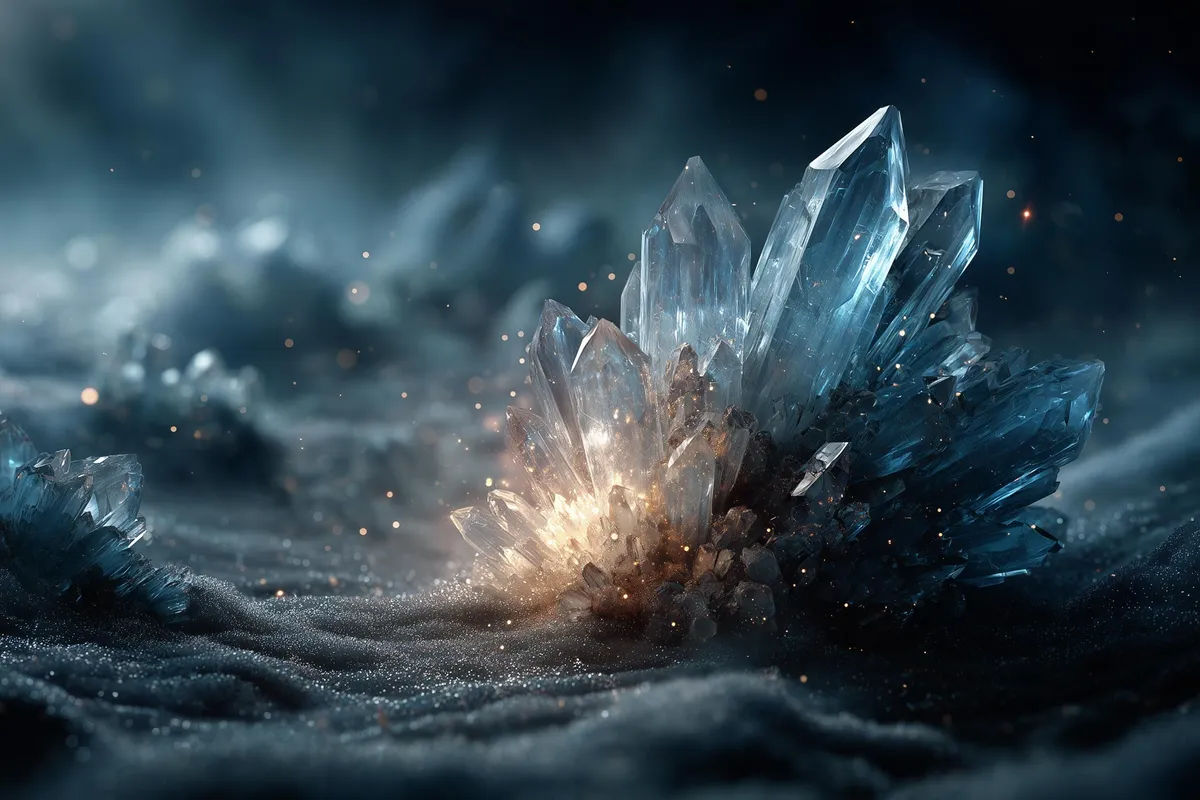
A chemical so toxic it kills humans might have been life's unlikely midwife. Hydrogen cyanide—the same compound that's lethal in small doses—could have played a crucial role in assembling the earliest molecular ingredients of life on a frozen early Earth.
The twist: when hydrogen cyanide freezes into solid crystals at low temperatures, something unexpected happens. Computer simulations show that certain crystal surfaces become unusually reactive, allowing chemical reactions to occur in conditions so cold they normally wouldn't support such activity at all. Those reactions could have triggered a cascade that produced amino acids, nucleobases, and other fundamental building blocks of proteins and DNA.
"We may never know precisely how life began, but understanding how some of its ingredients take shape is within reach," says Martin Rahm, the corresponding author of the study. "Hydrogen cyanide is likely one source of this chemical complexity, and we show that it can react surprisingly quickly in cold places."
We're a new kind of news feed.
Regular news is designed to drain you. We're a non-profit built to restore you. Every story we publish is scored for impact, progress, and hope.
Start Your News DetoxHow a cosmic poison becomes a life ingredient
Hydrogen cyanide isn't rare. It's been detected on comets, in planetary atmospheres, and on Saturn's moon Titan—places where it could have drifted through space and landed on early Earth. When it meets water, it can generate the polymers and organic molecules that form the basis of living systems. But the real discovery is what happens when it freezes.
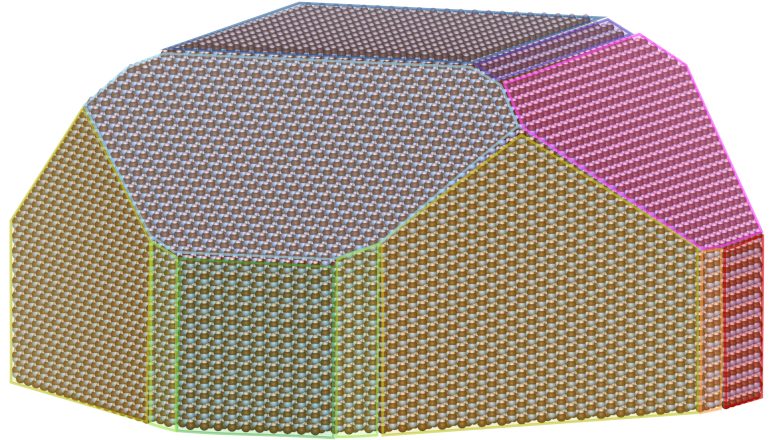
Using computer simulations, researchers modeled solid hydrogen cyanide crystals in detail. They found the crystals grow into geometric shapes with multiple flat faces—like cut gemstones—that arrange themselves into cobweb-like structures. These specific surfaces turn out to be chemical accelerators. The team identified two reaction pathways where frozen hydrogen cyanide could transform into hydrogen isocyanide, a more reactive compound, in timeframes ranging from minutes to days depending on temperature.
Once hydrogen isocyanide appears on these crystal surfaces, even more complex prebiotic molecules could form in the same cold regions. The researchers now want to test these predictions in the lab—crushing frozen hydrogen cyanide crystals in the presence of water to see whether fresh crystal surfaces actually do spark the formation of life's molecular ancestors at extremely low temperatures.
This doesn't explain how life began, but it fills in one crucial chapter: how the raw ingredients assembled themselves before anything was alive to use them.