New discoveries in Spain are changing what we know about the Bronze Age. A team found six previously unknown Bronze Age mines in southwestern Spain. These mines could explain where metal for ancient Scandinavian artifacts came from.
The University of Gothenburg's Maritime Encounters program led the survey in Extremadura, Spain. They worked with the Universidad de Sevilla and archaeologists from the Museo Arqueológico Provincial de Badajoz.
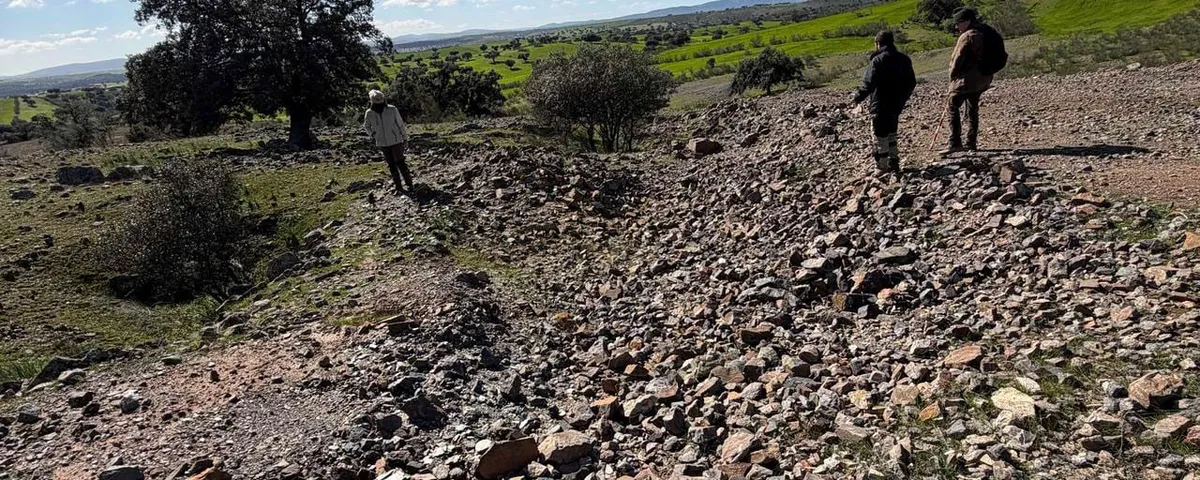
During the survey, the team found six mining sites. These sites varied in size. One site was especially notable because it contained about 80 grooved stone axes. These tools were used to break and process ore.
We're a new kind of news feed.
Regular news is designed to drain you. We're a non-profit built to restore you. Every story we publish is scored for impact, progress, and hope.
Start Your News DetoxThe mines held copper, lead, and silver. These metals were very important in the Bronze Age. They supported trade networks that stretched over long distances.
Extensive Metal Extraction Networks
This survey builds on earlier work by Professor Johan Ling at the University of Gothenburg. Previous studies looked at Scandinavian Bronze Age artifacts. They used lead isotope and chemical analysis. These studies suggested that much of the metal came from southwestern Spain.
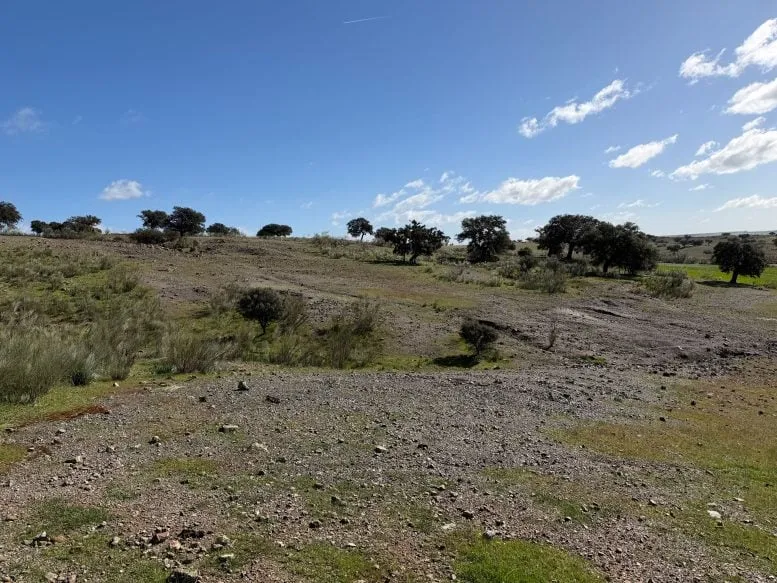
Johan Ling, a Professor of Archaeology, said these new mines are changing our understanding. He noted that Europe was already very connected 3,000 years ago. His team and others have found about 20 new mines between 2024 and 2026.
These discoveries show that metal extraction in southwestern Europe was much larger and more organized than once thought. They provide real archaeological proof for the chemical analyses. These analyses pointed to long-distance connections during the Bronze Age.
The Extremadura Survey
The survey took place around Cabeza del Buey in Badajoz province, Spain. It happened from February 9 to 16. The project was called Maritime Encounters. Partners included the Universidad de Sevilla and the Museo Arqueológico Provincial de Badajoz.
The team found six new Bronze Age mines. A key find was about 80 grooved stone axes, used for processing ore. The mines contained copper, lead, and silver.