Turns out, even your genes are trying to save energy. New research shows that individual genes in your body actually avoid being too "one-way" in their actions, which would burn a ton of cellular power.
Think of it like this: your cells are constantly turning DNA into RNA, a process called transcription. It's usually a one-way street, always moving forward. This takes energy. But figuring out how much energy each gene uses to do this has been a mystery.
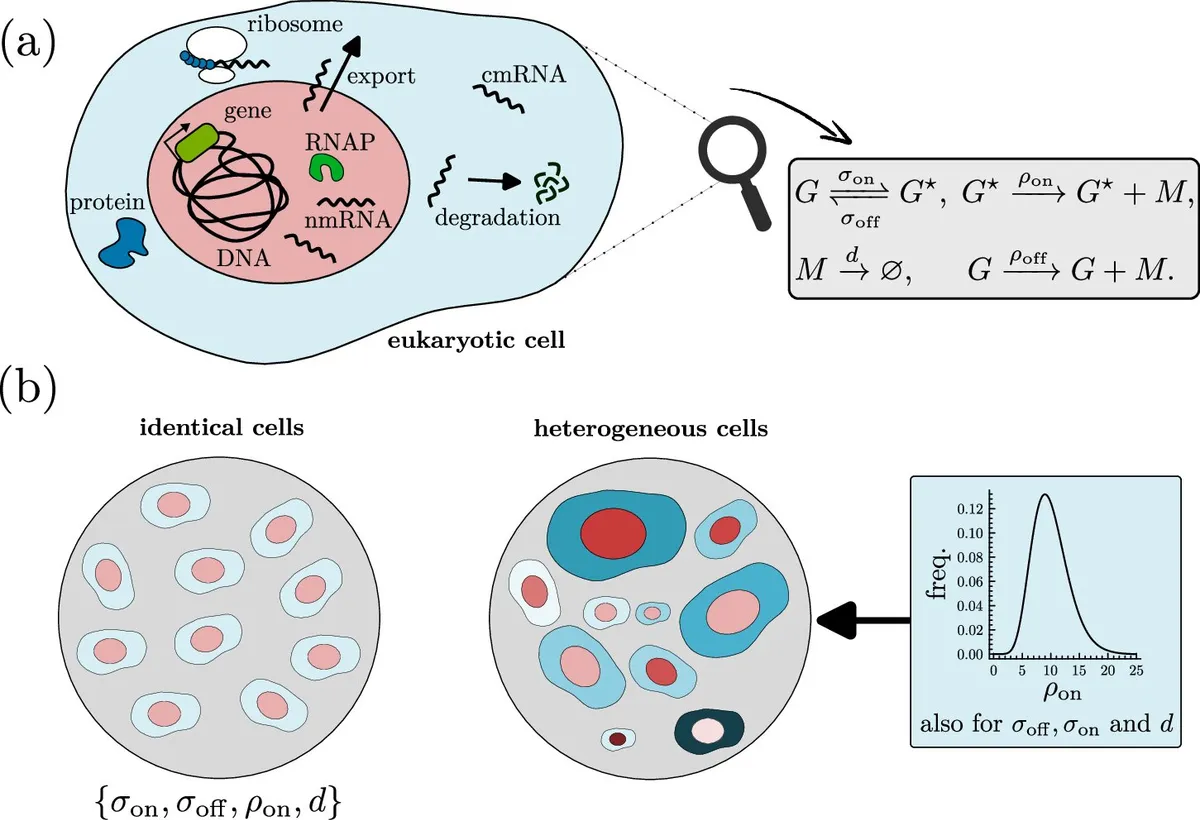
Enter James Holehouse, a researcher who cooked up a clever new way to measure this energy use. He built a simple model that basically watches a gene switch on and off. This helped him calculate something called a gene's "entropy-production rate" — basically, how much energy that gene is burning.
We're a new kind of news feed.
Regular news is designed to drain you. We're a non-profit built to restore you. Every story we publish is scored for impact, progress, and hope.
Start Your News DetoxGenes Play It Cool
When Holehouse looked at thousands of mouse genes, he found something pretty nuts: genes tend to steer clear of states that would make them burn a lot of energy. It's like they have an internal thermostat, trying to keep their energy waste low.
This isn't just about the whole cell saving energy; it's happening at the individual gene level. It suggests that there are fundamental physical rules guiding how genes express themselves, almost like they're trying to be as efficient as possible.
Here's why that matters: understanding these energy limits could totally change how we think about gene expression, from how cells develop to how diseases progress. It's like finding a secret rulebook for how your body's smallest workers operate.