The UK and Europe recently witnessed their most impressive solar eclipse in nearly 30 years. Millions watched this rare event.
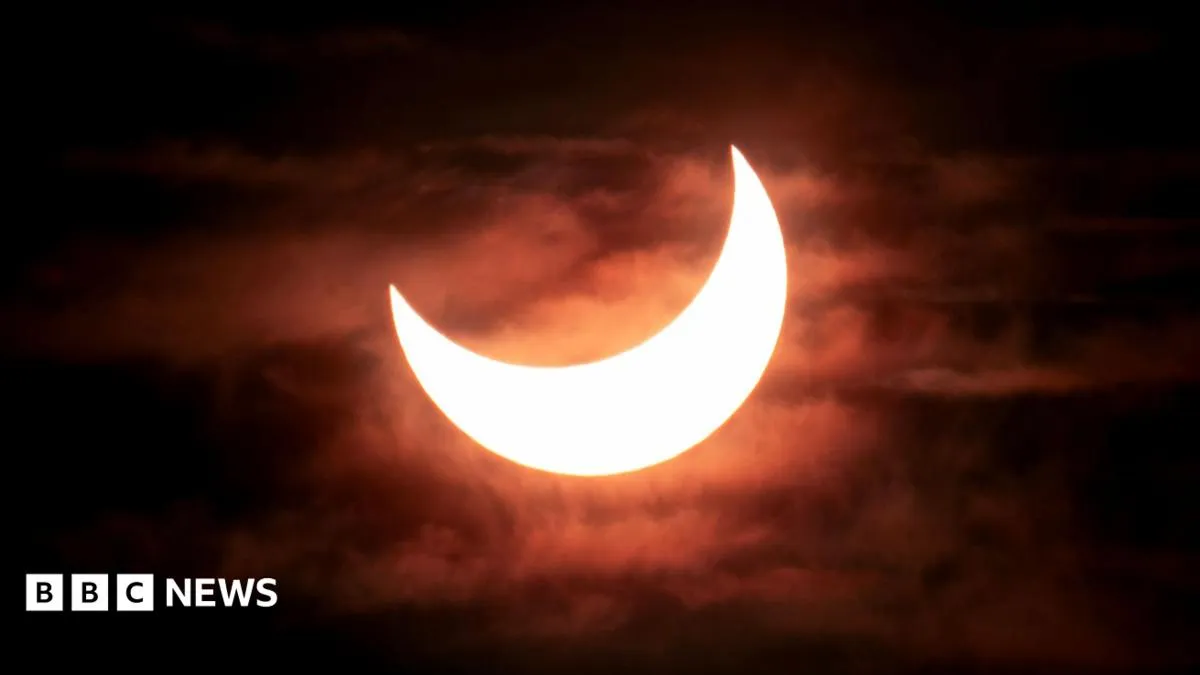
People in the UK saw a partial eclipse. Over 90% of the Sun was covered by the Moon shortly after 7:00 PM BST. However, parts of Greenland, Iceland, and Spain experienced a total eclipse, where the Sun was completely hidden.
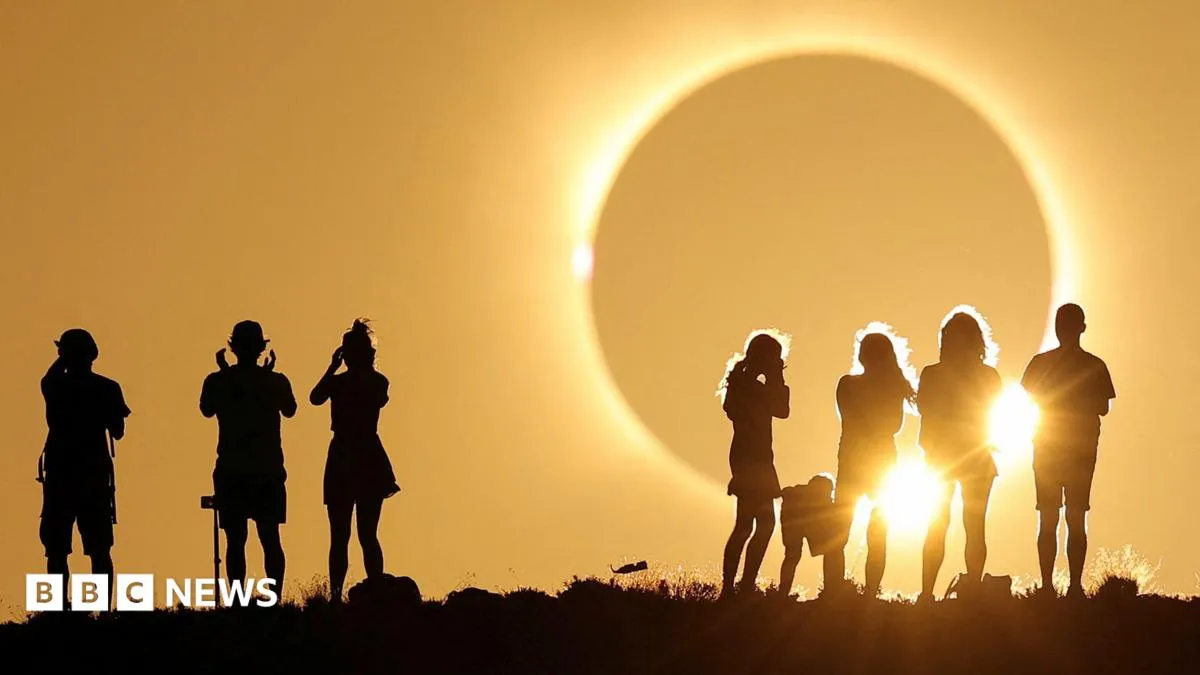
Crowds across the UK and Europe cheered and gasped. Astronomy fans called it a reminder of how "amazing" the universe is.
We're a new kind of news feed.
Regular news is designed to drain you. We're a non-profit built to restore you. Every story we publish is scored for impact, progress, and hope.
Start Your News DetoxThe Eclipse's Journey
The total eclipse started in northern Siberia, Russia. It then curved around the Arctic Ocean, reaching Iceland in the early evening. From there, it swept south, bringing a partial eclipse to the UK.
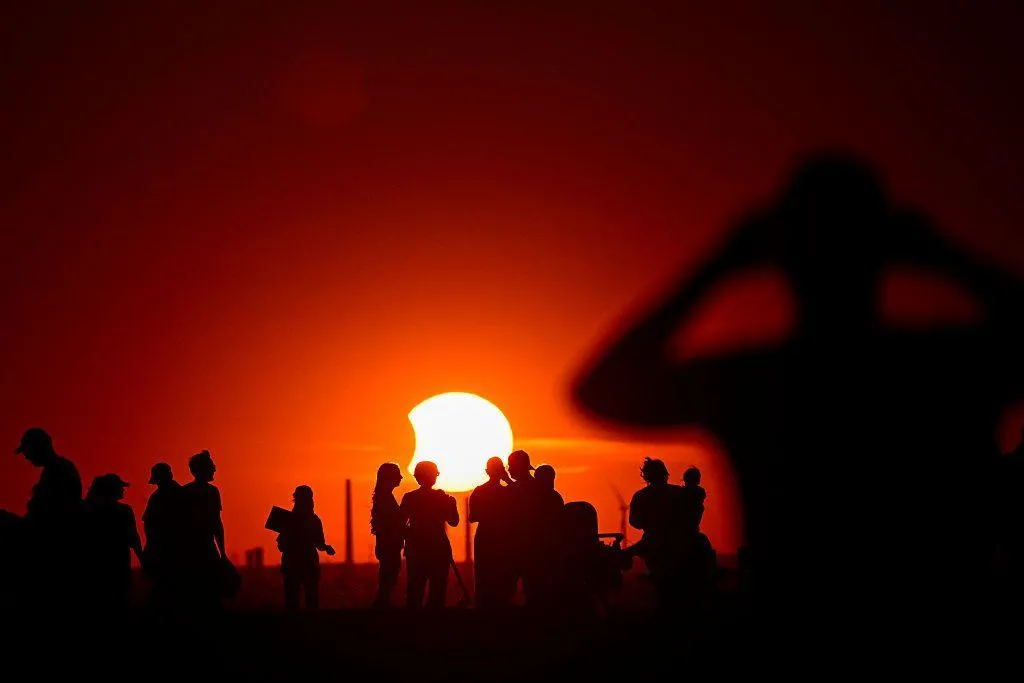
The partial eclipse began around 6:00 PM BST in northern Scotland and just before 6:20 PM on England's south coast. At first, it was hard to see. But for those with clear skies, people noticed the Moon slowly covering the Sun.
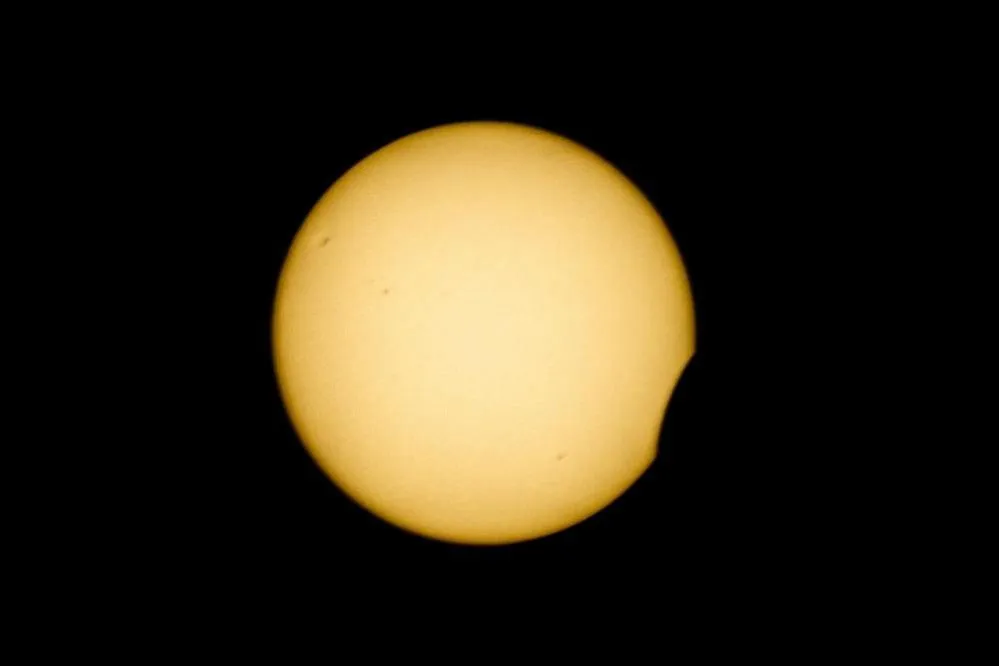
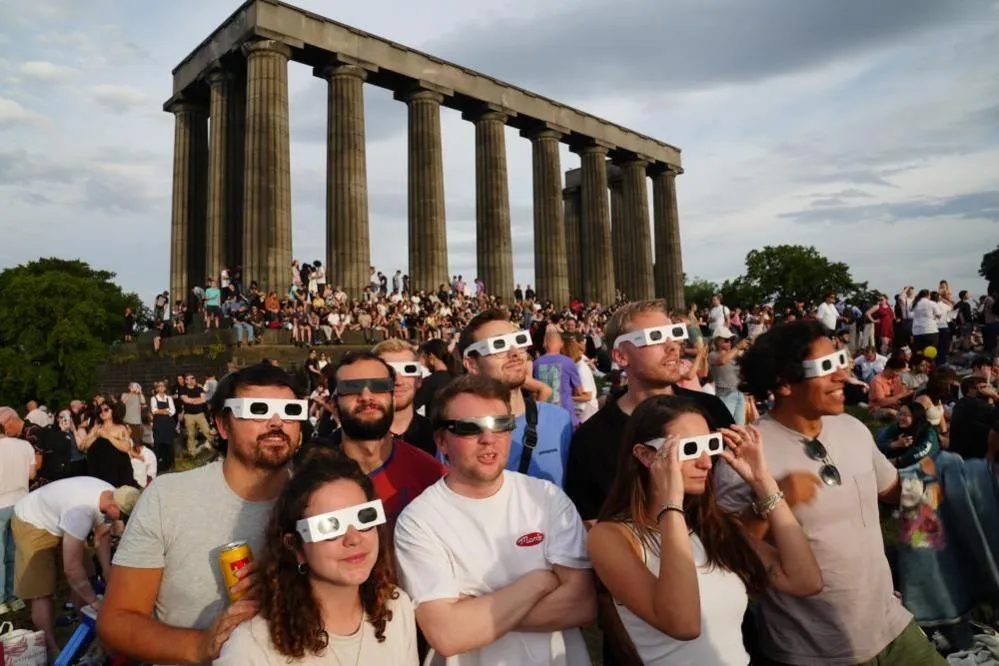
Much of central and southern England and Wales had clear skies. This gave them a great view as the Moon moved across the Sun for about an hour. Northern England, Scotland, and Northern Ireland were cloudier, but crowds still gathered at famous landmarks.
Solar eclipse glasses were in high demand and quickly sold out. However, people found creative ways to watch safely. They used colanders, cereal boxes, and pieces of paper to get a glimpse of the partial eclipse.
Understanding the Phenomenon
A solar eclipse happens when the Moon passes between the Sun and Earth. This blocks some or all of the Sun's light, casting a shadow on our planet.
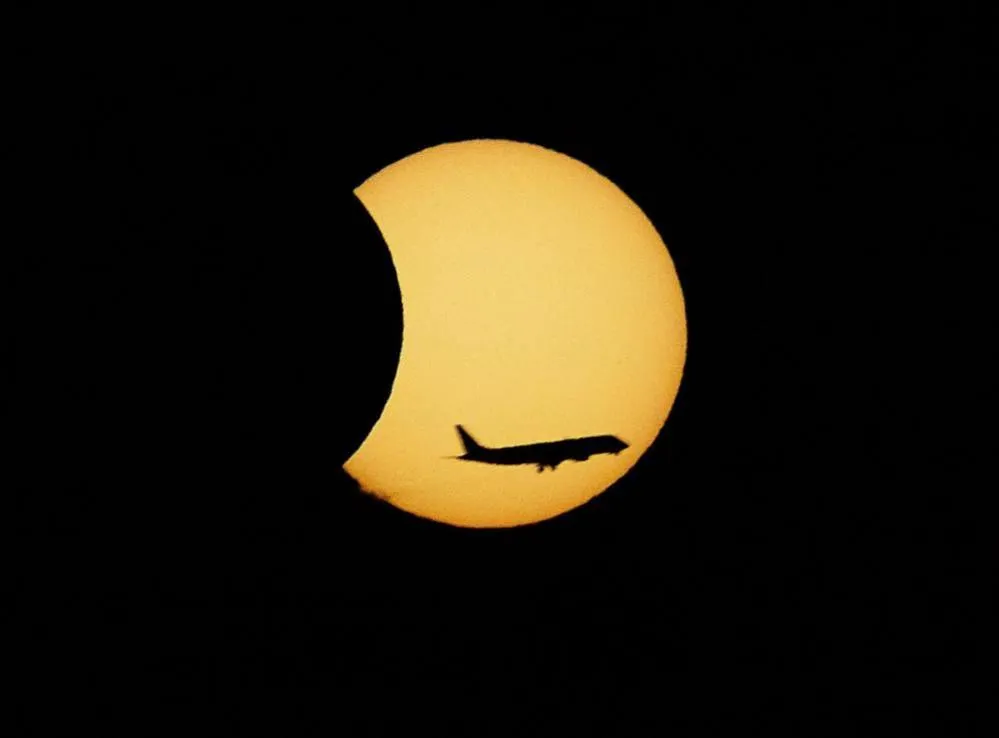
As the Moon slowly covered more of the Sun, it acted like a dimmer switch. In the UK, the Sun, Moon, and Earth were not perfectly aligned. This resulted in a partial eclipse, with the Moon covering about 90% of the Sun for most of the UK. In Cornwall, it was as high as 95%. This was the UK's most dramatic eclipse since 1999.
Parts of Spain experienced a total eclipse. Around 7:30 PM BST (8:30 PM local time), the Sun, Moon, and Earth were perfectly aligned.
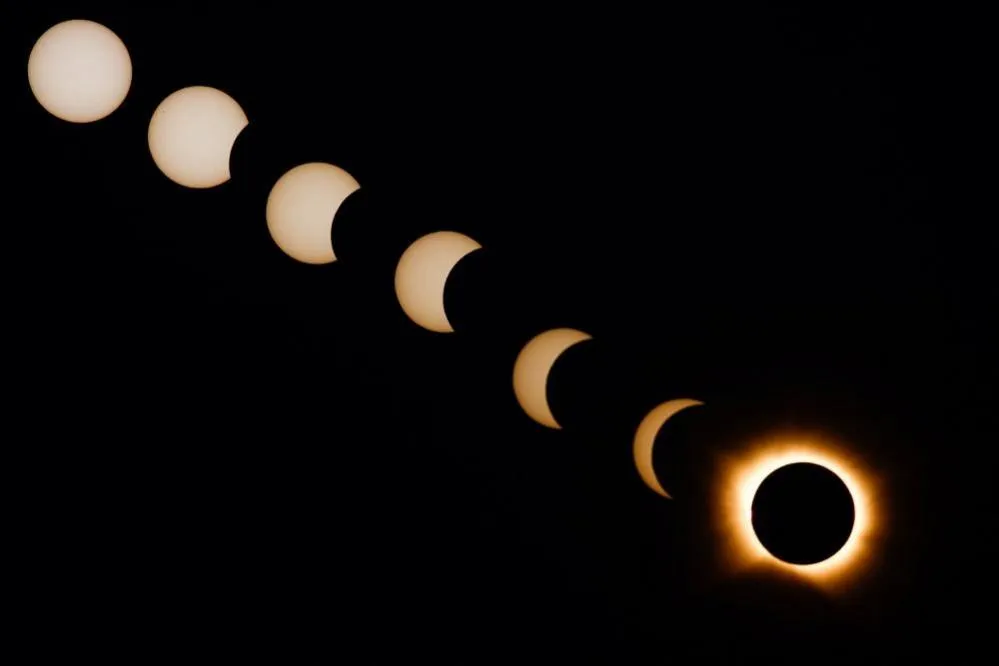
Chilean scientist Yasmin Catricheo traveled thousands of miles to A Coruña, Spain, for the event. She described the feeling during totality as indescribable, with everyone cheering and sharing the excitement. "The universe is amazing," she said.
A total solar eclipse occurs somewhere on Earth about every 18 months. However, for any specific location, they are much rarer, happening only once every 400 years or so.
Crowds in Spain saw the rare total eclipse, including the red glow of the Sun behind the Moon. This light came from the Sun's corona, which are superheated jets of gas. Some also saw small loops of pink gas, called prominences, following the Sun's magnetic field.
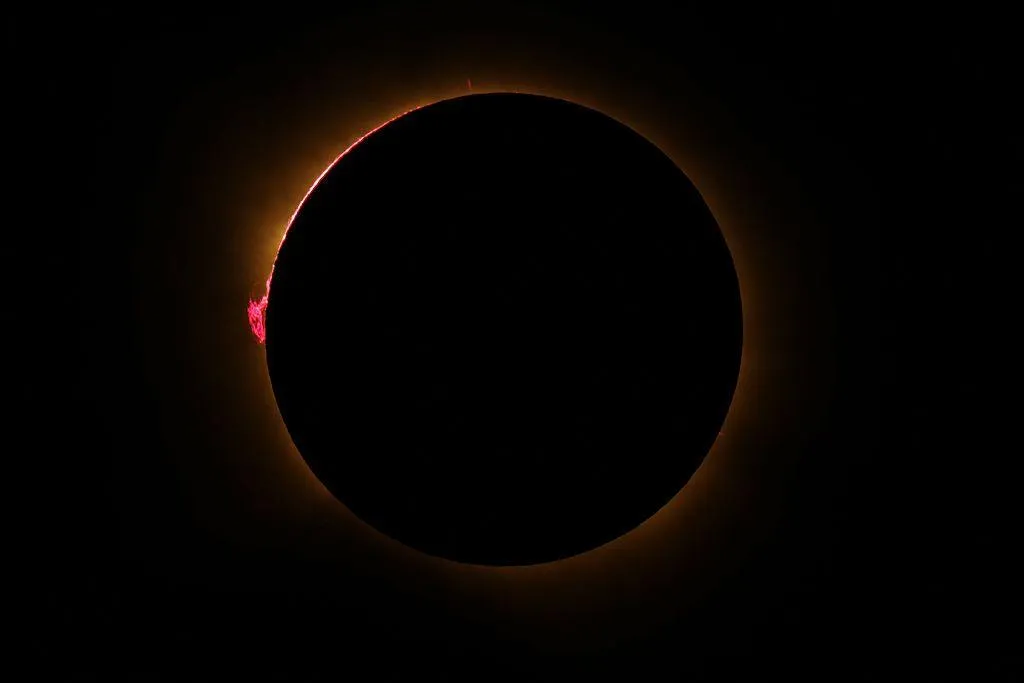
The total eclipse lasted less than two minutes, but it was unforgettable for many. The fact that we experience total eclipses is a cosmic coincidence. The Sun is 150 million kilometers (93 million miles) from Earth, 400 times further than the Moon. But because the Moon's diameter is 400 times smaller than the Sun's, they appear the same size in our sky. If the Moon were slightly smaller or further away, we would never see a total eclipse.
Future Eclipses
We are entering a "golden age" of total solar eclipses between 2026 and 2028. Eclipse enthusiasts can travel to see three total solar eclipses in the next few years.
However, none of these will be visible in the UK. The UK's best view will be a partial eclipse in 2027, with about 45% coverage in some areas. It will be decades until the UK sees a fuller solar eclipse than the recent one.
The next significant eclipse for the UK will be in 2081, with up to 99% of the Sun covered. The UK's next total solar eclipse will occur in 2090.