Ever wonder why some people just seem to pack on muscle with a casual glance at a dumbbell, while others need to practically live at the gym? Blame your ancestors. Specifically, your Neanderthal ancestors.
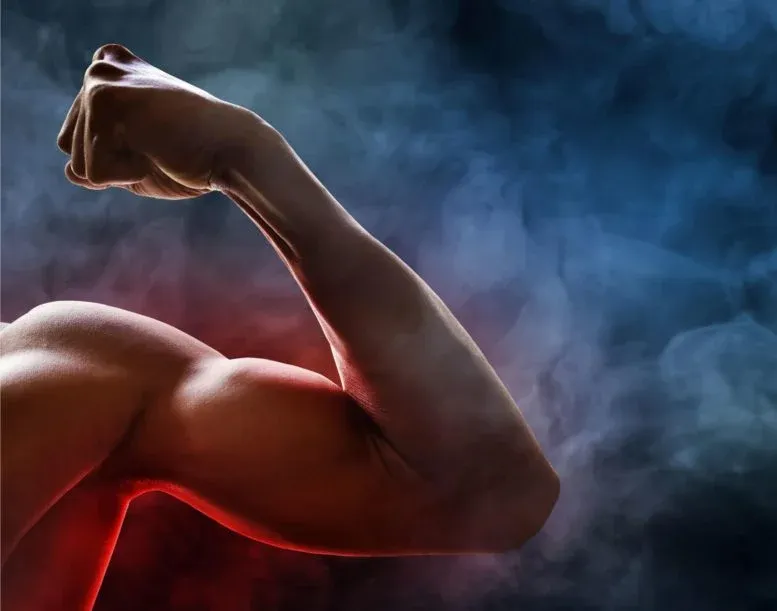
Turns out, if you're rocking the Neanderthal version of the growth hormone receptor, you're likely walking around with an extra 271 grams of muscle, on average. Inherited it from both parents? Even more. Which, if you think about it, is both impressive and slightly terrifying.
This isn't just some wild guess. This discovery comes from a study that didn't just poke around in a lab, but also crunched data from over a million people. Because apparently, that's where we are now — letting ancient DNA explain our modern physiques.
We're a new kind of news feed.
Regular news is designed to drain you. We're a non-profit built to restore you. Every story we publish is scored for impact, progress, and hope.
Start Your News DetoxThe Ancient Secret to Modern Muscle
That growth hormone receptor is basically the VIP pass for growth in your cells. When scientists put the modern human and Neanderthal versions head-to-head, the Neanderthal one was clearly flexing harder.
In lab tests, cells with the Neanderthal receptor grew more robustly. This makes perfect sense when you remember Neanderthals were, well, robust. Like, built-like-a-brick-outhouse robust. And it seems that particular genetic perk has stuck around in some of us.

Before you start questioning your family tree, remember that most people today have a cozy 1-2% Neanderthal DNA rattling around in their genes. Our ancestors got around, and interbred, a long, long time ago.
This specific muscle-boosting variant is most common in South and East Asian populations. In some parts of South Asia, nearly a quarter of the population carries it. So next time you see someone with impressive definition, you might just be looking at a little piece of ancient history.
What's particularly satisfying about this study is how perfectly the lab results mirrored the real-world data. Philipp Kanis, the lead author from the Max Planck Institute, practically gushed about how clearly the evidence clicked into place. Stronger response in cells, more muscle in people. Simple, really.

While we've known about Neanderthal contributions to things like our immune systems, adding muscle mass to the list just makes you wonder what else they snuck into our genetic code. Probably a penchant for cave painting and woolly mammoths, too.
But before you ditch your gym membership, co-author Miriam Berreiter from the Karolinska Institute offered a dose of reality: "Even a Neanderthal growth hormone receptor is no substitute for training." So, you still have to put in the work. Sorry.