
Scientists have long wondered why the Sun's outer atmosphere, called the corona, is millions of degrees hotter than its surface. They also question how the corona stays so hot despite constantly releasing huge amounts of energy through eruptions.
Now, new findings from India's first solar observation mission, Aditya-L1, offer important clues. These findings were published in the Astrophysical Journal Letters.
Unraveling the Sun's Heat Mystery
Professor R Ramesh, a leading Indian solar astrophysicist, led the study. He explained that the temperature differences in the Sun's regions seem to go against the laws of physics.
We're a new kind of news feed.
Regular news is designed to drain you. We're a non-profit built to restore you. Every story we publish is scored for impact, progress, and hope.
Start Your News DetoxThe Sun's core is about 15 million degrees Celsius. Its surface, or photosphere, is around 5,500 degrees Celsius. But the corona, the outermost layer, can reach about 2 million degrees Celsius, sometimes even 40 million degrees Celsius.
Extreme weather events like solar flares and coronal mass ejections (CMEs) start in the corona. During these events, the Sun releases massive amounts of energy into space. CMEs create beautiful auroras. They can also cause geomagnetic storms on Earth, which can disrupt power grids and affect satellites.
The Sun usually has two to three CMEs daily. During its peak activity cycle, which happens every 11 years, there can be ten or more CMEs in a single day.
Prof Ramesh noted that if the Sun kept losing so much energy without replacing it, our solar system's star would eventually cool down. This would plunge Earth into a deep freeze. Since this isn't happening, there must be a way for the corona to keep its high temperature.
Scientists believe two main factors contribute to this. First, bubbling motions on the Sun's surface create waves that carry energy outward to the corona. This is similar to sea waves carrying foam to the shore.
Second, the Sun's atmosphere has "tangled magnetic field lines." These lines constantly break and then reconnect. Prof Ramesh explained that CMEs happen when these twisting lines rupture, sending out large clouds of magnetized plasma and gas. These often start near sunspots, which are cooler, darker areas with strong magnetic fields.
He added that these lines then reconnect, and the Sun replaces the lost energy within hours.
Aditya-L1's Key Discoveries
The research team quantified how much energy each of these two systems provides to the corona. This helps explain both its initial high temperature and how it maintains that heat after losing energy.
Their study clearly shows that the second system, the magnetic field lines, supplies most of the energy.
Prof Ramesh stated that the waves from the bubbling motions on the Sun's surface provide very little energy, only about 7% of what's needed. The remaining 93% comes from the Sun reconfiguring itself and replacing the lost energy.
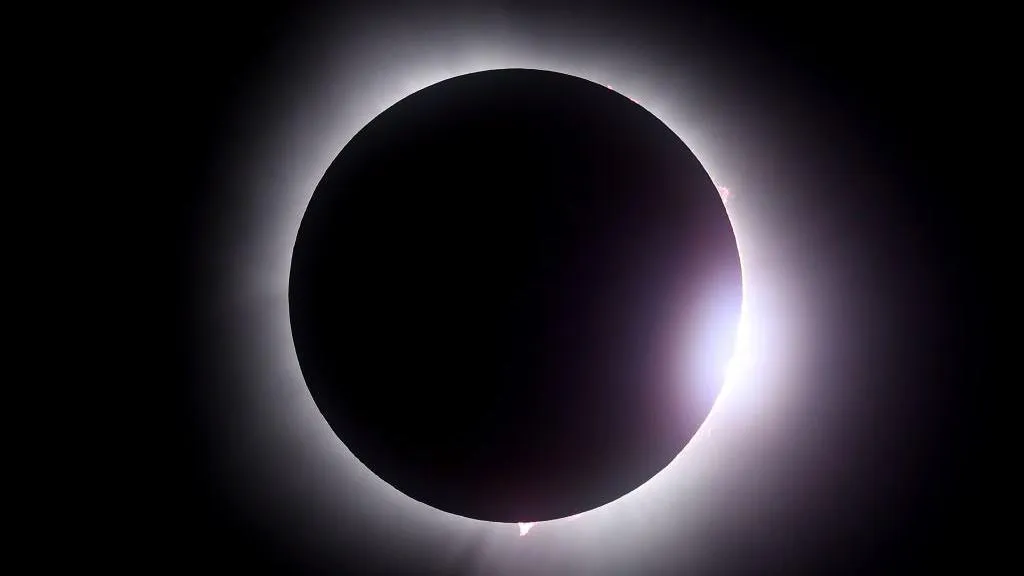
To reach this conclusion, the team studied a powerful CME that occurred on August 5, 2024. Aditya-L1's coronagraph, called Velc (Visible Emission Line Coronagraph), recorded the emissions.
Prof Ramesh observed that within ten hours after the CME, the tangled field lines returned to their original state. They reconnected, and the corona's energy was restored.
He noted that while energy from bubbly motions plays a role, it's not enough. The study shows that the snapping and reconnecting magnetic field lines across the Sun are the main source of most of the energy.
These findings provide an important benchmark for future studies on how the Sun's atmosphere generates energy. Prof Ramesh believes they will help answer fundamental physics questions that currently defy logic.
Deep Dive & References
Aditya-L1: Indian solar mission's new findings throw light on enduring Sun mysteries - BBC News, 2024