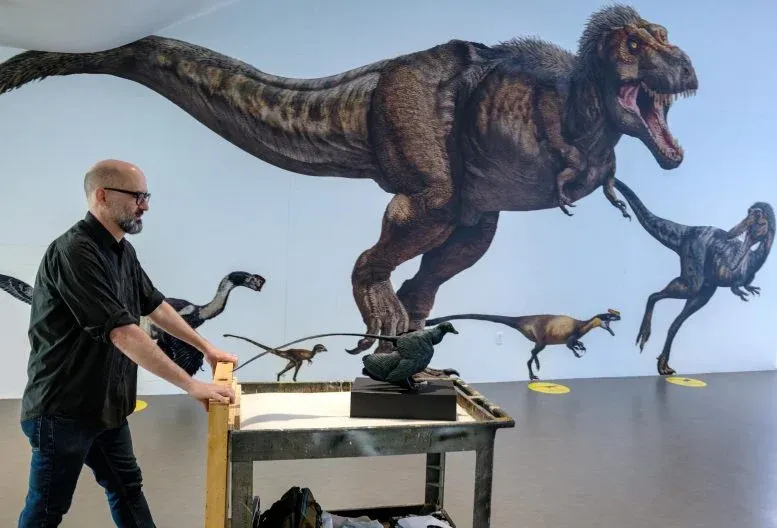
Dinosaurs were incredibly diverse, but they rarely became truly tiny. This is a puzzle because small animals are common in today's world, like mice, hummingbirds, and geckos.
A new study suggests that dinosaur bodies weren't the reason for this. Instead, early mammals and other small creatures might have already filled all the available "tiny" living spaces. This idea flips the usual story that dinosaurs kept mammals small. It suggests mammals also kept dinosaurs from getting smaller.
Roger Benson, a curator at the American Museum of Natural History, noted that while everyone loves giant dinosaurs, the lack of tiny ones is just as interesting. He explained that mammals likely stopped dinosaurs from evolving into smaller sizes.
We're a new kind of news feed.
Regular news is designed to drain you. We're a non-profit built to restore you. Every story we publish is scored for impact, progress, and hope.
Start Your News DetoxWhy Dinosaurs Were Surprisingly Large
When we compare dinosaur sizes to animals alive today, the difference is clear. Some dinosaurs weighed over 80 tons. However, the smallest non-bird dinosaurs known weighed about one pound. This might seem small next to a Tyrannosaurus rex, but it's quite large for a vertebrate.
For example, the smallest living bird, the bee hummingbird, weighs about 1.75 grams. The Etruscan shrew, a tiny mammal, weighs around 1.8 grams. A dwarf gecko can weigh as little as 0.15 grams.
About three-quarters of mammal species and 90% of bird species today are smaller than the smallest known non-bird dinosaurs. Most lizard species are smaller too. Stephanie Lechki, the lead author of the study, said that understanding why tiny dinosaurs were missing helps us understand how today's biodiversity came to be.
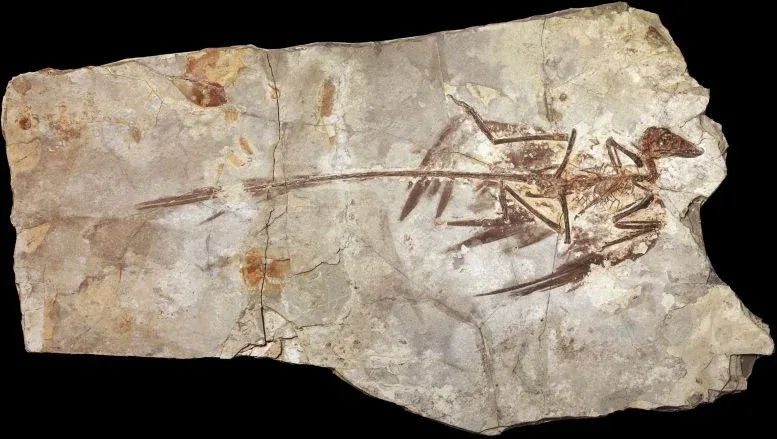
Are Tiny Dinosaur Fossils Just Missing?
One idea is that tiny dinosaurs existed but their fossils haven't been found. Small skeletons are fragile and easily missed by paleontologists.
However, the same fossil sites that hold dinosaur remains also contain much smaller mammals, amphibians, and lizards. If mouse-sized dinosaurs were common, scientists believe some would have been found alongside these other small creatures. This suggests that extremely small non-avian dinosaurs were genuinely rare or absent.
Testing Dinosaur Size with Models
Lechki and Benson used mathematical models to predict which body sizes natural selection would favor. Animals need energy to live, grow, and reproduce. The models looked at how these processes change with body size to find efficient sizes for reproduction.
They tested these energy relationships against body size data from thousands of living species, including birds, mammals, and lizards. They also included size estimates for 515 non-avian dinosaurs.
The models worked well for mammals, birds, and turtles. But they didn't explain the size patterns for lizards, snakes, crocodilians, or dinosaurs. Even with many possible physiological assumptions, the models couldn't explain why dinosaurs were so much larger than their energy needs alone predicted. This failure suggests that physiology isn't the main reason.
How Competition Limited Dinosaurs
Animals don't evolve alone. Even if a body size is physically possible, there might not be an open ecological role for it. Tiny animals need food, shelter, and ways to avoid predators. If other species are already using these resources efficiently, it's hard for new species to move into those roles.
During the age of dinosaurs, small mammals already filled many of these tiny ecological roles. Dinosaurs might have faced an "ecological floor." Getting smaller would have pushed them into already crowded spaces, rather than opening new opportunities.
This creates a balanced view of Mesozoic ecosystems. Large dinosaurs might have kept mammals from getting bigger. In turn, mammals and other small vertebrates might have made it harder for dinosaurs to get smaller. Other factors like predation, food, and habitat also played a role.
How Flight Changed Everything for Birds
Birds are living dinosaurs, and their size range is very telling. Modern birds include some of the smallest warm-blooded animals. However, their non-avian dinosaur relatives never reached such small sizes. When birds first evolved, their body size became much smaller than typical dinosaurs. The new models show that this change wasn't just about different energy use.
The researchers suggest that flight changed the evolutionary rules. Once early birds could fly, they could use resources and habitats that ground-bound dinosaurs couldn't. Trees, flying insects, and new ways to escape predators opened up ecological niches where being very small was an advantage.
Lechki explained that flight opened up entirely new ways of life. Once birds entered these new niches, they could evolve body sizes that were not possible for other dinosaurs.
What Dinosaur Size Teaches Us About Evolution
The evolution of tiny birds wasn't just about shrinking a dinosaur body. Flight allowed one dinosaur group to escape ecological limits that had lasted for millions of years.
Evolution doesn't always create every possible body form. Which possibilities actually happen depends on what other species are already present and what ecological opportunities are available.
Benson noted that dinosaur ancestors could be tiny, and their living descendants (birds) can be tiny. But dinosaurs themselves seemed unable to be tiny. This is a question scientists continue to explore to understand dinosaurs and their biology.
Deep Dive & References
The explanatory power of energetic fitness models across living amniotes and extinct non-avian dinosaurs - Evolution, 2026