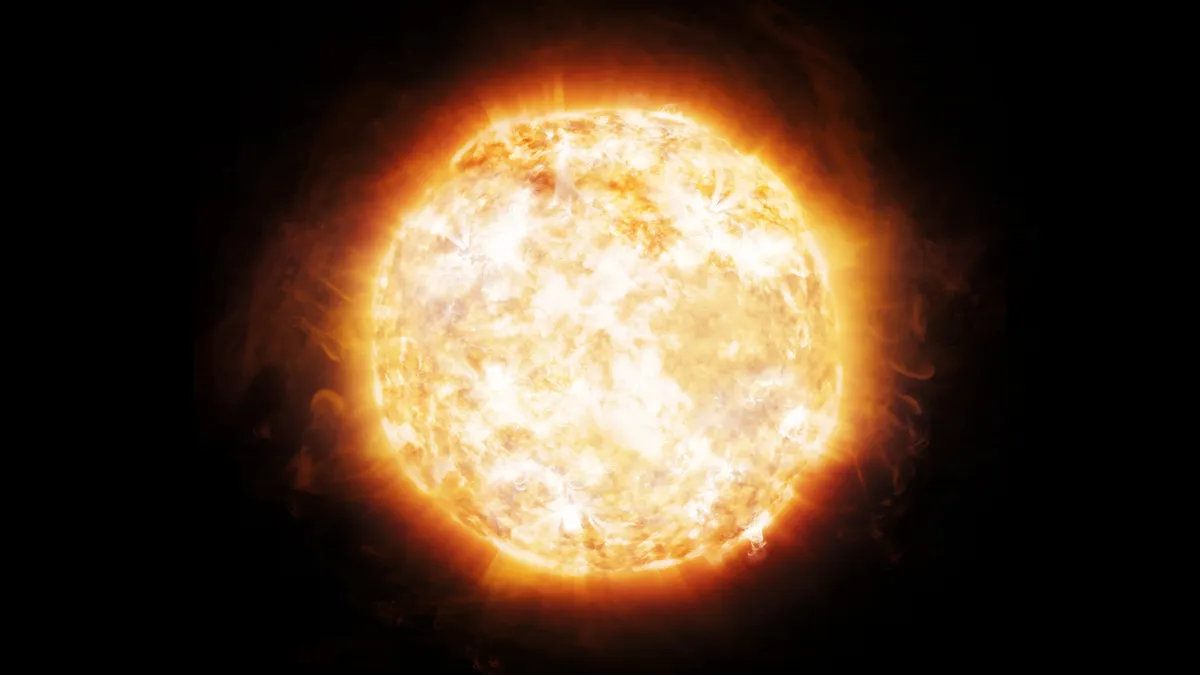
For over a century, scientists have squinted at the sun, mapping its big, dramatic features like plasma bubbles and sunspots. But the smaller, more chaotic details at the magnetic field edges remained a blurry mess, like trying to read a menu from across the galaxy.
Then came the Daniel K. Inouye Solar Telescope (DKIST) in Hawaii, which just delivered the clearest pictures ever taken of the sun's surface, the photosphere. And what did it find? Dozens of plasma whirlpools, swirling away from 12 to 125 miles across, churning at the very edges of those magnetic regions. Because apparently that's where all the fun happens.
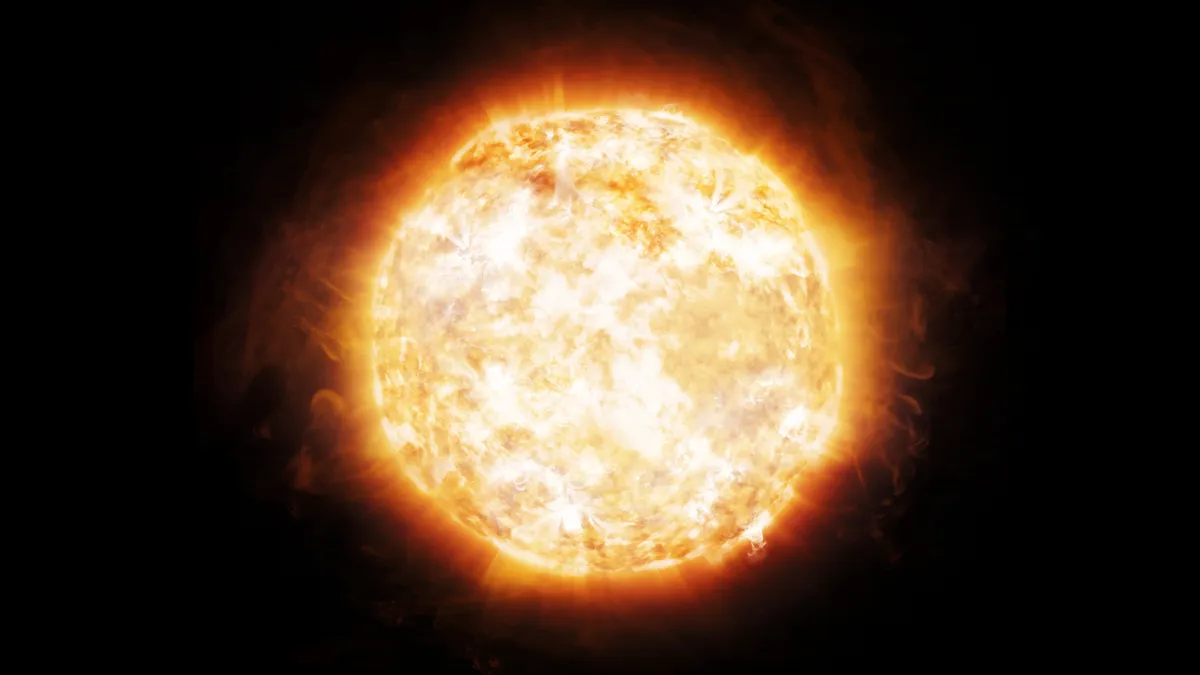
The Sun's Swirling Secrets
These solar cyclones are born from something called the Kelvin-Helmholtz instability. Which, if you've ever watched cream swirl into your coffee or seen certain cloud formations, means you've basically witnessed the same physics. It happens when two fluids (in this case, plasma) slide past each other at different speeds, creating those mesmerizing spiral patterns due to friction.
We're a new kind of news feed.
Regular news is designed to drain you. We're a non-profit built to restore you. Every story we publish is scored for impact, progress, and hope.
Start Your News DetoxTo catch these cosmic blenders in action, the DKIST team aimed their telescope at the outer edge of a sunspot, pushing its resolution to the absolute limit. Friedrich Wöger, a co-author of the study, described the precision as being able to spot ants crawling on the ground from 100 miles up. After observing the patterns, they ran simulations, matching DKIST's images with physics models until everything clicked.
Wöger noted they immediately recognized the "signature vortices" of this instability. Co-lead author David Kuridze added that these are the first observations to clearly show the dynamic, swirling boundaries of individual magnetic elements, rather than the smooth lines scientists once imagined.

Why a Solar Blender Matters
These whirlpools aren't just pretty pictures. They're likely the unsung heroes — or villains, depending on your satellite's mood — of space weather. Wöger explains that this continuous whirling and twisting probably "braids" the sun's magnetic fields like hair. When these braided lines inevitably snap and reconnect, they unleash solar flares and radiation bursts. Which, on Earth, means potential disruptions to power grids, satellites, and the very communications we rely on to complain about power grids and satellites.
This braiding process also offers the leading explanation for one of solar physics' most enduring mysteries: why the sun's corona is hundreds of times hotter than the surface directly beneath it. It's like finding your attic is a thousand degrees hotter than your living room, with no apparent heat source. Flux braiding fits the math, and what DKIST found might just be where this whole fiery process kicks off.
Mihalis Mathioudakis, an astronomer not involved in the research, called the discovery a "major breakthrough." And because it comes from direct imaging, it's not just a theory; it's a lasting, undisputed finding. So, next time you look at the sun (with proper protection, obviously), remember it's not just a giant ball of gas. It's a giant, turbulent, plasma blender, and it's probably messing with your phone signal.