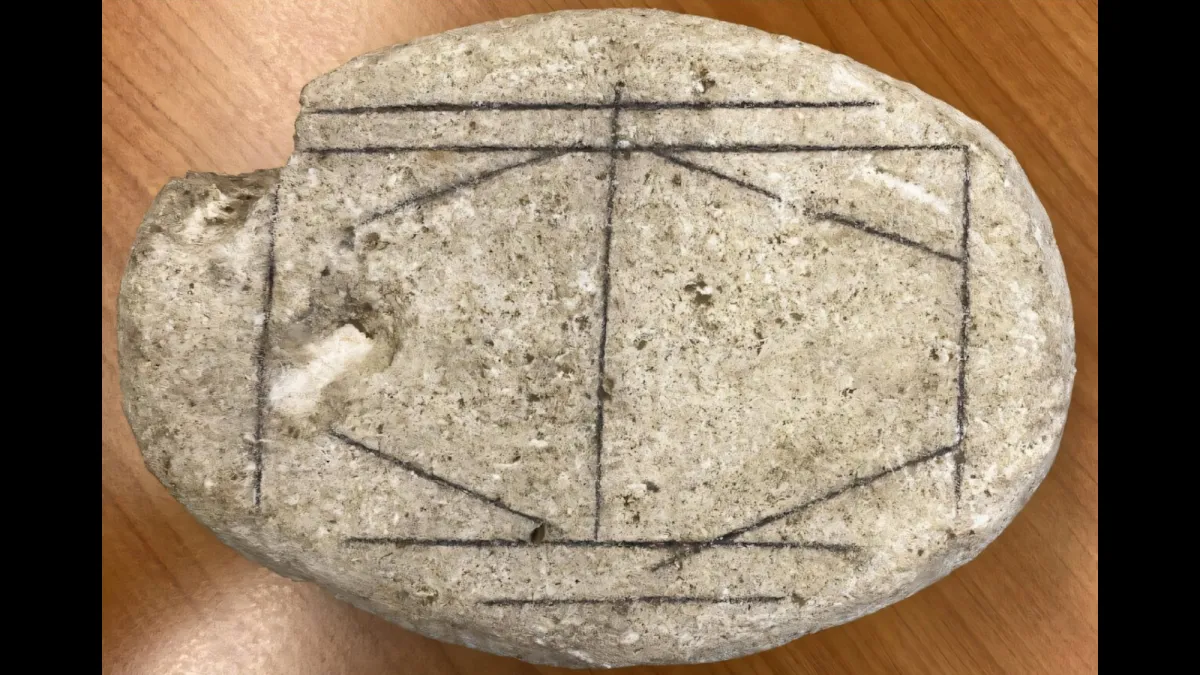
An oval limestone stone, no bigger than a smartphone, sat in a Dutch museum for decades without anyone quite knowing what it was. Found in 1984 at the Roman settlement of Coriovallum near the German border, the artifact was etched with crisscrossing lines that baffled archaeologists. Some thought it might be an architectural sketch. Others had no idea. But a few researchers never stopped believing it was something simpler and more human: a game board.
They were right. And the way they proved it—using artificial intelligence trained on ancient game rules—offers a glimpse into how modern tools can breathe life into mysteries that seemed unsolvable.
Coriovallum itself was no ordinary outpost. Founded during Augustus's reign around 27 BCE, it sat at the junction of two major Roman roads in what is now the Netherlands, making it prosperous enough to support grand architecture and elaborate burials for centuries. The limestone stone the excavators found there measured 8.3 by 5.7 inches and was carved from white Jurassic limestone quarried 200 kilometers away in northeastern France—a material Romans favored for its smooth surface and easy workability.
We're a new kind of news feed.
Regular news is designed to drain you. We're a non-profit built to restore you. Every story we publish is scored for impact, progress, and hope.
Start Your News DetoxFor 40 years, the stone's purpose remained contested. It was too small for building, too oddly shaped for construction work. The board game theory persisted among some scholars, but without evidence, it remained speculation.
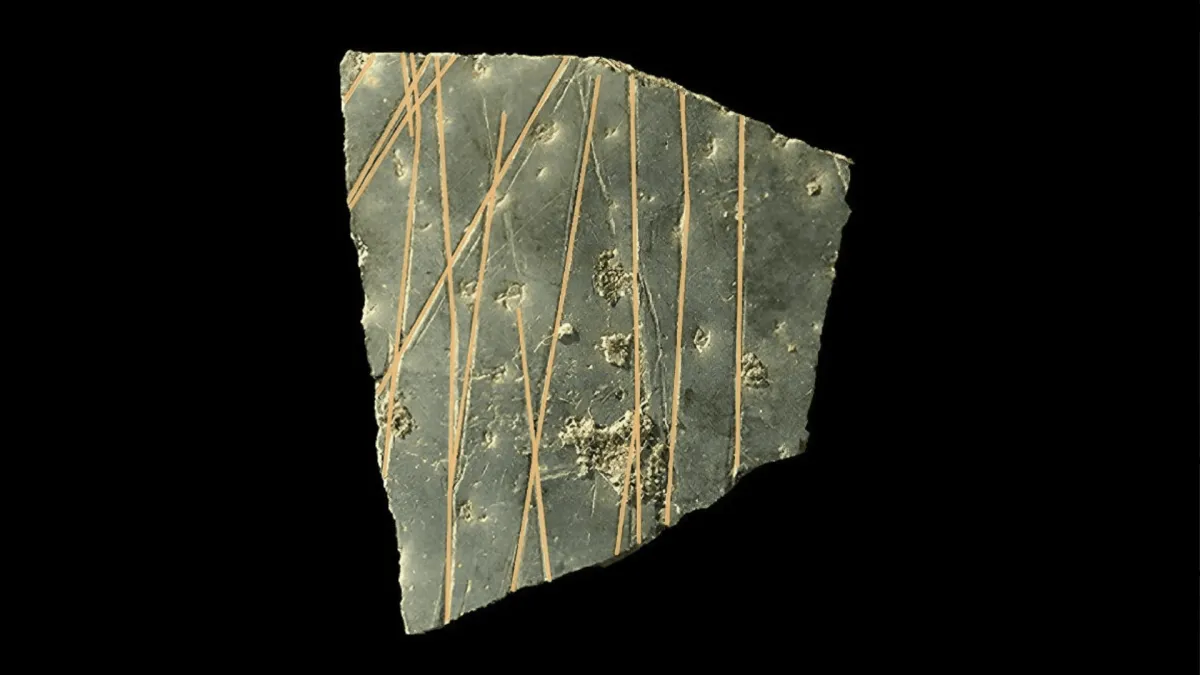
Then three-dimensional imaging revealed something crucial: wear patterns. Some lines carved into the stone were noticeably deeper than others—exactly where game pieces would have been slid repeatedly across the surface over years of play. "We can see wear along the lines on the stone, exactly where you would slide a piece," said Walter Crist, an archaeologist at Leiden University who specializes in ancient games.
But identifying it as a game board only opened a new puzzle: what were the rules? No surviving Roman texts described this particular game. So Crist's team did something unexpected. They partnered with AI researchers at Maastricht University to build a machine learning system called Ludii (from the Latin ludi, meaning "games"). They trained it on rules from roughly 100 ancient games documented from the same region and period.
Ludii generated dozens of possible rule sets, then played them against itself to identify which variants were actually enjoyable for humans. The team cross-checked these candidates against the wear patterns on the stone—the actual evidence of how Romans had moved pieces—and narrowed it down. The result: Ludus Coriovalli, a "deceptively simple but thrilling strategy game" where players pursued and trapped their opponent's pieces in as few moves as possible.
It's a clever solution, but the researchers are careful not to overstate it. "If you present Ludii with a line pattern like the one on the stone, it will always find game rules," cautioned Dennis Soemers, the AI designer. "Therefore, we cannot be sure that the Romans played it in precisely that way."
This is the honest edge of the discovery: they've likely found what the stone was, but the exact rules may remain forever lost. What matters is that a 2,000-year-old artifact has been given back its purpose—and a reminder that the Romans, like us, carved out time for games and strategy and the simple pleasure of playing to win.