NASA is taking a big step toward building a permanent Moon base. The agency announced four new commercial missions that will test technology and deliver science to the lunar surface. These missions will help prepare for future human exploration beyond Earth.
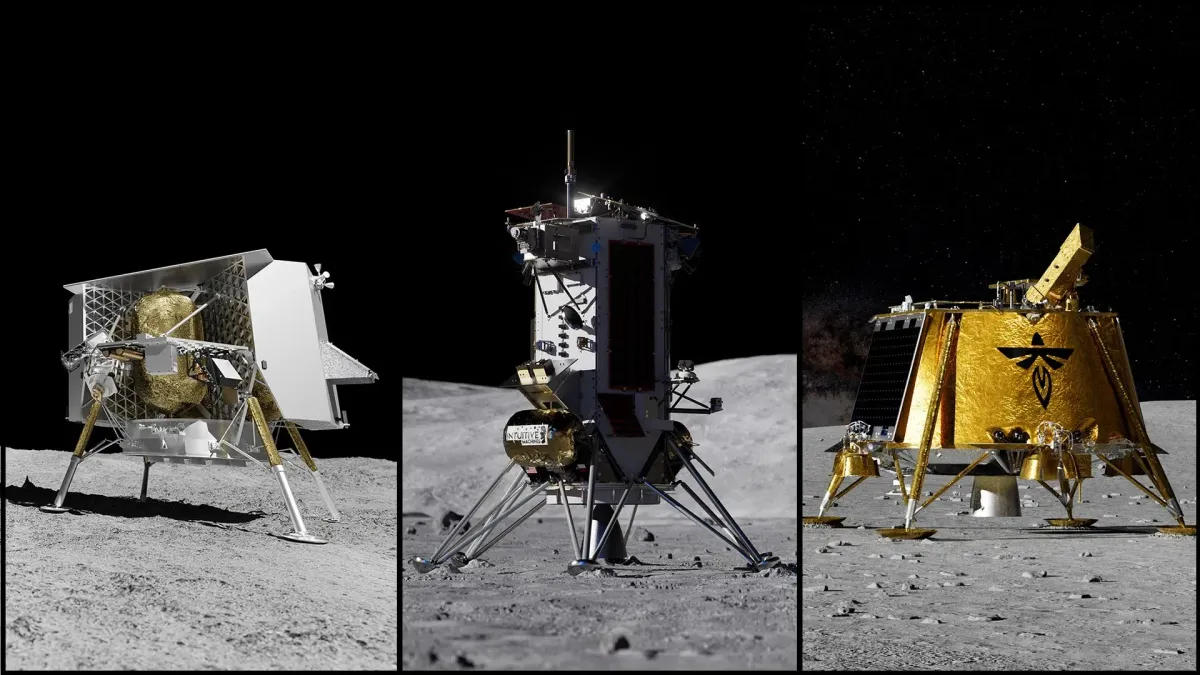
NASA chose three commercial space companies for these missions, set for late 2028. Astrobotic, Firefly Aerospace, and Intuitive Machines will transport NASA science tools to the Moon. This effort is part of NASA's plan to set up the first outpost on another celestial body.
Lori Glaze, a NASA associate administrator, said these awards show NASA's commitment to building a long-term presence on the Moon. The missions, totaling nearly $600 million, will help develop skills needed for humans to thrive there.
We're a new kind of news feed.
Regular news is designed to drain you. We're a non-profit built to restore you. Every story we publish is scored for impact, progress, and hope.
Start Your News DetoxNew Missions and Lunar Infrastructure
Astrobotic will get $297.9 million for two lunar deliveries. Firefly Aerospace received $144.2 million for one delivery, and Intuitive Machines will get $148.3 million for another.
These missions are part of NASA’s CLPS (Commercial Lunar Payload Services) initiative. This program is key to the Moon Base effort. Each company will use an upgraded version of a lander design that has already flown. This approach helps NASA increase how often it sends missions to the Moon.
Ryan Stephan, NASA’s acting director of cargo landers for the Moon Base, noted that these missions are building a "proving ground." He said speeding up the mission schedule helps NASA learn and improve quickly.
NASA now has seventeen planned lunar surface deliveries with various commercial partners. The agency also announced more ways for American companies to help develop the Moon Base.
One idea is to send PROMISE (Polar Rover for Observation, Mapping, and In-Situ Exploration) to the Moon. This rover is a hybrid version of the Mars Perseverance and Curiosity rovers. NASA will explore how PROMISE can study the Moon's surface and look for useful resources.
In the coming months, NASA also plans to ask for proposals for landers. These landers would deliver a power and avionics technology demonstration, more science instruments, and an optical imager for the lunar South Pole.
NASA will also ask for proposals for Moon Base technology demonstrations. Additionally, the agency plans to seek ideas for a lunar communications and navigation relay system. This system could improve connections between Moon Base systems and Earth.
Preparing for Reliable Lunar Operations
The awards announced on June 30 will help build the infrastructure needed for future Moon operations. The selected companies will manage procurement, evaluate past lander designs, and use lessons from earlier missions to make them more reliable.
Each of the four deliveries will carry the same three NASA instruments to the Moon.
Tracking Lunar Dust with Cameras
The Stereo Camera for Lunar Plume Surface Studies (SCALPSS) uses four cameras. It creates a 3D view of how a lander’s engine exhaust affects lunar dust during landing.
NASA will collect data from different engine sizes, fuels, and landing spots. The high-resolution images will help researchers predict how lunar soil erodes and how dust spreads. This information is vital as larger spacecraft and equipment start landing closer together.
Laser Markers for Lunar Navigation
The Laser Retroreflector Array (LRA) reflects laser beams from lunar orbiters or landing spacecraft. These reflections help spacecraft pinpoint their location or navigate more accurately to the surface.
Each LRA device is about the size of a cookie. It has eight quartz corner cube prisms in a dome-shaped aluminum frame. It works without power or maintenance. Similar arrays have been on previous lunar landers. Future missions will expand this network of permanent location markers for lunar exploration.
Radiation Sensors to Protect Astronauts
The Linear Energy Transfer Spectrometer (LETS) will measure radiation during different approaches to the Moon and at various spots on its surface.
This instrument uses a small advanced silicon detector to measure the energy of incoming space radiation. It will show both the strength and type of radiation in the lunar environment. NASA needs this detailed information to design safer missions, protect astronauts, and prepare for long-duration exploration.
NASA is also looking into whether the landers can carry extra payloads beyond these three standard instruments. Joel Kearns, deputy associate administrator for exploration, Science Mission Directorate, NASA, said flying the same instruments on multiple landers will help NASA understand landing hazards. It will also build a global network of environmental data and location markers on the Moon. He compared it to having weather stations in different places on Earth.
Building a Long-Term Human Presence
NASA continues to develop the Moon Base as a long-term lunar exploration program. Its goal is to support a lasting human presence while expanding scientific research and commercial activity on the Moon.
As part of a new era of innovation, NASA plans to send astronauts on increasingly challenging missions. These expeditions will lead to scientific discoveries, create economic benefits, and build the foundation for the first crewed missions to Mars.