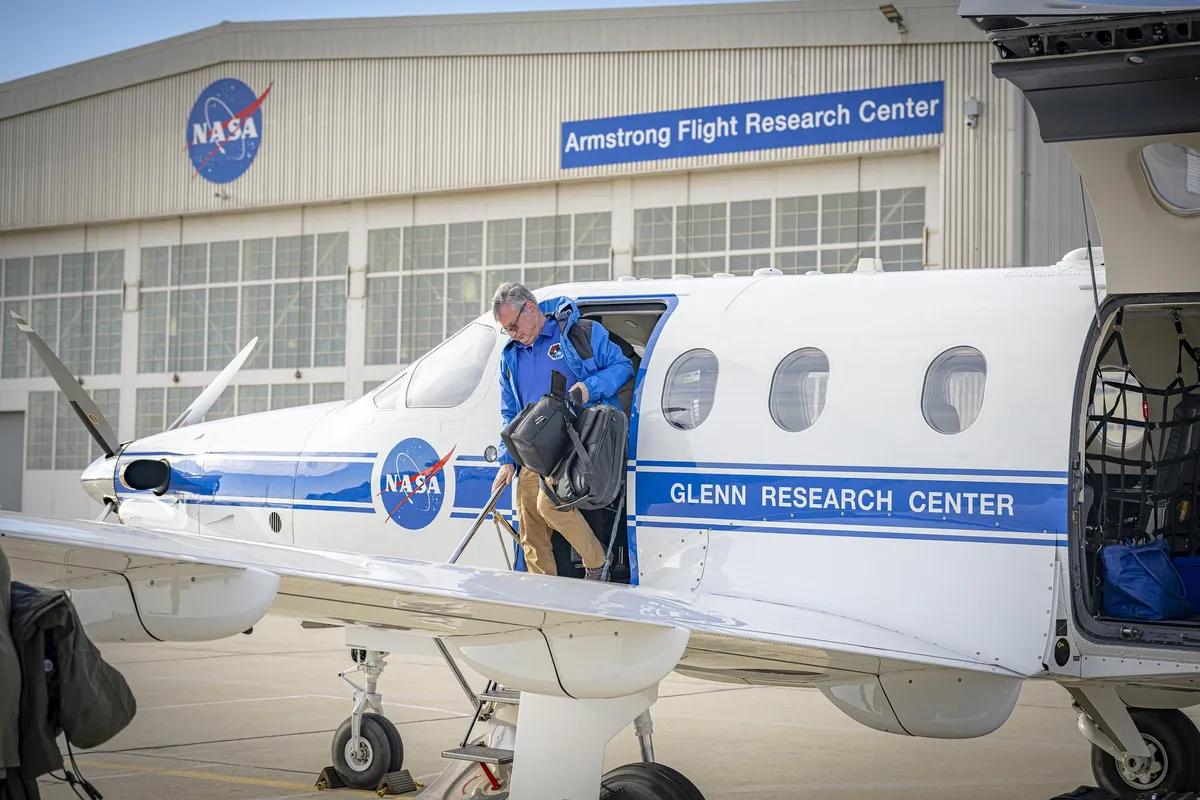
NASA just moved one of its super-versatile research planes, a Pilatus PC-12, to California. Think of it as a science lab with wings, now ready for even more wild experiments across the agency.
This isn't just any plane. The PC-12, nicknamed "606," was first snagged by NASA's Glenn Research Center in 2022. It spent four years there doing some seriously clever stuff, like helping beam 4K video to the International Space Station using a laser. Yes, a laser. It even worked through clouds, which is pretty nuts.
It also helped test new surveillance tech that could one day guide air taxis through city skies. So, from beaming videos to tracking future flying cars, this plane has seen it all.
We're a new kind of news feed.
Regular news is designed to drain you. We're a non-profit built to restore you. Every story we publish is scored for impact, progress, and hope.
Start Your News DetoxNow, the PC-12 will be based at NASA's Armstrong Flight Research Center. This spot is known for sending planes out on specific missions. Darren Cole, a manager there, says they're perfectly set up to keep the PC-12 busy with all sorts of flight research.
This move means the PC-12 will keep supporting Glenn's projects but also open up its capabilities to other NASA teams, industry partners, and even universities. It's like a shared science tool for anyone with a clever idea to test in the sky.
Another Plane Joins the Fleet
And get this: a smaller T-34 plane also just arrived at Armstrong. It's like a backup or a training buddy for the PC-12. Pilots can use it to practice or even run quick, low-cost tests with special pods mounted on its wings. This means researchers can try out new tech ideas without waiting for the bigger PC-12.
These new additions, including two F-15 jets, are making Armstrong the go-to spot for cutting-edge flight research. It's where the future of flight gets tested, one clever plane at a time.