The Artemis II crew just got back from their lunar flyby, and while they were busy taking in the views, NASA's science teams were already gearing up. Their mission? To turn four very well-traveled humans and some tiny organ chips into a cosmic instruction manual for future Moon and Mars dwellers.
Because apparently, if you want to build a lasting human presence on the Moon, you first need to figure out what happens when astronauts try to climb a rope ladder after a trip through deep space.

The Human Guinea Pig Obstacle Course
Astronauts Reid Wiseman, Victor Glover, Christina Koch, and Canadian Jeremy Hansen barely had their space legs back on solid ground before the researchers descended. The goal: understand how the human body transitions from the peculiar weightlessness of space to, you know, Earth gravity. And then, how quickly it can do things like, say, not trip over its own feet.
We're a new kind of news feed.
Regular news is designed to drain you. We're a non-profit built to restore you. Every story we publish is scored for impact, progress, and hope.
Start Your News DetoxWithin a day of splashdown, the crew was completing an obstacle course — lying down, standing up, unfurling a rope ladder, climbing a ladder. All the things you might need to do on a celestial body where there isn't a support crew waiting to hand you a juice box. This data, along with blood pressure, heart rate, and eye health checks, gives NASA a baseline for how fast future crews can be productive after landing.
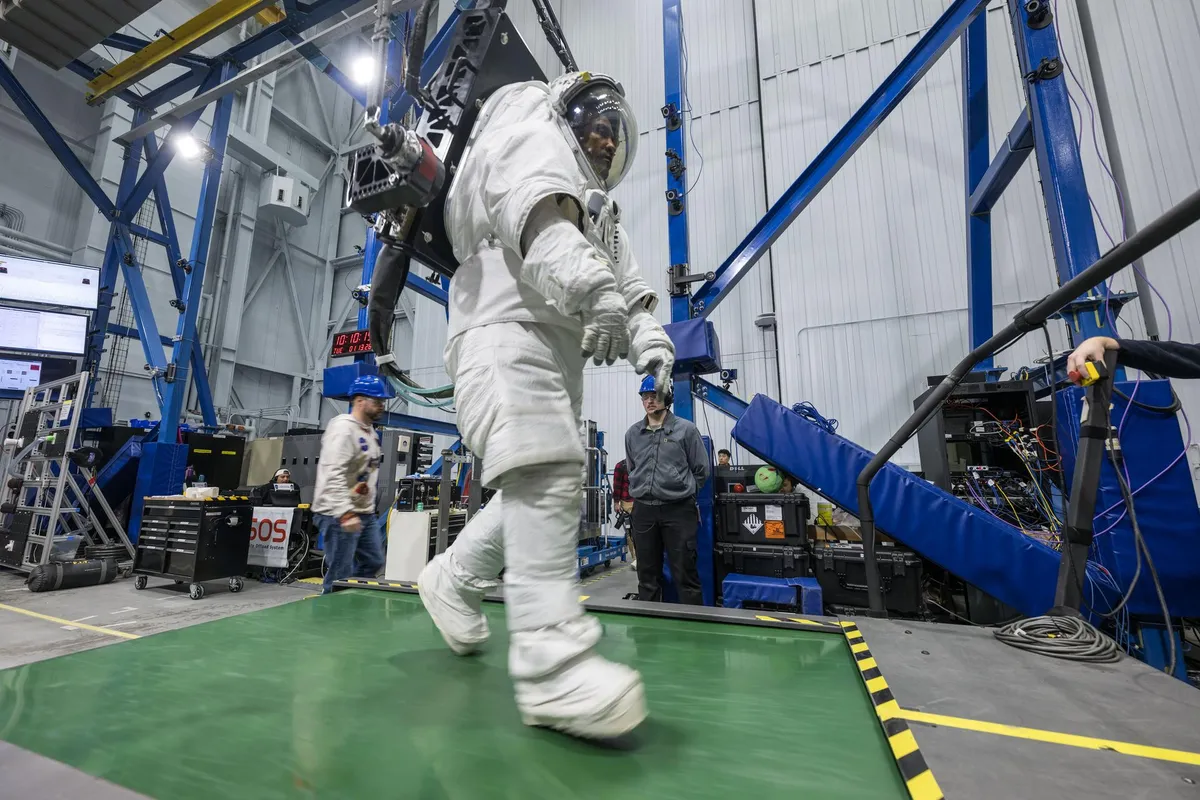
Back at Johnson Space Center, the tests continued. The crew even donned spacesuits, offloaded to simulate lunar gravity (about one-sixth of Earth's), and navigated more courses. Because nothing says 'welcome home' like doing a three-legged race in a bulky suit after a trip around the Moon.
Meanwhile, scientists are comparing blood and saliva samples taken before, during, and after the flight to see if any dormant viruses decided to reawaken in the cosmic environment. Because a space cold is one thing; a space zombie apocalypse is quite another.
Organ Chips and Lunar Snapshots
But it wasn't just the astronauts under the microscope. Tiny "organ chips" containing bone marrow cells from each crew member also took the trip around the Moon. These aren't your average microchips; they're designed to mimic human organs and show how deep space radiation and microgravity affect us at a molecular level.
These chips are now being compared to control chips that stayed on Earth and to the astronauts' actual blood samples. The hope is that these AVATAR (A Virtual Astronaut Tissue Analog Response) chips could eventually fly ahead of astronauts, helping NASA develop personalized medical kits. Because who needs a crystal ball when you have a tiny piece of yourself that's already seen the future?

And let's not forget the seven hours the crew spent glued to the windows during Orion's closest approach to the Moon. They weren't just admiring the view; they were following a detailed observation plan, capturing images, video, and audio of lunar features like impact flashes and surface color changes.
NASA plans to release over 100 audio recordings, complete with transcripts, and a staggering 11,500 Earth and Moon images and video files. All of this will be made available through NASA's Planetary Data System, ensuring that generations to come can pore over every detail. Because if you're going to go all the way to the Moon, you might as well bring back enough data to keep a small army of scientists busy for decades.