Just in time for America's 250th birthday, NASA decided to throw a party for the cosmos, releasing four stunning images from its Chandra X-ray Observatory. And because they're nothing if not on-brand, these cosmic portraits are all decked out in red, white, and blue. Because apparently that's where we are now: patriotic nebulae.
But wait, there's more! NASA also dropped three new "sonifications." This isn't some intergalactic DJ set, but a clever technique that translates mind-bending astronomical data into actual sounds. Because why just see the universe when you can hear it, too?

Star-Spangled Spectacles
First up, we have Cassiopeia A, a supernova remnant that looks like a cosmic fireworks display. Chandra's X-rays (blue and purple) show the sheer force of a star ripping itself apart, revealing elements like iron and oxygen. Layered with infrared data from the James Webb Space Telescope (red and white), you get a full picture of the expanding wreckage and cosmic dust. It's a violent end that makes for a beautiful beginning.
We're a new kind of news feed.
Regular news is designed to drain you. We're a non-profit built to restore you. Every story we publish is scored for impact, progress, and hope.
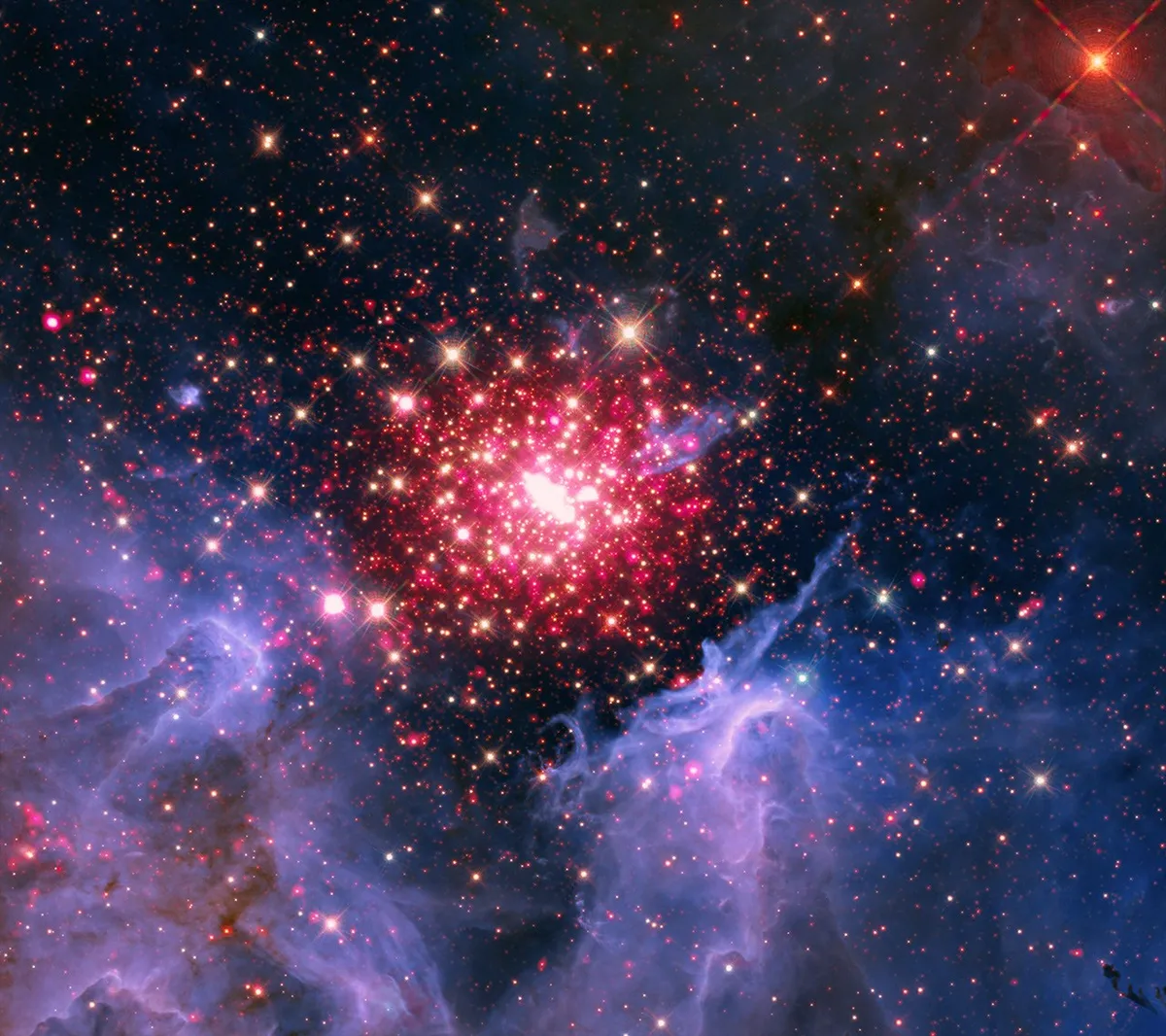
Start Your News DetoxThen there's the nebula NGC 3603, a bustling stellar nursery in our own Milky Way. Chandra's X-ray data (red and white) highlights glowing gas and a multitude of X-ray sources – essentially, the brightest, youngest stars flexing their celestial muscles. When combined with optical, infrared, and ultraviolet light from the Hubble Space Telescope, the whole thing just looks red, white, and blue. Pure cosmic coincidence, or a very deliberate coloring choice? We report, you decide.
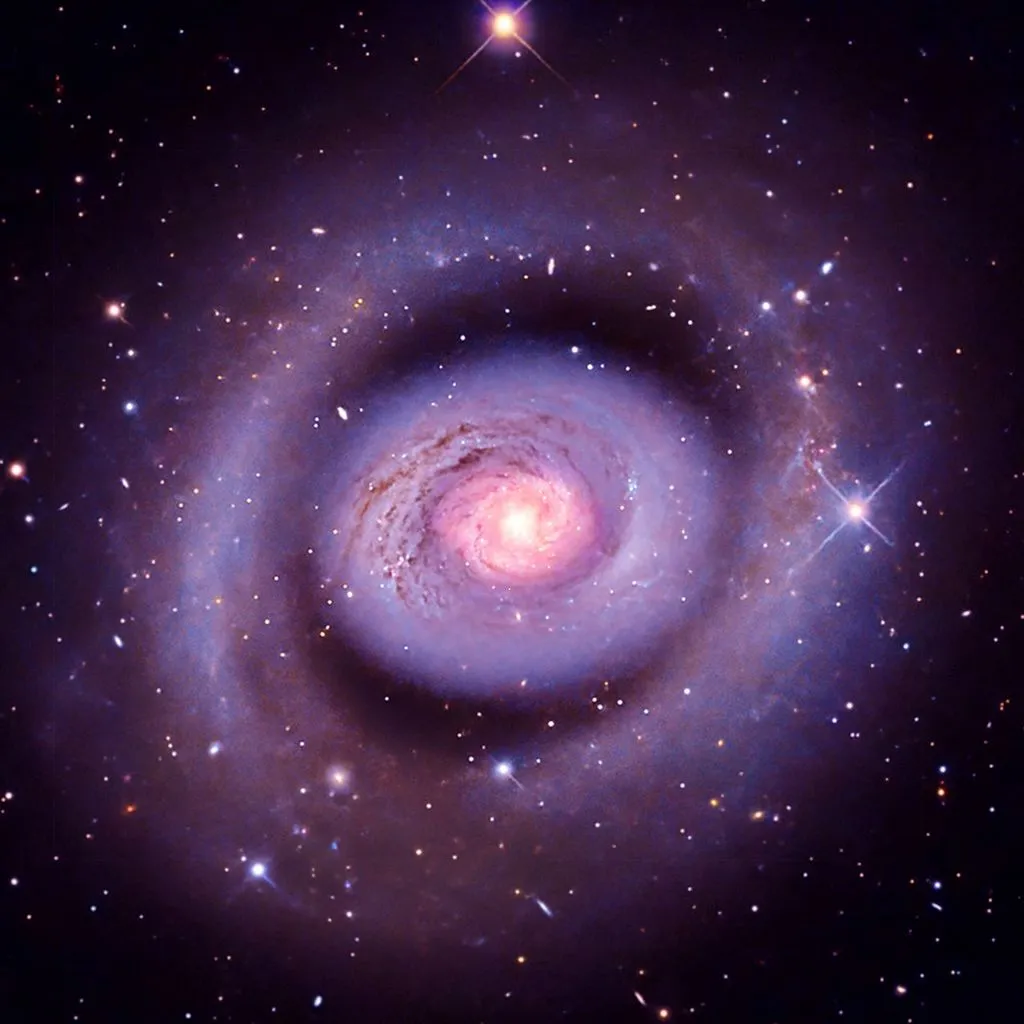
Next, the elegant spiral galaxy NGC 4736 (aka Messier 94). Here, Chandra’s X-rays (red, orange, and blue) mingle with visible light from ground telescopes. This galaxy sports a bright inner ring where stars are forming at a frantic pace – a "starburst ring" apparently fueled by gas in a rather unique oval shape. Because even galaxies need their own quirky features.
Finally, the distant galaxy cluster ZwCl 0024+1652. Hubble data (blue) hinted at dark matter here, while another Hubble image showed individual galaxies (yellow and white). But it's Chandra's X-ray data (red) that reveals a colossal amount of superheated gas, so massive it outweighs all the galaxies combined. Let that satisfying, slightly terrifying number sink in.
The Soundtrack to the Stars
For those who prefer their universe with a side of audio, NASA created sonifications for the three bottom images. Prepare your ears for a cosmic concert.
For NGC 3603, a left-to-right scan turns brighter sources into louder sounds. Chandra's observations become piano notes, while diffuse X-ray emissions get mapped to different audio frequencies. Hubble's optical data? Sustained tones and acoustic guitar. Because what's a star cluster without a little strumming?
NGC 4736 gets a radar-like scan moving clockwise. Chandra's X-rays transform into wind-like sounds, while neutron stars and black holes get pitched tones on a glass marimba. Optical data brings a low drone, and background galaxies sound like soft piano. It's like a sci-fi movie soundtrack, but it's real.
And for ZwCl 0024+1652, the sonification starts from the outside, circling inward. Volume swells with brightness, peaking over dark matter and then again at the core. Background stars are a glockenspiel, galaxies are piano, and Chandra's X-rays (that superheated gas, remember?) become airy synthesizer notes. It's a whole new way to experience the universe, proving that sometimes, the best way to see something is to hear it.
This whole sonification program is led by the Chandra X-ray Center, ensuring that even the most complex cosmic data can be appreciated by anyone with ears and a sense of wonder. Because who doesn't want to listen to the universe sing?